


Digital Brand Marketing And Promotion Strategies To Increase Sales MKT CD V




Try Before you Buy Download Free Sample Product
 Impress Your
 Audience
 100%
100% Editable
 Save Hours
 of Time


Brand Development Strategy is a comprehensive plan outlining the tactics needed to build plus maintain a solid and recognizable brand. Grab our Digital brand marketing and promotion strategies to increase sales template. It includes tactics for building brand awareness, driving engagement, and fostering customer loyalty. Our Brand positioning deck helps create a powerful, differentiated brand that resonates with target audiences and drives business growth. Additionally, it showcases brand development strategies that can help capture market share and gain a competitive edge. Further, our Brand identity PPT showcases the process of developing and launching a new brand in the market. It also includes steps like competitor assessment, target audience identification, brand positioning, and personality. Furthermore, our Product line extension module showcases online marketing and promotional activities to create awareness about new brands among potential audiences. It highlights promotional strategies like social media marketing, email promotion, and sharing customer testimonials. Lastly, our Multi branding template showcases a dashboard that can help to evaluate the impact and results of new brand launches in the market. Get access now.
People who downloaded this PowerPoint presentation also viewed the following :
Content of this Powerpoint Presentation
Slide 1: This slide introduces Digital brand marketing and promotion strategies to increase sales. Commence by stating Your Company Name.
Slide 2: This slide depicts the Agenda of the presentation.
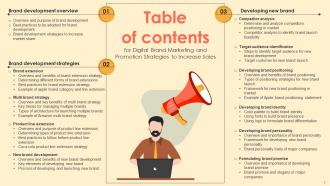
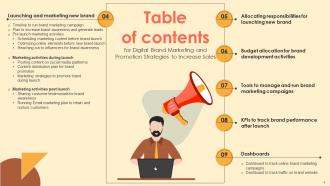
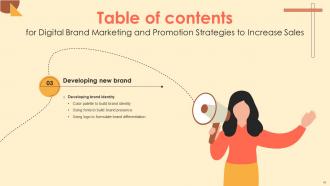
Slide 3: This slide incorporates the Table of contents.
Slide 4: This is yet another slide continuing the Table of contents.
Slide 5: This slide highlights the Title for the Topics to be covered further.
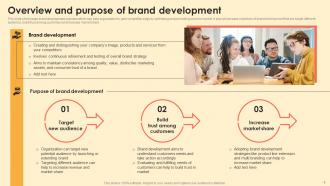
Slide 6: This slide showcases brand development overview which can help organization to gain competitor edge.
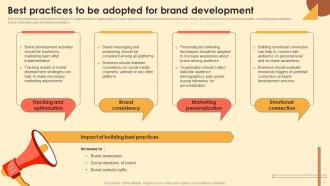
Slide 7: This slide exhibits the Best practices to be adopted for brand development.
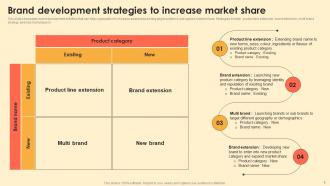
Slide 8: This slide states the Brand development strategies to increase market share.
Slide 9: This slide mentions the Heading for the Contents to be discussed next.
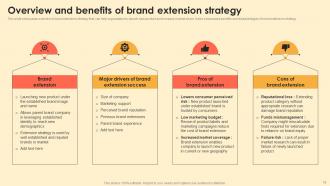
Slide 10: This slide portrays the Overview and benefits of brand extension strategy.
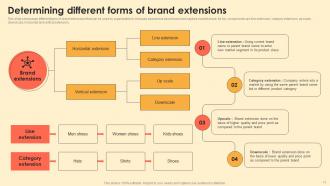
Slide 11: This slide daels with Determining different forms of brand extensions.
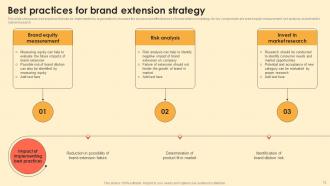
Slide 12: This slide elucidates the Best practices for brand extension strategy.
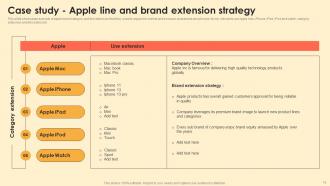
Slide 13: This slide highlights the example of apple brand category and line extension.
Slide 14: This slide displays the Title for the Ideas to be covered in the following template.
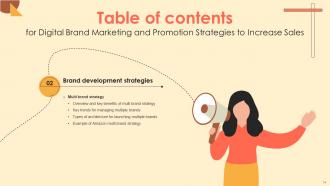
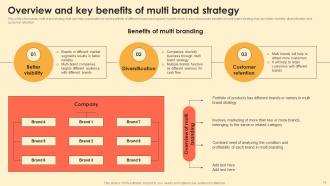
Slide 15: This slide reveals the Overview and key benefits of multi brand strategy.
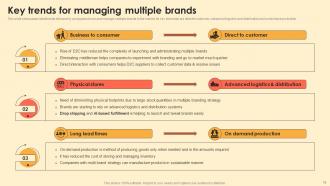
Slide 16: This slide displays the Key trends for managing multiple brands.
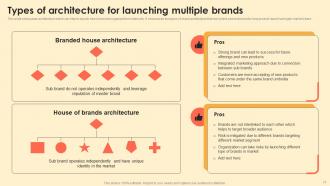
Slide 17: This slide depicts the Types of architecture for launching multiple brands.
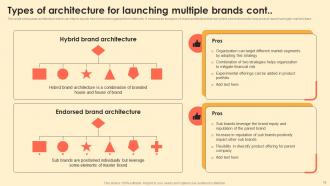
Slide 18: This slide continues the Types of architecture for launching multiple brands.
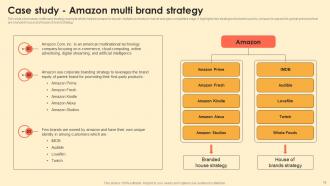
Slide 19: This slide showcases multibrand strategy example which helped amazon to launch multiple products in market and gain competitive edge.
Slide 20: This slide represents the Heading for the Ideas to be discussed next.
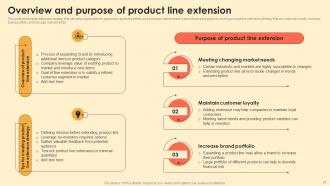
Slide 21: This slide portrays the Overview and purpose of product line extension.
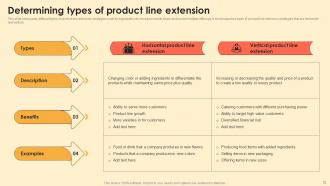
Slide 22: This slide focuses on Determining types of product line extension.
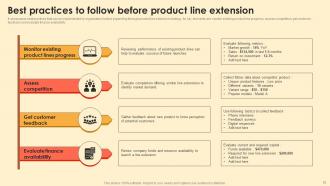
Slide 23: This slide outlines the Best practices to follow before product line extension.
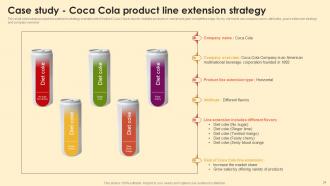
Slide 24: This slide showcases product line extension strategy example which helped Coca Cola to launch multiple products in market and gain competitive edge.
Slide 25: This slide includes the Title for the Contents to be discussed further.
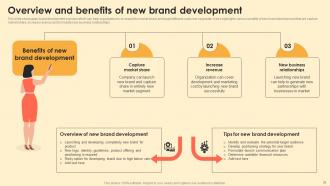
Slide 26: This slide depicts the Overview and benefits of new brand development.
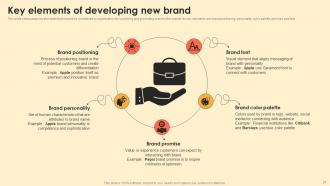
Slide 27: This slide highlights the Key elements of developing new brand.
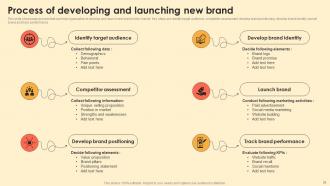
Slide 28: This slide mentions the Process of developing and launching new brand.
Slide 29: This slide shows the Heading for the Topics to be covered next.
Slide 30: This slide reveals new brand launch.
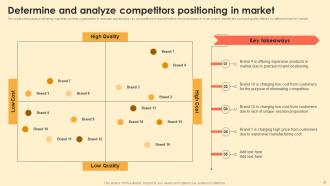
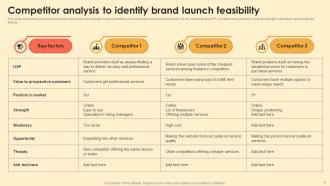
Slide 31: This slide displays Competitor analysis to identify brand launch feasibility.
Slide 32: This slide indicates the Title for the Topics to be discussed further.
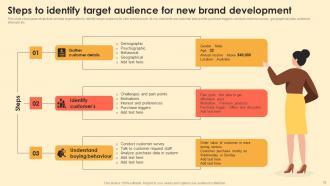
Slide 33: This slide showcases steps that can help organization to identify target audience for new brand launch.
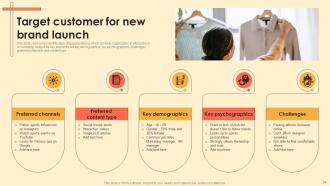
Slide 34: This slide talks about Target customer for new brand launch.
Slide 35: This slide reveals the Heading for the Contents to be covered in the forth-coming template.
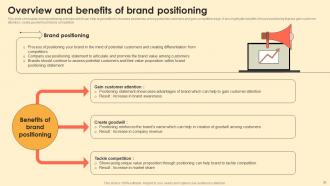
Slide 36: This slide showcases brand positioning overview which can help organization to increase awareness among potential customers.
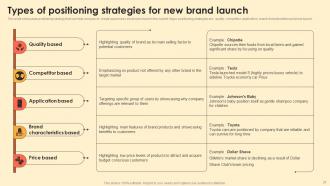
Slide 37: This slide states the Types of positioning strategies for new brand launch.
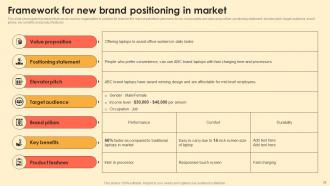
Slide 38: This slide illustrates the Framework for new brand positioning in market.
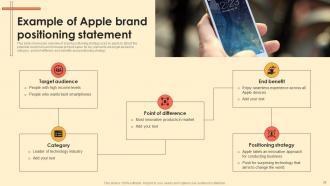
Slide 39: This slide reveals the Example of Apple brand positioning statement.
Slide 40: This slide incorporates the Title for the Ideas to be discussed next.
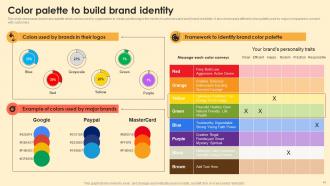
Slide 41: This slide represents the Color palette to build brand identity.
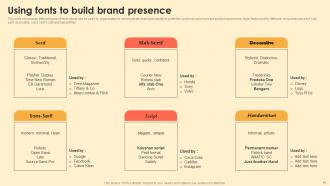
Slide 42: This slide talks about Using fonts to build brand presence.
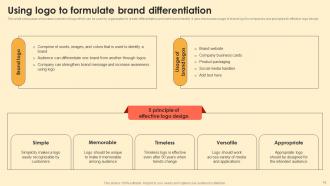
Slide 43: This slide emphasizes on Using logo to formulate brand differentiation.
Slide 44: This slide exhibits the Heading for the Ideas to be covered in the following template.
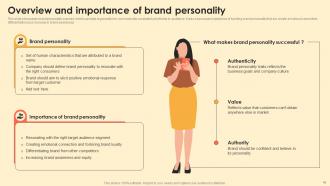
Slide 45: This slide mentions the Overview and importance of brand personality.
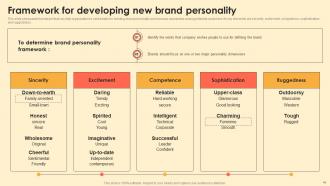
Slide 46: This slide reveals the Framework for developing new brand personality.
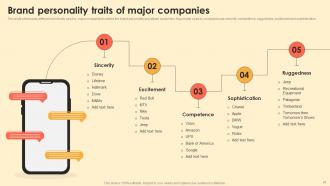
Slide 47: This slide talks about the Brand personality traits of major companies.
Slide 48: This slide states the Title for the Contents to be discussed next.
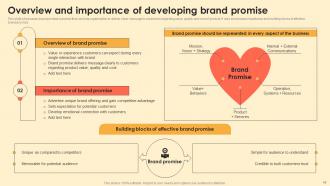
Slide 49: This slide showcases brand promise overview that can help organization to deliver clear message to customers.
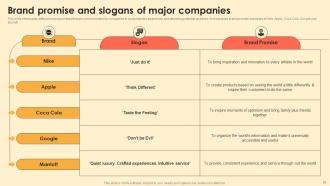
Slide 50: This slide focuses on Brand promise and slogans of major companies.
Slide 51: This slide reveals the Heading for the Topics to be covered further.
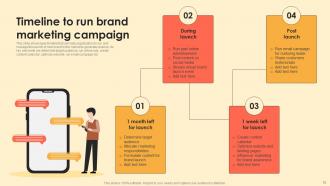
Slide 52: This slide highlights the Timeline to run brand marketing campaign.
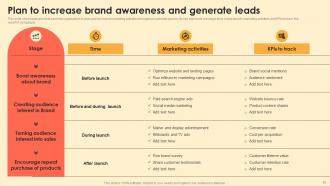
Slide 53: This slide exhibits the Plan to increase brand awareness and generate leads.
Slide 54: This sldie incorporates the Title for the Topics to be discussed next.
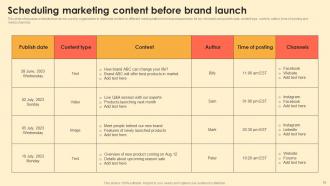
Slide 55: This slide showcases schedule that can be used by organization to distribute content on different media platforms for brand awareness.
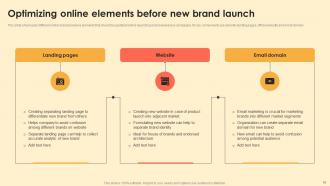
Slide 56: This slide deals with Optimizing online elements before new brand launch.
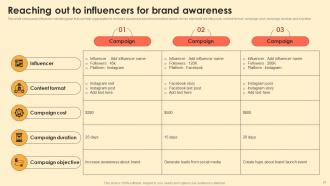
Slide 57: This slide talks about Reaching out to influencers for brand awareness.
Slide 58: This slide highlights the Heading for the Components to be covered in the next template.
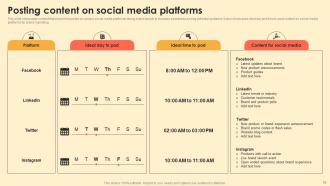
Slide 59: This slide emphasizes on Posting content on social media platforms.
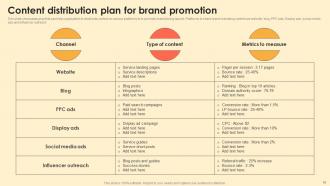
Slide 60: This slide displays the Content distribution plan for brand promotion.
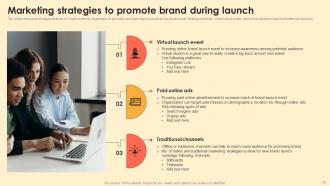
Slide 61: This slide exhibits the Marketing strategies to promote brand during launch.
Slide 62: This slide includes the Title for the Ideas to be discussed further.
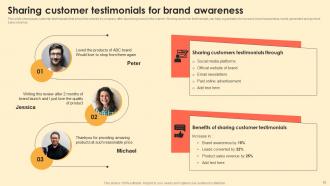
Slide 63: This slide focuses on Sharing customer testimonials for brand awareness.
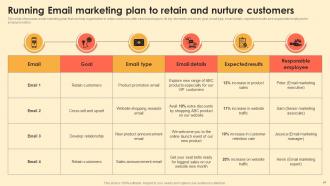
Slide 64: This slide talks about Running Email marketing plan to retain and nurture customers.
Slide 65: This slide depicts the Heading for the Ideas to be covered in the forth-coming template.
Slide 66: This slide emphasizes on Allocating responsibilities for launching new brand.
Slide 67: This slide displays the Title for the Contents to be discussed further.
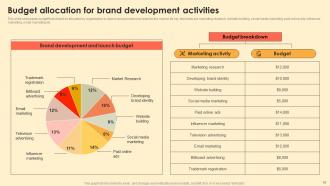
Slide 68: This slide exhibits the Budget allocation for brand development activities.
Slide 69: This slide mentions the Heading for the Topics to be covered next.
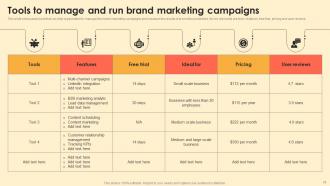
Slide 70: This slide showcases tools that can help organization to manage the brand marketing campaigns and measure the results of promotional activities.
Slide 71: This slide represents the Heading for the Topics to be covered next.
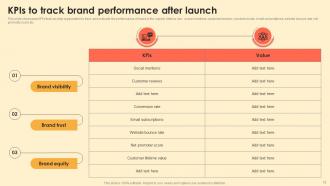
Slide 72: This slide indicates the KPIs to track brand performance after launch.
Slide 73: This slide shows the Title for the Topics to be discussed further.
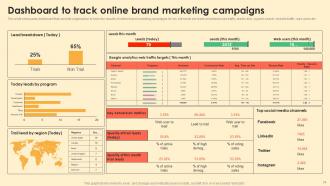
Slide 74: This slide eluicdates the Dashboard to track online brand marketing campaigns.
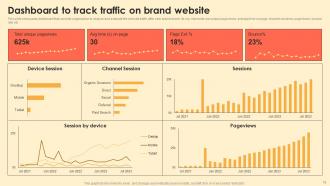
Slide 75: This slide represents the Dashboard to track traffic on brand website.
Slide 76: This is the Icons slide containing all the Icons used in the plan.
Slide 77: This slide is used for showcasing some Additional information.
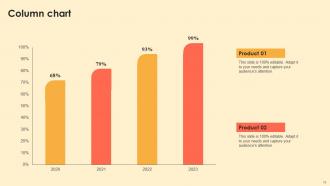
Slide 78: This slide elucidates the Line chart.
Slide 79: This is the Puzzle slide with related imagery.
Slide 80: This is Our team slide. State your team-related information here.
Slide 81: This is the Venn Diagram slide.
Slide 82: This slide contains the Post it notes for reminders and deadlines.
Slide 83: This slide exhibits the Company Timeline.
Slide 84: This is the 30 60 90 days plan slide for effective planning.
Slide 85: This slide portrays the firm's Roadmap.
Slide 86: This is the Thank You slide for acknowledgement.
Digital Brand Marketing And Promotion Strategies To Increase Sales MKT CD V with all 94 slides:
Use our Digital Brand Marketing And Promotion Strategies To Increase Sales MKT CD V to effectively help you save your valuable time. They are readymade to fit into any presentation structure.










FAQs for Digital Brand Marketing And Promotion Strategies To Increase Sales
Honestly, start with your brand voice - make sure it sounds the same whether someone's reading your Instagram or your emails. That consistency thing is what separates the pros from everyone else just winging it. Content strategy matters too, but don't overthink it. Just tell your story through posts and videos people actually want to see. SEO's boring but you'll thank yourself later when people can find you. Actually engage with your community instead of just posting into the void. And track your analytics or you're basically flying blind. Oh, and audit your current stuff first - I bet your voice is all over the place right now.
Honestly, social media just puts you right where your customers are already scrolling for hours anyway. Pick like 2-3 platforms where your people actually hang out - don't spread yourself too thin trying to be everywhere. Post regularly and actually reply when folks comment (shocking concept, I know). The cool thing is when people engage with your stuff, it shows up in their friends' feeds organically. You'll get instant feedback too, which is pretty sweet for figuring out what works. Stories, polls, user content - there's tons of ways to connect. Just be consistent and genuine about it.
So SEO is basically how people find you when they're googling stuff you do. When you show up on page one, customers automatically think you're legit - there's something psychological about those top results. Good SEO means writing content that actually helps people, which builds your reputation over time. Unlike ads where you pay and pray, organic traffic keeps coming even when money's tight (learned that the hard way during COVID). Start by figuring out what your customers are actually searching for. Then create content that answers their real questions. The ranking part usually follows if you're genuinely helpful.
Honestly, customer personas are like your secret weapon for digital marketing. You can't just wing it anymore. Instead of targeting "working moms," get specific - think "overwhelmed first-time moms juggling remote work who scroll Instagram during naptime." That level of detail changes everything. Your content hits different when you know their actual pain points and where they hang out online. I'd start by looking at your current campaigns and see where you're being too vague. Even your posting times should match when your personas are actually online. It's wild how much this stuff matters.
Honestly, start with engagement stuff - likes, shares, comments, click-through rates. That shows if people actually care about your content. But here's the thing - don't get caught up in vanity metrics! Like, 50K followers sounds cool but means nothing if they're not buying anything. Focus on conversions instead: leads, email signups, actual sales. Website traffic matters too. Oh, and ROI is huge for figuring out your budget. I'd pick maybe 3-4 metrics that match your goals rather than trying to track everything. You'll drive yourself crazy otherwise.
Okay so here's the thing - storytelling is like magic for digital marketing. Makes your brand actually memorable instead of just noise. I've watched engagement numbers jump when brands ditch the boring feature lists and tell real stories instead. You can drop these narratives everywhere - social posts, emails, videos, your website copy. Find what's authentic about your brand first though. Maybe it's how you started, customer wins, or just random behind-the-scenes stuff that's actually interesting. Pick one solid story that shows what you're about. Then test it across different platforms and see what sticks.
Start with some branded hashtags and get your customers posting about your stuff. The messy, real posts honestly crush our expensive photoshoots every time - people can smell fake from miles away. Feature their best content on your socials and website. Contests work great for getting more submissions, but definitely ask before reposting anyone's stuff. Oh, and set up some kind of system to organize everything or you'll be digging through DMs at midnight looking for that perfect post. The whole thing works best when it doesn't feel like you're trying too hard.
Dude, AI and VR are seriously changing the game for brands right now. With AI, you can personalize content for tons of people at once and predict what customers actually want - plus those chatbots are getting scary good. VR is where things get really cool though. Instead of boring ads, you're creating virtual showrooms or letting people test products from their couch. My cousin's company did this VR thing for furniture and customers loved it. Start small - maybe try AI for customer service first, then experiment with a simple VR demo. Don't go crazy with the budget initially.
Honestly, keeping your brand consistent across all platforms is such a game-changer. People need to recognize you whether they're scrolling Instagram or checking their email - it just builds way more trust. I hate when I follow a brand on LinkedIn and their Twitter looks completely different, like... are you even the same company? Make a simple brand guide with your colors, fonts, and tone. Short sentences work. Then actually use it everywhere. Your audience will remember you so much better when everything feels cohesive. Plus you'll look way more professional than competitors who are all over the place.
Honestly, just dig into your data and see what's actually working. Google Analytics is my best friend (probably spend way too much time there lol). Check your website traffic, email opens, social media engagement - all that stuff. You'll start noticing patterns like which posts get shared or when people bounce from your site. Pick one thing to focus on this month and test small tweaks. Maybe your audience is way more active at 2pm than you thought? The conversion data will tell you. Just measure, adjust, repeat.
Ugh, the speed is what kills you - one bad review goes viral and suddenly you're in crisis mode. Social media never sleeps, so literally anyone can post about your brand at 3am and by morning it's everywhere. You can't control the story anymore since customers, competitors, even random people online all get to weigh in. Honestly, trying to monitor everything manually is a joke - there's just too much content. Oh, and set up Google Alerts ASAP. Social listening tools too. Catch problems early before they turn into dumpster fires you can't put out.
Dude, mobile optimization can literally make or break your brand. Most people browse on their phones now - like 60%+ of web traffic. Google ranks mobile-friendly sites higher too, so you'll get buried if you don't have it dialed in. Here's the thing though - mobile users have zero patience. Your site better load fast and look decent or they're gone in seconds. I'd honestly just grab your phone right now and try navigating your own site. If it's annoying you, it's definitely frustrating your customers. Trust me on this one.
Honestly, just pick one platform where your people actually are and show up every day. Post stuff that genuinely helps them - like actually solves their problems, not fluffy nonsense. Reply to comments yourself (none of that copy-paste garbage), and get your community talking to each other, not just you. User-generated content is gold - everyone loves being featured. Here's the thing though: you gotta be consistent even when you're not selling anything. That's what builds real trust. Oh, and create little spaces where your audience can connect with each other too.
Honestly, working with influencers is one of the smartest moves you can make. Their followers already trust them, so when they recommend your stuff, it doesn't feel like an ad. Way more authentic than traditional marketing. People scroll past corporate posts all day, but they'll actually listen to creators they follow. The content feels natural too since influencers know their platforms inside out. Oh, and don't go straight for the big names - micro-influencers in your space are usually better. They're more engaged with their audience anyway. Just make sure you pick people who actually align with your brand values, not just whoever has the most followers.
Honestly, just be super upfront about everything. Always mark sponsored posts clearly - people hate feeling tricked. Cambridge Analytica totally wrecked trust around data stuff, so get consent before collecting anything personal. Don't target kids or people struggling financially with sketchy ads. When someone opts out of emails or tracking, actually respect that. Your ads shouldn't promise things you can't deliver either. I always think about it this way - would I be pissed if a company did this to me? If yes, then don't. Trust takes forever to build but like two seconds to destroy.
-
“Love it! I was able to grab an exciting proposal because of SlideTeam.”
-
A beautiful, professional design paired with high-quality images and content that is sure to impress. It is a must-use PPT template in my opinion.