

Digital Marketing Campaign Conversion Funnel Guide To Direct Response Marketing





Try Before you Buy Download Free Sample Product
 Impress Your
 Audience
 100%
100% Editable
 Save Hours
 of Time


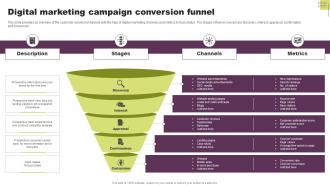
This slide provides an overview of the customer conversion funnels with the help of digital marketing channels and metrics to track status. The stages of funnel covered are discovery, interest, appraisal, confirmation and conversion.
People who downloaded this PowerPoint presentation also viewed the following :
Digital Marketing Campaign Conversion Funnel Guide To Direct Response Marketing with all 6 slides:
Use our Digital Marketing Campaign Conversion Funnel Guide To Direct Response Marketing to effectively help you save your valuable time. They are readymade to fit into any presentation structure.





FAQs for Digital Marketing Campaign Conversion Funnel Guide To
So there's basically three main stages - awareness, consideration, and conversion. First you get people to actually know your brand exists through content or ads. Then they start comparing you to other options, which is where email campaigns and retargeting really shine. Finally they pull the trigger and buy something. Oh, and some marketers add retention stages after that but honestly? Those three cover most of what you need. The trick is matching your content to wherever people are in that journey. Like, don't hit someone with a sales pitch when they're still figuring out what the hell your company even does.
Honestly, just focus on making stuff people actually want to read or watch. Blog posts that answer real questions work great - same with videos and social content. I'd definitely throw some money at Facebook or LinkedIn ads too, they're pretty solid for getting your name out there. The whole trick is not being obviously promotional, you know? Like, people should walk away having learned something useful. Oh, and research what your customers are googling first - that's huge. Then just stay consistent with putting content out there. Way easier said than done though!
Think of content marketing like guiding someone through a conversation. Blog posts and guides grab attention early on. Then you build trust with case studies and webinars - this middle part is where the magic happens, honestly. Product demos and testimonials come last to seal the deal. Most companies just throw random content at people though, which is why they struggle. Map out what questions your leads actually have at each stage. Short answer: match your content to where they are in the process, not what's easiest for you to create.
So social media works differently depending on where people are in your funnel. Top of funnel? You're throwing out organic content and ads to get eyeballs on your brand. Middle gets more interesting - that's where you're nurturing with educational stuff, retargeting (which honestly feels a bit stalker-ish but works), and showing off testimonials. Bottom funnel is all about those direct response ads and making it stupid easy to buy through social commerce. The trick is matching your content to their headspace. Broad brand stuff for awareness, specific solutions when they're considering, then hit them with clear CTAs when they're ready to convert.
So basically you want different metrics for each stage. Awareness stuff like impressions and brand searches. Interest = click rates, how long people stay on your page. Then consideration metrics - email signups, demo requests, that kind of thing. Obviously conversion rates and sales for the final stage. Honestly, don't get caught up in follower counts - total waste of time IMO. Customer lifetime value matters way more. The tricky part is setting up attribution so you actually know what's working. I'd pick maybe 2-3 key metrics per stage first. Way easier than drowning in data from day one.
Oh totally - email is clutch for the consideration stage. You're basically nurturing people who aren't ready to buy yet but are definitely interested. I love how you can educate them without being all salesy, you know? Share some case studies, answer their concerns, that kind of thing. Segmenting your lists based on what they actually care about makes a huge difference too. The trick is giving them real value in every email instead of just trying to close them. Honestly, that's what actually gets them to convert down the line.
Dude, visuals work so much better than text - like our brains literally process images 60,000x faster. When people first discover you, colorful infographics and videos stop the scroll on social feeds. Then you want product demos and behind-the-scenes stuff to build trust in the middle. Honestly, nothing beats customer testimonials with actual faces for closing deals at the bottom. The trick is matching your style to where they are. Awareness content should appeal to everyone, but decision-stage visuals need to be laser-focused on your specific offer. Just look at what you're currently using at each stage first.
Ugh, the worst thing companies do is rush people way too fast. Like, someone just found out you exist and you're already pitching them your premium package? Weird. Build trust first, then sell. Also, tons of businesses create content that's totally wrong for where people are mentally. I'm talking product demos for brand-new visitors - so cringey. Oh, and track each stage separately! Most don't bother optimizing the individual steps. Here's what actually works: figure out how YOUR customers make decisions first. Then build around their pace, not some arbitrary timeline you made up.
So retargeting is basically going after people who already checked you out but didn't buy anything yet. Website visitors, email subscribers, whoever watched your videos - that crowd. You'll want different messages depending on where they bailed. Like, cart abandoners need a totally different vibe than someone who just browsed your homepage once. Honestly, the segmenting part is where most people mess up. Start with your hottest prospects first since they convert way better. Makes testing your whole approach less stressful when you're actually making money from the gate.
UX is huge for conversions, honestly. Poor design can tank your rates by like 50% - I've watched it happen. Slow loading pages? People bounce immediately. Confusing checkout flow? They'll abandon their cart right at the finish line. Mobile experience matters too since everyone's on their phones now. The whole journey from landing page to purchase needs to feel smooth. Test your page speed first, then focus on making navigation super obvious. Oh, and remove any weird friction points that make people think twice. Small changes here can seriously boost your numbers.
So you'll want to track where people are bailing out of your funnel - like which pages they're leaving from, email open rates, all that stuff. Google Analytics is your best friend here, plus Hotjar if you can swing it (those heatmaps are actually insane). Check your bounce rates and see how long people stick around on each page. Once you spot the biggest problem area, that's where you focus first. Don't try to fix everything at once - just tackle the worst drop-off point and A/B test some changes. Usually gives you the fastest results anyway.
Start with one killer value prop in your headline - something that actually grabs attention. Strip out any extra navigation links because honestly? You're just giving people more ways to bail. Talk about benefits, not boring features. Your CTA button needs to pop with contrasting colors and say something like "Get My Free Guide" instead of the generic "Submit" nonsense. Test different headlines and button placements - I've seen tiny tweaks double conversion rates, it's wild. Oh, and make sure it loads fast on mobile since that's where everyone browses now anyway.
Okay so basically you want to meet people where they're at in the buying process. Early on, they just need helpful stuff - blog posts about their problems, how-to guides, that kind of thing. Once they're more interested, get specific with comparison guides and case studies. Then at the end when they're ready to buy? That's demo and free trial territory. The whole trick is actually being useful instead of just pushing your product right away. I usually start by figuring out what questions people have at each stage, then create content that genuinely answers them. Works way better than being pushy.
So when they're ready to buy, don't let stupid friction kill the deal. Throw in some urgency - limited discounts, free trials, whatever makes sense. Social proof is huge here too, like testimonials or those "other customers bought this" things. Oh and retargeting ads that tackle their specific worries? Those work crazy well. Keep checkout brain-dead simple with tons of payment options. Your sales team needs to jump on hot leads fast with personal follow-up. Honestly, people will talk themselves out of buying if you give them time to overthink it. Just make it feel obvious, not scary.
Look, automation tools are game-changers for handling all that boring repetitive work. I'd start with email automation first - easiest way to see quick wins on lead conversion. You can set up sequences that trigger based on what people actually do on your site, score leads automatically, segment them, the whole nine yards. HubSpot's pretty solid for this stuff, or Marketo if you want something beefier. Once it's running smooth, you'll have way more time for the strategic thinking. Plus your sales team gets pinged automatically when someone's actually ready to buy instead of just tire-kicking.
-
Great work on designing the presentation. I just loved it!
-
Excellent work done on template design and graphics.