Ecommerce Conversion Funnel For Product Managers And Marketing Teams

Rating:
90%
Ecommerce Conversion Funnel For Product Managers And Marketing Teams
Slide 1 of 6
Favourites Favourites

Try Before you Buy Download Free Sample Product

Audience Impress Your
Audience
Editable 100%
Editable
Time Save Hours
of Time
The Biggest Sale is ending soon in
0
0
:
0
0
:
0
0
Rating:
90%
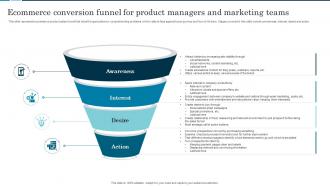
This slide represents ecommerce product sales funnel that benefit organizations in comprehending problems which visitors face against buyer journey and how to fix them. Stages covered in this slide include awareness, interest, desire and action. Presenting our set of slides with name Ecommerce Conversion Funnel For Product Managers And Marketing Teams. This exhibits information on four stages of the process. This is an easy to edit and innovatively designed PowerPoint template. So download immediately and highlight information on Awareness, Interest, Desire, Action.

FAQs for Ecommerce Conversion Funnel For Product Managers

So there's basically five stages: awareness, interest, consideration, purchase, and retention. First you get people to find your site - ads, SEO, whatever works. Hook them with solid product pages once they're there. When they're comparing options (which honestly takes forever these days), reviews and clear pricing are your best friends. Keep checkout stupid simple - nobody wants to fill out seventeen forms. Oh and retention's huge too. Email marketing, good customer service, all that stuff to bring them back. Each stage needs different tactics, so don't try to optimize everything at once or you'll go crazy.

Okay so basically you need to map out every step from when someone first hears about you to when they buy. Google Analytics is clutch for this - seriously, I don't know how people did marketing before it existed. Also grab Hotjar for heatmaps. Break it down into stages like awareness, consideration, and conversion. Then track where people come from, which pages they hit, and where they bail out. The drop-off points are goldmines because that's where you're losing money. Don't guess what customers do - actually look at the data. Once you see the biggest problem areas, fix those first and you'll get way better results.

Okay so you need to track different stuff at each stage. Top of funnel - watch your traffic sources, bounce rates, page views. Are you getting the right people? Middle funnel gets trickier - look at product page engagement, add-to-cart rates, how long people browse. Bottom funnel is where I get really nerdy about the data - checkout metrics and cart abandonment especially. Cart abandonment drives me crazy because they're *so close* to buying! Conversion rates obviously matter too. Set up weekly reports and you'll see patterns pretty fast. Oh and don't obsess over every tiny dip - focus on the stages bleeding the most people.

Test one thing at a time - headlines, checkout buttons, product page stuff. Split traffic 50/50 and see what works better. Honestly, some of the smallest tweaks give crazy results, it's wild. Start with your biggest problem areas first, like wherever people are dropping off the most. Your checkout flow is usually a good bet since that's where the money happens. Run tests for at least a week or two so you actually get real data - though that depends on how much traffic you're getting obviously. Don't jump around too much between tests.

So here's the thing - customer segmentation is huge for plugging those funnel leaks. You can't treat everyone the same, right? New visitors need way more hand-holding and trust stuff before they'll buy. Meanwhile your repeat customers just want to checkout fast and get out. I've seen this work so well when you actually dig into where different groups are dropping off. Like, maybe your mobile users bail at the payment step but desktop folks make it through fine. Start by looking at your current segments and see where the biggest gaps are happening. Then you can build different experiences for each group instead of using that one-size-fits-all approach that honestly never works anyway.

Honestly, I'd focus on content marketing and SEO first - blog posts, guides, that whole thing. Gets people when they're just starting to look around. YouTube's huge too since it's basically Google's video search engine. Social media can work but ugh, those algorithms change every five minutes. Paid ads on broad keywords will get you faster results if you don't want to wait months for organic stuff to kick in. Oh, and pick one thing you'll actually stick with instead of trying to do everything at once. You'll burn out otherwise.

Honestly, your product photos and descriptions are make-or-break for sales. When people can't touch stuff, those images become everything - I've literally watched conversion rates spike 30% just from better pics. Multiple angles, fast loading, the works. Your descriptions should tackle why someone might hesitate to buy, not just ramble about specs. Focus on benefits over features (boring). Help them picture actually using it, you know? Oh and start with your bestsellers first - no point perfecting descriptions for products that barely sell anyway.

Start with Google Analytics 4 - covers your whole funnel from landing to checkout. Hotjar's my personal favorite for heatmaps and watching actual user sessions (seriously, it's weirdly fascinating). For deeper stuff, Mixpanel or Amplitude handle event tracking and cohort analysis really well. Shopify users get decent built-in analytics, plus Lucky Orange integrates nicely if you want more. Honestly though? Pick maybe 2-3 tools tops and actually use them consistently. I've seen too many people install like 10 different tracking things and then never look at the data. Total waste.

Honestly, your website design can totally tank your sales if it sucks. I've watched bad checkout pages destroy conversion rates by like 60% - it's brutal. People will literally abandon their cart if your site's confusing or takes forever to load. Clean layouts matter. Smooth navigation matters even more. You want users flowing through your funnel without hitting weird roadblocks or getting frustrated. Trust me, one clunky step and they're gone. Start by walking through your own site like a customer would. Where do you get annoyed? Fix those spots first.

Honestly, timing is everything here. Fire off that first email within an hour while they're still thinking about it, then hit them again in 24-48 hours with free shipping or like 10% off. I've seen this recover 15-20% of carts when done right. Show the actual items they left behind with good photos and make checkout stupid easy - one click if possible. Three emails max though, don't be annoying about it. Oh, and those exit-intent popups work pretty well too - catch them before they bounce with a quick discount. Start with the automated email sequence first since that'll give you the biggest bang for your buck.

Oh this is totally doable! So basically you wanna match your emails to where people are in your funnel. Top-funnel people need educational stuff and lead magnets to get their email and build some trust. Once they're in the middle, hit them with demos, case studies, social proof - anything that nudges them toward buying. Bottom-funnel is your money zone. Limited offers, cart abandonment emails, all that urgent stuff works here. Honestly, I think timing is just as crucial as what you actually write. The trick is segmenting properly - you don't want to spam someone with "complete your purchase!" when they literally just found you yesterday.

Reviews are seriously like magic for sales - I've seen conversion rates jump 15-30% just from adding them. People trust other customers way more than whatever you're telling them about your product. I do this myself honestly, always checking reviews before I buy anything online (probably spend too much time reading them tbh). Make sure they're visible on your product pages and checkout. Don't forget to actually respond to reviews too. Oh, and use specific testimonials that answer the doubts people usually have about buying from you.

Honestly, personalized content just hits different - people actually stick around when they feel understood. Like when someone visits your site and sees product recs based on what they've been browsing? They're way more likely to buy. Think of it as your best salesperson, but working 24/7 for everyone at once. Use the data you've already got - purchase history, where people came from, how they behave on your site. Then serve up stuff that actually matters to them at each step. I'd start simple though. Maybe personalized product suggestions or switch up your homepage based on traffic source. Works every time.

Honestly, the worst mistake is trying to fix everything at once - pick one bottleneck and nail it first. I've seen so many companies obsessing over their homepage conversion when people are actually bailing during checkout. Total waste of time. Don't assume you know what customers want either. Test your theories with actual data instead of guessing. Oh, and mobile users act way different than desktop ones, so you can't use the same approach for both. Start by finding your biggest drop-off point. That's where the real money is.

Hey! So for retargeting, match your ads to where people are in your funnel. Top-funnel folks just need brand awareness stuff - keep it light. Mid-funnel is where you show product benefits and reviews, but don't be super salesy here (I see brands mess this up constantly). Bottom-funnel people who checked out specific products? Hit them with those exact items plus free shipping or whatever discount you can swing. Oh, and definitely cap your frequency at like 3-5 ads over a week or two. Nobody wants to feel stalked by your brand. Test different creative angles too - some will flop, others won't.

Ratings and Reviews

90% of 100
Review Form
Write a review
Most Relevant Reviews
  1. 80%

    by Collin Gonzales

    SlideTeam offers so many variations of designs and topics. It’s unbelievable! Easy to create such stunning presentations now.
  2. 100%

    by Dante Wells

    Qualitative and comprehensive slides.

2 Item(s)

per page: