


Disaster Management Powerpoint Ppt Template Bundles




Try Before you Buy Download Free Sample Product
 Impress Your
 Audience
 100%
100% Editable
 Save Hours
 of Time


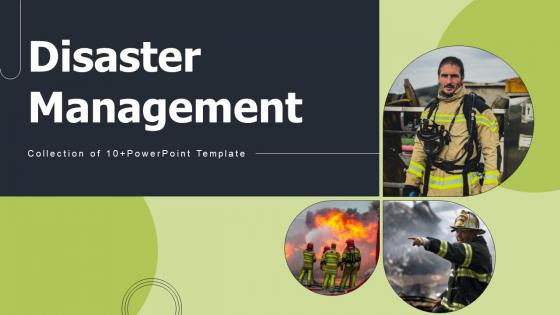
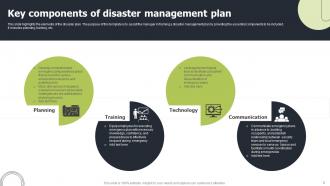
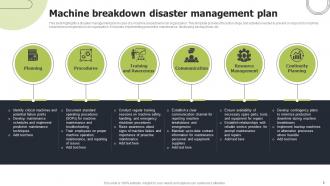
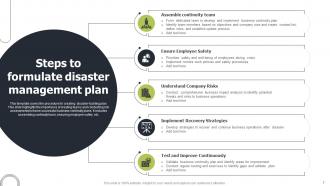
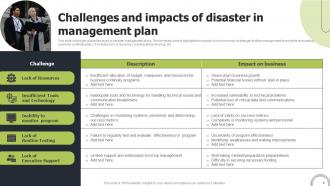
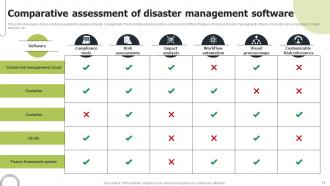
Disaster management in business refers to the coordinated approach of mitigating, preparing for, responding to, and recovering from disasters. It involves risk identification, planning, resource allocation, and implementation of measures to protect assets, maintain operations, and reduce risks. Its primary purpose is to enhance resilience, minimize losses, and ensure business continuity in the face of unforeseen events, safeguarding the well being of employees and stakeholders. This template includes a wide array of content for your presentation on disaster management. It covers the disaster management process, including emergency management plans for fire incidents and machine breakdowns, as well as a management plan for product failure. Additionally, it explores the benefits and challenges of implementing disaster management strategies. Lastly, the disaster management ppt templates provides information on various software solutions and a performance dashboard to enhance the efficiency and effectiveness of disaster management efforts.
People who downloaded this PowerPoint presentation also viewed the following :
Disaster Management Powerpoint Ppt Template Bundles with all 20 slides:
Use our Disaster Management Powerpoint Ppt Template Bundles to effectively help you save your valuable time. They are readymade to fit into any presentation structure.











FAQs for Disaster Management Powerpoint
So you'll want to cover five main things: risk assessment, prevention stuff, preparedness planning, response protocols, and recovery procedures. First figure out what disasters could actually happen where you are - floods, fires, earthquakes, whatever. Then work on prevention measures and train everyone on what to do when shit hits the fan. Communication planning is huge too. Honestly, most places totally bomb the recovery phase, so don't skip that part. I'd start with a basic risk assessment and build from there based on what you're actually vulnerable to.
So basically, tech speeds everything up by automating the boring stuff and getting everyone on the same page. AI monitors earthquakes, weather, even social media posts - which is kinda creepy but super useful. GPS helps responders dodge traffic jams and blocked streets. Drones can scope out damage way faster than sending people on foot. When cell towers crash, special communication apps keep teams connected. But honestly? The best part is how agencies can finally coordinate through shared platforms instead of that nightmare phone tag situation during emergencies.
Honestly, your neighbors are everything when disaster strikes. They'll be there before any official help shows up - checking on elderly folks, sharing resources, knowing which roads flood first. Plus they're the ones rebuilding afterward, so you need them on board from day one. Get people involved early: train volunteers, set up communication networks, maybe organize some practice drills (sounds dorky but works). The communities that bounce back fastest? They already knew each other beforehand. Don't wait until everything's chaos to start building those connections.
Don't wait until disaster strikes to think about mental health stuff - weave it into your planning from day one. Train your response teams in psychological first aid. Connect with mental health pros NOW, before you actually need them. Communication plans should tackle anxiety and all the crazy rumors that spread during emergencies. The emotional side can honestly tank your whole recovery if you ignore it. Plan for immediate crisis counseling AND the long-term support people will need later. Oh, and map out what mental health resources your community already has - those relationships are gold when things go sideways.
Start by figuring out what disasters could actually hit your area - floods, earthquakes, fires, you know the drill. Map out what's vulnerable: people, buildings, infrastructure, supply chains. The tricky bit is putting numbers on how likely each scenario is and how bad it'd be. Historical data helps, plus get input from experts and locals. Don't ignore cascading effects either - disasters love triggering other disasters. Write everything down but keep updating it regularly since risks shift over time. Honestly, half these assessments just gather dust, so make sure yours stays relevant.
Dude, culture affects disaster response way more than people realize. Language barriers mess things up immediately - you can't warn people if they don't understand you. Religious beliefs and family structures? They totally change how folks react to evacuation orders. Some communities are all about group decisions while others leave it to individuals (which honestly makes my job way harder). Gender roles matter too - like who's allowed to make family decisions during emergencies. You absolutely have to work with local leaders first and learn their customs, or your whole plan just falls apart. Can't use a one-size-fits-all approach here.
So basically, early warning systems and teaching people what to do beforehand saves way more lives than scrambling after stuff hits. Have backup ways to communicate - Katrina showed us how fast your main systems go down. Honestly, your neighbors will probably help you more than FEMA will, so get involved in local prep groups. Practice those evacuation routes now, not when there's a hurricane breathing down your neck. Keep your emergency kit updated too. The whole point is testing everything while it's boring and normal, not during the actual disaster.
Go with the classic triage thing - life safety, then property, then everything else. Handle immediate threats to people first: search/rescue, medical stuff, getting folks out of dangerous spots. I know it sounds super obvious, but trust me, it's crazy how easy it is to get sidetracked by expensive equipment or whatever looks worst. After that, focus on stopping more damage to critical infrastructure and stuff you'll need for long-term recovery. Oh, and document your decisions as you make them - you'll have to explain yourself later anyway, plus it actually helps spot holes in your response plan.
So FEMA and those big government agencies handle the macro stuff - declaring emergencies, coordinating resources, all that bureaucratic coordination. Red Cross and other NGOs? They're the ones actually on the ground handing out food and setting up shelters. Honestly, NGOs are usually way faster at getting things done because they don't have as much red tape. But here's the thing - they need each other. Government provides the funding and big-picture logistics, while NGOs do the actual helping since they're already plugged into communities. If your org ever needs to plan for disasters, definitely reach out to both sides early. You'll want to know who handles what before everything hits the fan.
Social media's honestly your best bet for disaster comms these days. Set up verified accounts beforehand - don't wait until shit hits the fan. Twitter works great for quick alerts, Facebook's better for longer community posts. Instagram's surprisingly useful for damage photos too. People are glued to their phones way more than old school radio anyway. Monitor hashtags and location tags to see what's really happening, but double-check anything sketchy before you repost it. Oh, and use it both ways - push out updates AND gather intel from people in affected areas.
Honestly, it's mostly logistics hell. Language barriers mess everything up, countries have totally different response protocols, and agencies show up without coordinating first - classic disaster. Customs delays are the worst part though. Critical supplies sit at borders for days while people are literally dying, which makes me furious every time. Cultural differences don't help either since everyone handles disasters differently. My advice? Set up communication channels beforehand and pick lead coordinators early. Don't wait until everything's on fire to figure out who's in charge.
First thing - figure out what could actually mess up your business. Power goes out, supplier flakes, half your team gets sick, whatever. Make backup plans for each scenario. Most people way overcomplicate this stuff initially, but really you just need simple alternatives ready. Write down your important contacts, backup suppliers, how to work remotely, where your data's backed up. Run practice drills so everyone knows what they're doing when things go sideways. Oh and don't forget to update it every few months - there's nothing worse than a disaster plan that's totally outdated.
Tabletop exercises are perfect for this - walk through scenarios without total chaos. Get people doing community mapping sessions where they identify local hazards together. Drills build that muscle memory for when everything goes sideways. I've actually seen block parties turn into prep training, which is pretty smart if you ask me. Role-playing helps with decision-making under pressure. Keep it hands-on and relevant to whatever risks your area faces. Nobody wants another boring lecture. Start with neighbors who are already interested and let it grow naturally from there.
So basically you've gotta flip the script on disaster planning. Don't just look at what happened before - plan for what's coming. Climate change means everything's getting more intense, right? Storms hit harder, droughts last longer, seasons get weird. Update your risk assessments to include future climate scenarios first. Then adjust your infrastructure, evacuation routes, stockpiles - all that stuff. Honestly, it's like disaster prep but assuming everything will be worse than usual. The trick is building flexibility into your plans so they'll work for tomorrow's crazy weather, not just yesterday's patterns.
Honestly, the whole thing gets messy fast - you've got equity issues where aid needs to reach the most vulnerable people, not just whoever's easiest to find. Consent becomes super complicated when people are desperate, you know? Power dynamics are all screwed up. Cultural stuff is huge too - can't just bulldoze in with your own values even if you think you're right. Oh, and don't forget privacy when you're collecting data for distributions. Real talk though: actually ask communities what they want instead of assuming. Check in regularly. Their voices matter more than your best guesses about their needs.
-
These stunning templates can help you create a presentation like a pro.
-
Loved the fact that SlideTeam provides clean, high-definition, and professional PowerPoint products.