


Disaster Recovery Management Powerpoint Presentation Slides





Try Before you Buy Download Free Sample Product
 Impress Your
 Audience
 100%
100% Editable
 Save Hours
 of Time


Disaster Recovery Management PowerPoint Presentation Slides gives you an impressive layout to formulate and explain your organization’s response plan to emergencies. Use this crisis management PPT theme to illustrate your disaster management plan in terms of mitigation, response, and long-term measures. With the help of our disaster control PowerPoint slideshow’s neat tabular format, it becomes fairly easy to showcase maintenance review. Through this emergency response PPT template, you can elucidate the structure for the proper governance of disaster response. Emergency management PowerPoint presentation helps you demonstrate prevention and mitigation measures like hazard identification, risk assessment, and financial impact analysis. This risk management PPT slides deck also helps you depict preparedness by elaborating on the business continuity plan. Further, showcase immediate steps to take in an emergency, response procedure, and staff communication process using a disaster response PowerPoint theme. So, gain access to impact data visualization tools and informative content by downloading threat management PPT slideshow.
People who downloaded this PowerPoint presentation also viewed the following :
Content of this Powerpoint Presentation
Slide 1: This slide introduces Disaster Recovery Management. State Your Company name and begin.
Slide 2: This slide displays Content.
Slide 3: This slide displays Introduction.
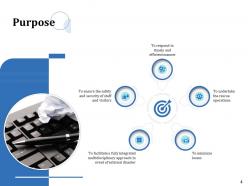
Slide 4: This slide explains the Purpose.
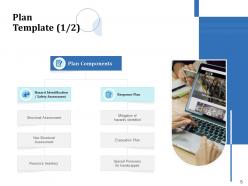
Slide 5: This slide showcases Hazard Identification / Safety Assessment.
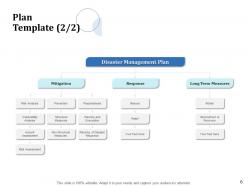
Slide 6: This slide depicts Disaster Management Plan.
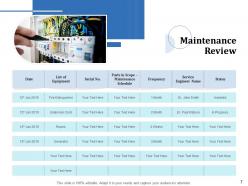
Slide 7: This slide showcases Maintenance Review.
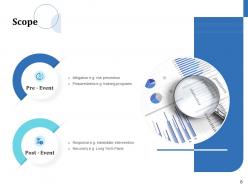
Slide 8: This slide represents Scope.
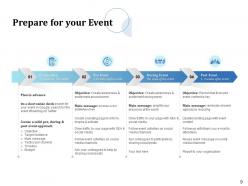
Slide 9: This slide allows to Create a solid pre, during & post event approach.
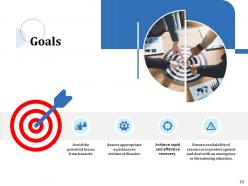
Slide 10: This slide depicts the Goals.
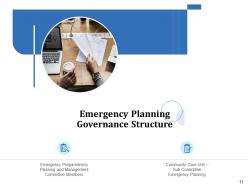
Slide 11: This slide shows Emergency Planning Governance Structure.
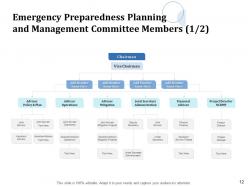
Slide 12: This slide depicts Emergency Preparedness Planning and Management Committee Members.
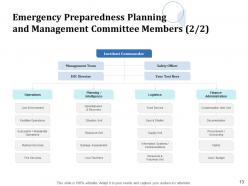
Slide 13: This slide showcases Emergency Preparedness Planning and Management Committee Members.
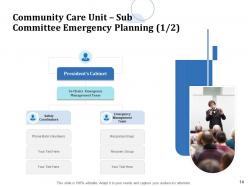
Slide 14: This slide depicts Community Care Unit – Sub Committee Emergency Planning.
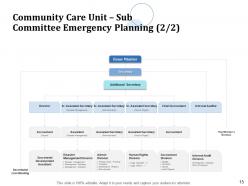
Slide 15: This slide shows Community Care Unit – Sub Committee Emergency Planning.
Slide 16: This slide showcases Client Safety Guide.
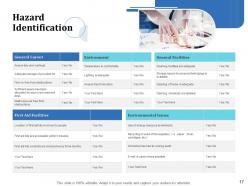
Slide 17: This slide displays Hazard Identification.
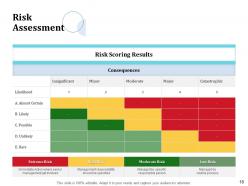
Slide 18: This slide shows Risk Assessment.
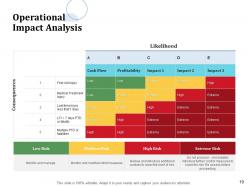
Slide 19: This slide represents Operational Impact Analysis.
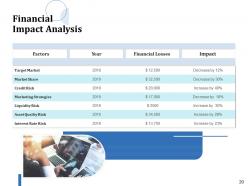
Slide 20: This slide highlights Financial Impact Analysis.
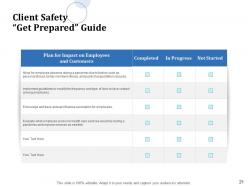
Slide 21: This slide allows to create Plan for Impact on Employees and Customers.
Slide 22: This slide displays Business Continuity Planning.
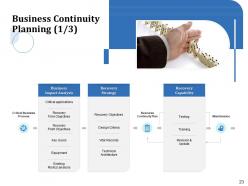
Slide 23: This slide highlights Business Continuity Planning.
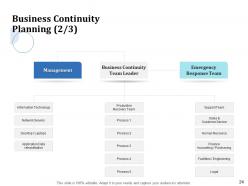
Slide 24: This slide showcases Business Continuity Planning Team.
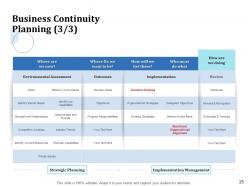
Slide 25: This slide shows Business Continuity Planning.
Slide 26: This slide showcases Immediate steps to take in an Emergency.
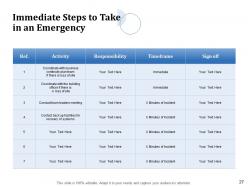
Slide 27: This slide showcases Immediate steps to take in an Emergency.
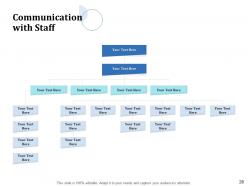
Slide 28: This slide presents Communication with Staff
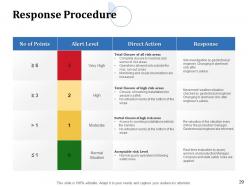
Slide 29: This slide displays Response Procedure
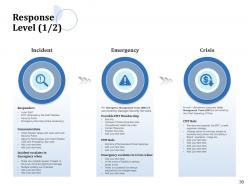
Slide 30: This slide highlights Response Level. Initiates action to minimize impact on business and protect the University’s Brand, reputation, image etc.
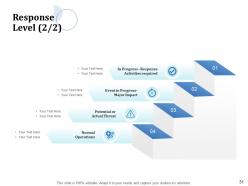
Slide 31: This slide depicts Response Level.
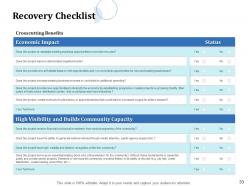
Slide 32: This slide displays Recovery Checklist.
Slide 33: This slide shows Recovery Checklist.
Slide 34: This slide displays KPI & Dashboards.
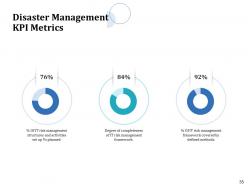
Slide 35: This slide shows Disaster Management KPI Metrics.
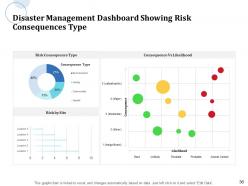
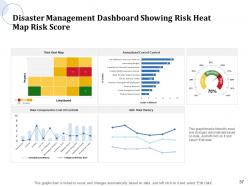
Slide 36: This slide shows Disaster Management Dashboard showing Risk Consequences Type.
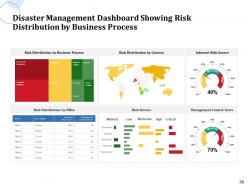
Slide 37: This slide displays Disaster Management Dashboard showing Risk Distribution by Business Process.
Slide 38: This slide highlights Disaster Management Dashboard showing Risk Distribution by Business Process.
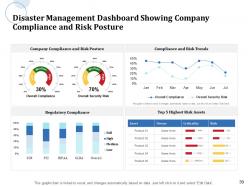
Slide 39: This slide shows Disaster Management Dashboard showing Company Compliance and Risk Posture.
Slide 40: This is Disaster Management Recovery Management Icons Slide.
Slide 41: This slide reminds of Coffee Break.
Slide 42: This slide displays Graphs and Charts.
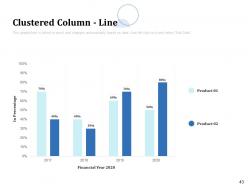
Slide 43: This slide displays Clustered Column chart with product comparison.
Slide 44: This slide shows Clustered Bar chart with product comparisons.
Slide 45: This slide is titled as Additional Slides for moving forward.
Slide 46: This slide displays Our Mission, Vision and Goal.
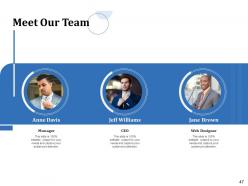
Slide 47: This is Our Team slide with Names and Designations.
Slide 48: This is About Us slide to showcase Company specifications.
Slide 49: This slide displays venn.
Slide 50: This is Thank You slide with Address, Contact number, Email address.
Disaster Recovery Management Powerpoint Presentation Slides with all 50 slides:
Use our Disaster Recovery Management Powerpoint Presentation Slides to effectively help you save your valuable time. They are readymade to fit into any presentation structure.






FAQs for Disaster Recovery Management
So you need to cover the basics: risk assessment, backups, recovery steps, and communication plans. Start with your most critical system - don't try to tackle everything at once, you'll go crazy. Document exactly how to recover each piece, step by step. The people part is honestly just as important as the tech stuff. Everyone needs to know their role and how to contact each other when things go sideways. Communication templates save your butt during real incidents. Oh, and definitely test your plans regularly because what sounds perfect on paper usually has weird gaps when you actually try it.
Start by figuring out what could actually mess up your day-to-day operations. Check your local risks first - floods, power outages, earthquakes, whatever applies to your area. Then think bigger: cyberattacks, supply chain issues, losing key people. Honestly, that last one happens way more than people expect. Walk around and document everything you depend on, especially your IT stuff and any sketchy old equipment that somehow still runs everything. Rank everything by how likely it is vs how badly it'd hurt. Don't sugarcoat your weak spots.
Dude, communication can totally make or break your disaster recovery. I've watched companies get the tech stuff perfect but then everything goes to hell because nobody knows what's going on. Your teams need clear ways to talk to each other, plus you've got to keep everyone else in the loop about what's happening. Set up your main communication channels AND backups before anything bad happens - don't wait. Pick specific people to handle messaging too. Oh, and definitely test all this during your DR drills because that's when you'll catch the gaps.
Dude, you've gotta bake data integrity checks right into your DR workflow from day one. Run checksums and hash validations throughout the whole recovery process to catch corruption. Testing backups regularly is huge - seriously, I've watched so many companies find out their backups were completely worthless right when disaster strikes. That's some real nightmare stuff right there. Set up automated verification tools to compare your restored data against known good copies. Always restore to a separate environment first though. Make integrity checks mandatory, not something you tack on later, and document everything you validate.
Honestly, you can't mess around with manual backups - they always fail when you need them most. Get automated backup systems running 24/7. Monitoring alerts are huge too, since you want to know the second something breaks. Cloud storage keeps your data safe offsite, which saved my butt once during a server meltdown. Mass notification systems help coordinate everyone during chaos. Oh, and document everything as you go - recovery steps, what worked, what didn't. I'd start by seeing what gaps you have now and tackle the scariest ones first.
Test it twice a year minimum, but quarterly's way better if you can manage it. Most places I've seen treat DR testing like a root canal though - always putting it off! Update your plan right after any big system changes, new apps, or when key people leave. Don't wait around. The worst thing is scrambling when audit season hits and realizing your plan's totally outdated. Honestly, just put the dates on your calendar now. Make it routine instead of this dreaded thing hanging over everyone's head.
Focus on role-specific training first - people just need to know their part, not the whole playbook. Those tabletop exercises are actually pretty useful, even if they feel weird at first. Keep your procedures dead simple because nobody remembers complicated stuff when chaos hits. Oh, and definitely test your communication systems during drills - learned that one the hard way. You'll want to do refreshers every few months. Repetition is everything. When adrenaline kicks in, you want this stuff to be muscle memory, not something people have to think about.
Yeah, so regulations basically make DR planning mandatory now - no more winging it. HIPAA, SOX, all those fun acronyms have specific recovery timeframes you've got to hit. The rules themselves can be pretty vague honestly, but auditors still want detailed plans and proof you can actually recover on time. Testing has to be regular too, which is honestly such a pain but whatever. You'll need to check what applies to your industry first, then see where your current setup falls short. Better to fix those gaps now than scramble before an audit hits.
Honestly, distance is your biggest thing to figure out first. Far enough that one disaster won't wreck both sites, but not so far that your data transfer speeds suck or it takes forever to get staff there. Budget's gonna dictate a lot though - hot sites recover fastest but they're pricey as hell. Check what natural disasters hit that area historically. Network quality matters too, obviously. Oh and make sure you can actually get the space and power you need there. I'd start with your RTO requirements and work backwards from there to see what makes sense.
Start with a real risk assessment - figure out what systems you absolutely can't live without versus stuff that's just nice to have. Honestly, most companies waste money trying to protect everything at the same level, which is dumb. Put your expensive, fast recovery options on the mission-critical stuff only. Everything else gets cheaper backup methods. Cloud's your friend here since you're not stuck buying hardware that just sits around doing nothing. Map out what can't be down for more than a few hours versus what you could survive losing for days. That'll tell you exactly where to spend your money.
Honestly, the biggest thing is testing your backups - can't tell you how many places thought they were covered until they actually needed them and found out they were useless. Make sure someone's clearly in charge when things go sideways, because panic makes everyone stupid. Oh, and don't put everything in one location - I learned that one the hard way. You really need to run actual drills, not just talk through what you'd do. Like, block out time next quarter and pretend it's really happening. Trust me, there's always some random thing you didn't think of.
Honestly, cloud DR is a game changer. You don't need those crazy expensive backup data centers anymore - just sync everything to AWS or Azure for way less money. Only pay when you're actually testing or dealing with a real disaster, which is pretty sweet. The cloud providers basically do all the maintenance work for you too. I'd start with your most important systems first and actually test those backups regularly. Can't tell you how many companies think their recovery times are realistic until they actually try it. Trust me on the testing part - learned that one the hard way.
So on-premises DR basically means you're running your own backup site - more expensive upfront but you control everything. Cloud DR uses AWS, Azure, whatever - cheaper to start and way faster to set up. Downside is you're handing over your critical stuff to someone else, though honestly their security is probably better than ours anyway. Plus cloud scales without the headache. Really depends on your budget and how much you want to babysit the whole thing. Also compliance - some industries get weird about cloud storage. That'll tell you which way to go.
Look, you've gotta build cybersecurity into your DR plan from day one. Air-gapped backups are clutch here - ransomware will absolutely hunt down anything connected. I'd run your incident response drills alongside DR testing since most disasters have some cyber angle these days anyway. Set up secure comms for your team and create totally separate recovery environments. Honestly, just assume your main systems are compromised and work backwards from there. You'll want everything encrypted and isolated so you can restore clean operations without second-guessing whether you're bringing the problem back with you.
Don't treat BC and DR like separate things - biggest mistake I see companies make. Get both teams talking from day one and using the same risk assessments. Your recovery times need to match up, otherwise you're just creating chaos. Run joint exercises too, not separate ones. What really works is building one master playbook that covers business ops AND the tech recovery stuff. That way when things go sideways (and they will), everyone's on the same page instead of scrambling with different procedures. Trust me, I've watched too many orgs where these teams barely know each other exist.
-
Thanks for all your great templates they have saved me lots of time and accelerate my presentations. Great product, keep them up!
-
Great product with effective design. Helped a lot in our corporate presentations. Easy to edit and stunning visuals.
-
Good research work and creative work done on every template.
-
Unique design & color.