


Driving factors resulting in execution objectives of the company for a merger





Try Before you Buy Download Free Sample Product
 Impress Your
 Audience
 100%
100% Editable
 Save Hours
 of Time


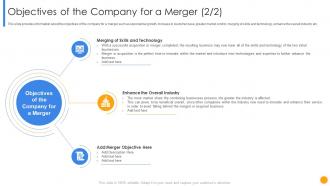
This slide provides information about the objectives of the company for a merger such as exponential growth, increase in customer base, greater market control, merging of skills and technology, enhance the overall industry etc.
People who downloaded this PowerPoint presentation also viewed the following :
Driving factors resulting in execution objectives of the company for a merger with all 6 slides:
Use our Driving Factors Resulting In Execution Objectives Of The Company For A Merger to effectively help you save your valuable time. They are readymade to fit into any presentation structure.





FAQs for Driving factors resulting in execution objectives of the company
Okay so merger execution is basically about hitting those synergy targets you promised - cost cuts, revenue bumps, all that. Speed's crucial because uncertainty just destroys everything. You're trying to keep the lights on while rebuilding the whole house, which is honestly insane when you think about it. Don't lose your best people or customers in the chaos. Cultural stuff is where things usually blow up though - I've seen it happen so many times. Quick wins help build momentum early on. Clear communication timelines are your friend here.
Oh man, cultural fit is huge - honestly can't stress this enough. I've watched deals that seemed perfect on paper just completely implode because nobody bothered checking if the companies actually meshed. People start jumping ship, productivity tanks, everything takes forever. The smart move? Map out those cultural differences during due diligence, way before you sign anything. Figure out where things might get messy and build a real integration plan that doesn't steamroll either culture. It's like... you're creating something totally new while respecting what already works. Skip this step and you're basically gambling with millions.
Honestly, communication can totally make or break the whole thing. People get super anxious without updates - I've seen it tank productivity and make good employees bail. Your customers freak out too if they think service might get weird. The trick is getting ahead of it instead of just reacting when problems pop up. Regular check-ins with everyone involved keep people from working toward completely different goals, which happens more than you'd think. I'd rather overcommunicate and annoy people slightly than have them making up their own stories about what's happening.
Honestly, stakeholder stuff can totally make or break your merger. You've got to talk to employees, customers, suppliers - basically everyone who matters. Keep them in the loop or they'll freak out and start spreading rumors. People will literally quit if they feel left out, which screws up your whole timeline. But here's the thing - when stakeholders actually feel heard, they become your biggest supporters. I'd say map out who's important early on and figure out what each group is worried about. Address their concerns upfront before things get messy. Trust me, it's way easier than dealing with the fallout later.
Track the obvious money stuff first - cost savings, revenue bumps, ROI targets. But honestly? Most deals crash on the operational side. Watch your employee retention like a hawk, especially key people who can make or break everything. Customer churn matters too. Don't forget integration timelines and whether systems are actually talking to each other (IT migrations always take forever). Cultural surveys sound touchy-feely but they're worth doing. Set up monthly check-ins instead of waiting until year-end to discover you're screwed.
Look, your financial projections are basically your game plan for the whole merger. They'll show you exactly where the money's coming from - cost cuts, new revenue, whatever - and that tells you what to focus on first. Say your models predict 60% of the value comes from cutting duplicate roles? That's obviously going to be a huge priority. The numbers also help you figure out timing and which integration steps to tackle when. Honestly, I've seen too many deals fail because teams ignored their own projections. Use them to build your playbook and set milestones people can actually meet.
Honestly, most M&As crash because of people stuff, not spreadsheets. Communication totally falls apart - leadership can't agree on basics while employees freak out thinking they're getting fired. Cultural clashes are brutal too. Oh and timeline-wise? Double whatever you're thinking, seriously. I've seen so many deals where they rush integration and it's a disaster. Due diligence on tech compatibility gets half-assed, then you're stuck trying to merge systems that hate each other. Key talent? They're already updating their LinkedIn while you're celebrating the announcement. Talk constantly about what's happening, start planning the culture blend immediately, and pad every deadline. You can debug software later, but losing good people will wreck everything.
Dude, tech will save your sanity here. Get project management tools set up first - they'll coordinate all your workstreams without you losing your mind. Data rooms are clutch for sharing docs securely. I've watched mergers turn into absolute disasters when teams tried doing everything manually with spreadsheets everywhere. AI analytics can spot synergies way faster than the old-school methods too. Oh, and map out your current tech stack like yesterday - figure out what integration tools you'll need before you're drowning in chaos. Trust me, automate whatever you can.
Dude, regulatory stuff will totally mess with your timeline - I'm talking months or even years added on. Map out that approval process first, then work backwards from there. Don't make my mistake of planning everything else and trying to squeeze regs in later. You'll probably have to sell off parts of the business or accept weird restrictions that kill your original synergy plans. Communication gets tricky too since you can't always tell people what's actually happening. Regulators love dropping surprises right when you think you're done. Super annoying but just how it works.
Talk to people constantly - seriously, that's like 90% of it. Be super clear about where things are headed and how everyone fits in. Town halls work great, but don't skip the smaller stuff either. One-on-ones catch problems early. I've watched companies totally bomb this by disappearing for months (so dumb). Your managers need talking points since they're getting hammered with questions. Oh, and mix teams from both sides on projects - gets people working together instead of staying in their corners. People just want to know what's happening, you know?
Dude, you absolutely need those integration plans - they're what turn all those fancy merger promises into actual results. Think IT systems, HR stuff, keeping customers happy, the whole nine yards. Honestly, most companies just wing it and then act shocked when everything falls apart. Map out your milestones early so you know if you're hitting those cost savings or revenue targets. Here's the thing though - start building your team and timeline before you close the deal. Waiting until after is like cramming for a test you've known about for months.
So due diligence is basically your reality check before setting merger goals - shows you what you're actually buying vs. what the pitch deck promised. Skip it and you'll either aim way too high or completely miss obvious wins. It's like buying a car without popping the hood first (learned that one the hard way). The financial stuff, operations review, cultural fit - all that directly tells you whether to focus on cutting costs, boosting revenue, or just surviving the integration without everything falling apart. Oh and make sure your execution team sees the full DD report, not just the sanitized version executives usually get.
Honestly, the timing thing is what trips up most people. Pre-close, just hammer the regulatory stuff and due diligence - if those fall through, game over anyway. Once you close though, flip completely to culture integration and some quick wins so everyone sees progress. Save the heavy lifting like system mergers for later when you've got your footing. I learned this the hard way - trying to do it all at once just destroys your team. Make a simple priority chart for each phase and beat everyone over the head with it (kidding, but seriously communicate it constantly). Otherwise people get scattered and nothing important gets done.
Dude, competition totally changes the game when you're merging companies. You can't mess around with slow integration anymore - competitors will literally steal your customers while you're figuring things out. Speed becomes everything. Focus on grabbing market share fast, cutting costs quickly, and stopping client defection because your rivals are 100% going to try poaching during the mess. Honestly, the more competitive your industry is, the less time you have to be perfect about it. Revenue protection has to come first. I'd map out what competitors might pull during your integration and plan some defensive moves ahead of time.
Honestly, just look back at what actually happened vs what you planned for. Cultural stuff always takes way longer than anyone expects - learned that the hard way. Did your IT integration drag on forever? People quit unexpectedly? Build those lessons into your next timeline with actual buffer room. The trick is being real about where things went wrong before. I swear, most companies just repeat the same mistakes because they don't want to admit what didn't work. Design your whole approach around not hitting those same walls again.
-
Informative presentations that are easily editable.
-
Great experience, I would definitely use your services further.
-
Very well designed and informative templates.
-
Great quality product.
-
Great product with highly impressive and engaging designs.