


Electrical Newspaper Production Hanging Wooden Engineer Repairing




Try Before you Buy Download Free Sample Product
 Impress Your
 Audience
 100%
100% Editable
 Save Hours
 of Time


Our Electrical Newspaper Production Hanging Wooden Engineer Repairing are topically designed to provide an attractive backdrop to any subject. Use them to look like a presentation pro.
People who downloaded this PowerPoint presentation also viewed the following :
Electrical Newspaper Production Hanging Wooden Engineer Repairing with all 12 slides:
Use our Electrical Newspaper Production Hanging Wooden Engineer Repairing to effectively help you save your valuable time. They are readymade to fit into any presentation structure.

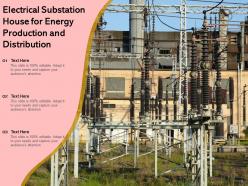

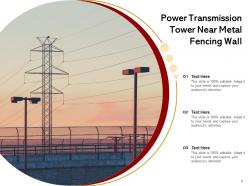

FAQs for Electrical Newspaper Production Hanging
Dude, energy storage is blowing up right now - grid-scale stuff especially. Smart grids are getting insane with AI handling all the battery optimization. Microgrids too, they're way more sophisticated than like two years ago. Solar inverters and wind controllers are where the real efficiency gains are happening if you ask me. Oh and bidirectional EV charging is huge - cars feeding power back to the grid and all that. Honestly? I'd start with energy storage control systems first. That's probably your best bet for staying relevant.
So smart grids give you real-time data on your whole electrical network - honestly the visibility alone is worth it. Problems get caught before they turn into major outages since the system automatically reroutes power around busted equipment. The efficiency boost is immediate too because it balances supply and demand on the fly, which cuts down on waste. Oh and the predictive maintenance thing is clutch - you can spot transformers or lines about to fail. I'd start with your most critical grid areas and roll out smart meters there first.
Dude, power electronics is literally everywhere once you start noticing it. Your EV charger? Solar panels? Industrial motors? All running on these circuits that switch semiconductors like MOSFETs thousands of times per second. It's wild how precise the voltage control gets while barely wasting any energy. Honestly the switching topology stuff can get pretty complex, but that's where I'd start if you're designing anything with power conversion. Oh and variable frequency drives - those things are workhorses in manufacturing. Pretty much the backbone of modern electrical systems.
Dude, AI is literally everywhere in EE now. Your design software probably has AI optimization built in already. Power grids use it for load balancing, and there's tons of predictive maintenance stuff preventing equipment failures. I swear the signal processing tools get smarter every month - it's actually kind of wild how fast this is moving. PCB routing, electromagnetic sims, all that stuff is getting AI upgrades. My advice? Just pick whatever you work with most and see what AI tools exist for it. Don't overthink it.
Honestly, start with figuring out peak demand - how many cars charging at once and what power levels. The grid connection stuff is where things get messy though, utilities can be a real pain to coordinate with. Physical placement matters way more than people realize too - you need good traffic flow, weather protection, accessibility. Load management systems are pretty much mandatory or you'll fry the grid. My buddy who does this for a living says to get utilities involved super early in planning. Trust me, you don't want those surprise infrastructure costs hitting later.
Dude, semiconductors are literally the backbone of everything we do in EE. Better chips mean faster processors, more efficient power systems, and way better sensors. GaN and SiC devices have been game-changers lately - honestly didn't think we'd see improvements this fast. Your design choices for power supplies, RF circuits, even IoT stuff all depend on what's available. I've been guilty of using the same old components for too long instead of checking out newer options. Short version: keep up with what's new or you'll be designing with yesterday's tech.
So the biggest pain is that grids weren't built for power flowing backwards - solar panels and wind farms push electricity upstream, which screws with voltage and makes protection systems trip at random times. Super annoying. Smart inverters help with voltage control, plus you need better forecasting and updated protection gear. Energy storage smooths out the renewable ups and downs too. Demand response programs are clutch for managing peak loads. Honestly? Start with upgrading your monitoring systems first - can't fix what you can't see properly.
So electrical engineers are pretty much what make IoT actually work. We design all the sensors and microcontrollers that turn regular stuff into "smart" devices. The tricky part is power management - these things need to run on tiny batteries for months without dying. Then you've got wireless protocols like WiFi and Bluetooth to figure out. Signal processing is huge too since there's tons of sensor data to handle. Honestly, the hardest part might be making everything small and cheap enough that companies can actually sell it. Oh, and don't even get me started on RF components - that's where things get really fun. If you're thinking about jumping in, definitely start with low-power design basics.
NFPA 70 (the National Electrical Code) is your main go-to - treat it like your bible honestly. OSHA 1910 covers safety stuff you can't skimp on, especially lockout/tagout procedures. Don't mess with those. IEEE standards handle power systems and equipment specs. You'll also need local building codes, UL listing requirements, and IEEE 519 for power quality issues. IEC standards come up if you're doing international work. My advice? Start with NEC and whatever codes your city uses, then branch out based on what you're actually working on. There's a ton of standards out there but those are the core ones.
Honestly, simulation software is a lifesaver - you can catch problems before wasting money on prototypes. SPICE and MATLAB are solid choices, though there's tons of specialized stuff out there too. Instead of building a circuit only to discover your power supply is garbage, you'll spot stability issues virtually first. Circuit analysis, thermal modeling, whatever you need. I probably should've started using simulators way earlier in my projects. Just pick something that matches what you're working on right now. Way better than the old "build it and pray" approach.
Honestly, renewables are a solid move once you get past that upfront cost hit. The tech has gotten crazy good lately - efficiency isn't even an issue anymore. Operating costs drop big time, and you're not as tied to the grid which is nice. Tax breaks right now are pretty decent too, so the math actually works out. You can start small and add more panels or whatever based on what you actually need. Oh and the cost predictability is huge - no more surprise rate hikes screwing you over. I'd probably get someone to look at your current setup first though, see where you'd get the most bang for your buck.
So electrical engineering is actually pretty cool for sustainability stuff. Engineers work on making solar panels and wind turbines way better than they used to be. Smart grids are where the real action is - they cut down on so much energy waste it's crazy. There's also the whole electric car charging infrastructure thing, plus better batteries for storing renewable energy. Motors and power systems are getting more efficient too. Oh and microgrids are becoming huge right now. If you're curious, IEEE has some solid papers on energy harvesting that aren't totally boring to read through.
Honestly, you gotta nail the basics first - Python, C++, whatever your field uses most. DSP and embedded systems are still huge. But dude, everything's changing so fast it's kinda crazy. Don't sleep on the soft skills either since you'll be stuck in meetings with software people all the time. Project management stuff actually matters more than I thought it would. My take? Pick something cool like IoT or AI hardware and go deep on that while keeping your fundamentals tight. Oh, and power electronics isn't going anywhere if you're into that.
So microgrids are your best friend here - they keep neighborhoods running when the main grid fails. Underground lines help too, especially in areas that get hammered by storms regularly. Smart grid tech will automatically find new routes for power when something gets knocked out, which is pretty cool honestly. You definitely want backup transmission paths so electricity has multiple ways to reach people. Weather monitoring gives you a heads up (though storms still do whatever they want). Oh and hardening substations with flood barriers is smart. I'd start by figuring out your weakest spots first.
Honestly, 5G/6G and fiber optic stuff is where everything's heading. Edge computing's getting integrated everywhere now too. Those massive MIMO antennas are completely changing how signals get processed - it's pretty crazy when you see it in action. Software-defined networking is probably the biggest shift though. Instead of needing all that dedicated hardware, you can just virtualize network functions. Quantum communication isn't just lab experiments anymore either, they're actually building real prototypes. Oh and photonic integrated circuits - way more efficient for data transmission. Definitely learn SDN protocols if you haven't already, you'll need that knowledge for basically any telecom job.
-
Topic best represented with attractive design.
-
Great designs, really helpful.
-
Illustrative design with editable content. Exceptional value for money. Highly pleased with the product.
-
Great designs, really helpful.
-
Professional and unique presentations.