

Emergency Management Instructions Professionals Process Strategies Planning




Try Before you Buy Download Free Sample Product
 Impress Your
 Audience
 100%
100% Editable
 Save Hours
 of Time


Our Emergency Management Instructions Professionals Process Strategies Planning are topically designed to provide an attractive backdrop to any subject. Use them to look like a presentation pro.
People who downloaded this PowerPoint presentation also viewed the following :
Emergency Management Instructions Professionals Process Strategies Planning with all 12 slides:
Use our Emergency Management Instructions Professionals Process Strategies Planning to effectively help you save your valuable time. They are readymade to fit into any presentation structure.
FAQs for Emergency Management Instructions Professionals
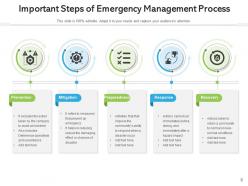
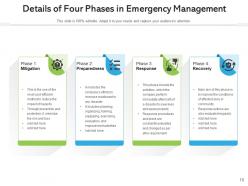
**Key components include risk assessment, communication protocols, resource allocation strategies, evacuation procedures, and recovery frameworks. These elements work together by identifying potential threats, establishing clear command structures, and coordinating response efforts across agencies, with many organizations finding that comprehensive planning significantly reduces response times, minimizes operational disruption, and ultimately delivers faster community recovery and enhanced organizational resilience.** [Word count: 60]
Technology enhances emergency response through real-time communication systems, GPS tracking, predictive analytics, automated alert systems, and drone surveillance capabilities. These tools streamline coordination between first responders, enable faster resource deployment, and improve situational awareness, with hospitals and fire departments finding that integrated platforms reduce response times while delivering better outcomes for affected communities.
Community engagement and public awareness serve as foundational pillars of effective disaster preparedness, encompassing education campaigns, evacuation planning, resource coordination, communication systems, and volunteer network development. These initiatives streamline emergency response by building local resilience, enhancing evacuation compliance, and fostering neighborhood support networks, with many municipalities finding that engaged communities recover faster and experience significantly lower casualty rates during disasters.
Organizations should prioritize risks by conducting comprehensive assessments evaluating likelihood, potential impact, business continuity implications, and regulatory requirements. Through systematic risk matrices and stakeholder input, companies across healthcare, manufacturing, and financial services can allocate resources strategically, focusing first on high-probability, high-impact scenarios while building scalable response frameworks that enhance overall organizational resilience.
Best practices for training staff in emergency response include regular drills and simulations, clear role assignments, communication protocols, evacuation procedures, and hands-on equipment training. These comprehensive programs enhance organizational resilience by building muscle memory, reducing response times, and improving coordination during actual emergencies, with many healthcare facilities and manufacturing plants finding that consistent training significantly minimizes operational disruptions.
Social media enables emergency communication by providing real-time updates, facilitating two-way dialogue between authorities and citizens, and enabling rapid information dissemination across multiple platforms simultaneously. Through platforms like Twitter and Facebook, emergency services deliver critical alerts, coordinate resource allocation, and monitor public sentiment, while citizens share localized conditions and safety status, ultimately creating comprehensive situational awareness that enhances response effectiveness.
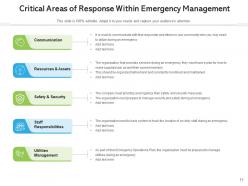
Emergency managers face challenges including communication breakdowns, conflicting protocols, resource allocation disputes, jurisdictional boundaries, and varying technological systems across agencies. These coordination complexities often result in delayed response times, duplicated efforts, and gaps in service delivery, with many emergency management organizations finding that standardized communication platforms and pre-established mutual aid agreements significantly streamline multi-agency operations.
Climate change significantly impacts emergency management by increasing disaster frequency, intensifying storm systems, creating unpredictable weather patterns, and expanding vulnerable geographic areas. Through enhanced risk assessment technologies and adaptive planning frameworks, emergency management agencies are developing more resilient response strategies, improved resource allocation systems, and community preparedness programs, with many municipalities finding that proactive climate adaptation ultimately delivers faster response times and better protection outcomes.
Ethical considerations in emergency management include equitable resource allocation, transparent communication, respect for human dignity, protection of vulnerable populations, and balancing individual rights with collective safety. During crises, emergency managers face complex decisions about prioritizing limited resources, maintaining public trust through honest information sharing, and ensuring fair treatment across diverse communities, ultimately delivering effective responses while preserving social cohesion and democratic values.
Businesses ensure operational continuity through comprehensive disaster recovery planning, redundant systems across multiple locations, robust data backup protocols, and cross-trained personnel for critical functions. These strategies enable organizations to maintain essential services during disruptions, with many financial institutions and healthcare providers finding that diversified infrastructure and clear communication channels minimize downtime while preserving customer relationships.
Emergency management program effectiveness can be measured through response time metrics, resource deployment efficiency, communication system performance, community preparedness levels, and post-incident recovery rates. These indicators help organizations assess their operational readiness, with many institutions finding that regular evaluation of evacuation times, stakeholder coordination, and business continuity measures ultimately delivers improved resilience and faster crisis resolution.
Lessons learned from past disasters can be integrated through comprehensive after-action reviews, updated response protocols, enhanced training programs, and improved resource allocation strategies. Emergency management agencies increasingly conduct detailed assessments following incidents, with many organizations finding that incorporating historical insights into planning documents, staff exercises, and community preparedness initiatives ultimately delivers more resilient response capabilities and better protection outcomes.
Mental health support in emergency response involves providing immediate psychological first aid, crisis counseling, trauma-informed care, community resilience programs, and long-term therapeutic services to affected populations. These comprehensive approaches help communities process trauma, rebuild emotional stability, and maintain social cohesion, with many hospitals, relief organizations, and local governments finding that integrated mental health services significantly enhance overall recovery outcomes and community preparedness.
Emerging emergency management technologies include AI-powered predictive analytics, IoT sensor networks, drone surveillance systems, mobile crisis communication platforms, and blockchain for secure data sharing. These technologies enhance disaster preparedness by enabling real-time monitoring, faster response coordination, and improved resource allocation, with many emergency services finding significantly reduced response times and better community protection outcomes.
Local governments can effectively allocate disaster preparedness resources through risk assessment mapping, multi-hazard planning, community vulnerability analysis, cross-departmental coordination, and strategic partnerships with regional agencies. This comprehensive approach enables municipalities to prioritize high-risk areas, streamline emergency response capabilities, and optimize budget allocation, ultimately delivering faster disaster response and enhanced community resilience.
-
It saves your time and decrease your efforts in half.
-
Use of different colors is good. It's simple and attractive.
-
Attractive design and informative presentation.
-
Easily Understandable slides.
-
Design layout is very impressive.
-
Great experience, I would definitely use your services further.
-
Awesome presentation, really professional and easy to edit.
-
Unique research projects to present in meeting.
-
The Designed Graphic are very professional and classic.
-
Innovative and attractive designs.
-
Page:
- You're currently reading page 1
- Page 2
-
