

Emergency Response Plan Powerpoint Ppt Template Bundles DTE




Try Before you Buy Download Free Sample Product
 Impress Your
 Audience
 100%
100% Editable
 Save Hours
 of Time


Introducing our comprehensive Emergency Response Plan PowerPoint template, a vital tool for organizations prioritizing safety and resilience. Crafted with precision, this presentation equips you with a robust Crisis Management Strategy, Emergency Preparedness Protocol, Incident Response Procedure, Contingency Planning, and Business Continuity Measures. Effectively communicate your emergency response framework, ensuring your team is well-prepared to navigate unforeseen challenges. Visually compelling graphics, editable content, and strategic layouts make this template an indispensable resource for training sessions, board presentations, and organizational readiness assessments. Strengthen your capacity to handle crises with this professional, user-friendly PowerPoint solution a crucial investment in safeguarding your business and community.
People who downloaded this PowerPoint presentation also viewed the following :
Emergency Response Plan Powerpoint Ppt Template Bundles DTE with all 33 slides:
Use our Emergency Response Plan Powerpoint Ppt Template Bundles DTE to effectively help you save your valuable time. They are readymade to fit into any presentation structure.
-
Emergency Response Plan
-
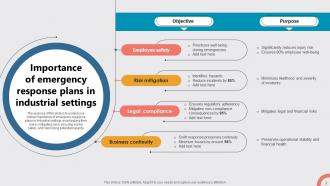
Importance of emergency response plans in industrial settings
-
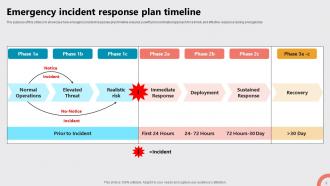
Emergency incident response plan timeline
-

Employee emergency response training plan
-
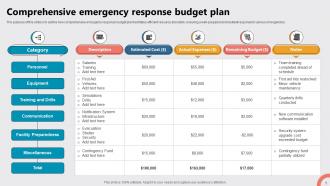
Comprehensive emergency response budget plan
-
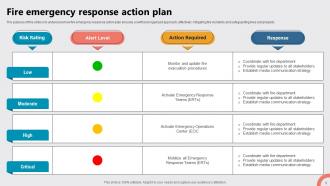
Fire emergency response action plan
-

Roles and responsibilities plan for emergency response team
-
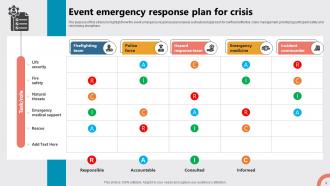
Event emergency response plan for crisis
-
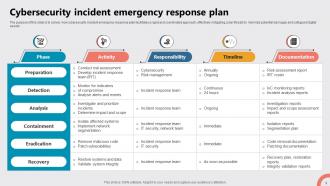
Cybersecurity incident emergency response plan
-
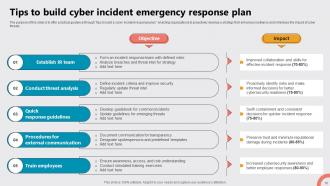
Tips to build cyber incident emergency response plan
-
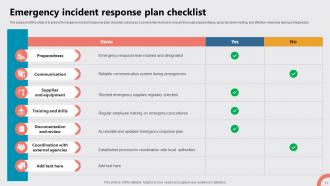
Emergency incident response plan checklist
-
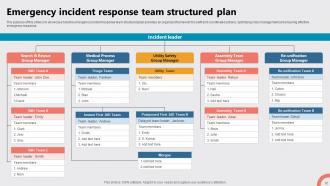
Emergency incident response team structured plan
-

Steps to build successful emergency response plan
-
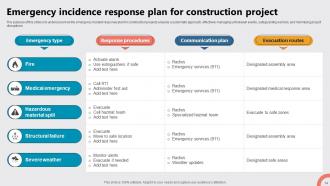
Emergency incidence response plan for construction project
-
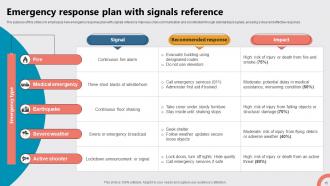
Emergency response plan with signals reference
-
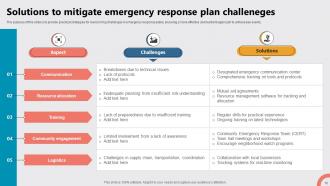
Solutions to mitigate emergency response plan challenges
-

Business impact by emergency response plan
-
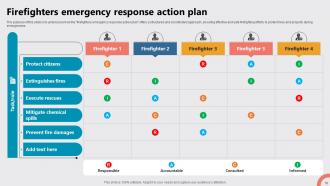
Firefighters emergency response action plan
-
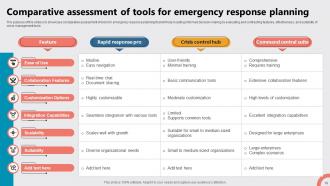
Comparative assessment of tools for emergency response planning
-

Key performance matrix for emergency response plan
-

Employee survey on emergency response plan
-
Emergency response plan icon for natural disasters
-
Emergency response plan icon for security threats
-

Emergency response plan icon for cybersecurity incidents
-

Thanks for watching
-

-

-

-

-

-

-

-

FAQs for Emergency Response Plan Powerpoint Ppt
**INPUT**: What are the key components that should be included in an effective emergency response plan? **OUTPUT**: Effective emergency response plans include risk assessment protocols, communication systems, evacuation procedures, resource allocation strategies, and recovery frameworks. These components work together by establishing clear command structures, enabling rapid notification processes, and streamlining coordination efforts, with many organizations finding that comprehensive planning ultimately delivers faster response times and minimizes operational disruptions. [Word count: 54 words]
Organizations assess risks through comprehensive threat analysis, vulnerability mapping, business impact assessments, stakeholder consultation, and regulatory compliance reviews. This multi-layered approach enables companies across healthcare, manufacturing, and financial services to identify critical dependencies, evaluate response capabilities, and prioritize resource allocation, ultimately delivering more resilient operations and faster recovery times during actual emergencies.
Communication serves as the central nervous system of emergency response plans, enabling rapid information flow, coordinated decision-making, clear role assignments, and real-time status updates across all response teams and stakeholders. Organizations optimize communication through redundant channels, automated alert systems, and pre-established protocols, with many hospitals and manufacturing facilities finding that integrated communication platforms significantly reduce response times and enhance overall emergency coordination effectiveness.
Training and drills enhance emergency response effectiveness by familiarizing personnel with procedures, identifying plan weaknesses, and building muscle memory for critical actions. Through regular simulations, organizations streamline response times, improve coordination between departments, and ensure staff confidence during actual emergencies, with many hospitals and manufacturing facilities finding that consistent practice ultimately delivers faster evacuation times and better crisis management.
Emergency response plans outline specific responsibilities including incident commanders coordinating overall response, safety officers monitoring hazard conditions, communication coordinators managing information flow, evacuation wardens guiding personnel to safety, and first aid responders providing medical assistance. These designated roles streamline crisis management by ensuring clear accountability, reducing response times, and minimizing confusion, with many organizations finding that structured responsibility assignments ultimately enhance safety outcomes and operational continuity.
Technology integration in emergency response plans enhances efficiency through real-time communication systems, GPS tracking, automated alert networks, predictive analytics, and mobile coordination platforms. These technologies streamline response times by enabling instant information sharing, optimizing resource deployment, and facilitating seamless coordination between agencies, with many emergency services finding that automated systems significantly reduce response times while improving situational awareness.
Common pitfalls include inadequate staff training, unclear communication protocols, insufficient resource allocation, lack of regular testing, and poor coordination between departments. These challenges often result from rushed implementation or failure to customize plans for specific organizational needs, with many companies finding that comprehensive preparation and regular drills significantly enhance response effectiveness and minimize operational disruptions.
Emergency response plans should be reviewed annually at minimum, with updates triggered by organizational changes, new regulations, lessons from drills, or after actual incidents. Regular reviews ensure plans remain relevant to current operations, personnel, and potential threats, while incorporating evolving best practices and technologies, ultimately maintaining organizational resilience and regulatory compliance in an increasingly complex risk environment.
Creating a comprehensive emergency response plan requires involvement from internal stakeholders like senior leadership, department heads, safety officers, HR teams, and frontline employees, alongside external partners including local emergency services, regulatory agencies, and community organizations. This collaborative approach ensures plans address real operational challenges while meeting compliance requirements, with many organizations finding that diverse stakeholder input enhances response effectiveness and organizational resilience.
Emergency response plans differ across industries by addressing sector-specific risks, regulatory requirements, and operational complexities unique to each environment. Healthcare facilities prioritize patient safety and medical equipment continuity, educational institutions focus on student evacuation and communication with parents, while corporate environments emphasize business continuity and employee safety protocols, with many organizations finding that industry-tailored approaches deliver faster response times and more effective crisis management.
Best practices for documenting incidents include establishing real-time reporting protocols, creating standardized incident forms, maintaining detailed timeline logs, conducting post-incident debriefings, and developing centralized documentation systems. These approaches streamline analysis by capturing critical data, facilitating stakeholder communication, and enabling systematic reviews, with many organizations finding that structured documentation ultimately enhances future response effectiveness and organizational resilience.
Organizations ensure employee preparedness through comprehensive training programs, regular simulation drills, clear communication channels, accessible plan documentation, and ongoing awareness campaigns. These initiatives enhance workplace safety by reinforcing emergency procedures, building confidence in response protocols, and creating a culture of preparedness, with many companies finding that consistent training significantly reduces response times and improves overall safety outcomes.
Business continuity strategies include establishing remote work capabilities, diversifying supply chains, creating redundant communication systems, implementing data backup protocols, and developing cross-trained teams. These approaches enable organizations to maintain operations through disruptions by ensuring workforce flexibility, resource availability, and operational resilience, with many companies finding that strategic preparation ultimately delivers faster recovery times and competitive advantage.
Collaboration with local emergency services enhances emergency response plans by providing specialized expertise, coordinating resource allocation, and establishing clear communication protocols during critical incidents. Through partnerships with fire departments, police, and medical teams, organizations streamline response times, access professional training resources, and ensure seamless integration with community-wide emergency systems, ultimately delivering faster incident resolution and improved safety outcomes.
Emergency response plan effectiveness metrics include response time accuracy, resource deployment efficiency, communication system performance, casualty reduction rates, and recovery timeline adherence. These measurements enable organizations to assess operational readiness through simulation exercises, real incident analysis, and stakeholder feedback collection, with many institutions finding that regular metric evaluation significantly enhances preparedness capabilities and minimizes crisis impact.
-
Out of the box and creative design.
-
I’m not a design person, so I couldn’t make a presentation to save my life. Thankfully, they have all kinds of templates that I regularly use for my work.