


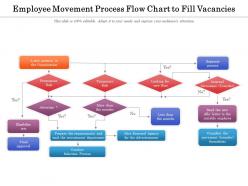
Employee movement process flow chart to fill vacancies





Try Before you Buy Download Free Sample Product
 Impress Your
 Audience
 100%
100% Editable
 Save Hours
 of Time


Our Employee Movement Process Flow Chart To Fill Vacancies are topically designed to provide an attractive backdrop to any subject. Use them to look like a presentation pro.
People who downloaded this PowerPoint presentation also viewed the following :
Employee movement process flow chart to fill vacancies with all 2 slides:
Use our Employee Movement Process Flow Chart To Fill Vacancies to effectively help you save your valuable time. They are readymade to fit into any presentation structure.

FAQs for Employee movement process flow chart
So basically you'll go through requisition approval first, then post the job, screen apps, do interviews, make your selection, and onboard. Pretty standard stuff. If someone's leaving that role, don't forget about their exit process too - that can get messy if you overlap timing wrong. Get all your approvals before posting anything though. Trust me, budget drama later is the worst. Your HR team will guide you through everything, but honestly? Just text Sarah in HR about timelines since she always knows how long each step actually takes these days.
Honestly, the biggest thing is just making sure nobody gets blindsided. Get everyone in a room first - the employee, both managers, maybe HR. Lay out the timeline and what's expected from each person. I'd definitely push for regular check-ins throughout the process because transfers can get messy fast. Have the employee document their current projects and key relationships before they move. That handover doc will save everyone's sanity later. The worst transfers I've seen happened when someone made surprise announcements or changed plans last minute. People hate that stuff. Keep it transparent and you'll avoid most of the drama.
Honestly, tech is a game-changer for employee transfers. HRIS systems can automatically update everything at once - manager changes, benefits, access permissions, payroll. No more running around to five different departments like a headless chicken. Digital forms mean paperwork won't disappear into someone's desk drawer (because that always happens with the important stuff). You'll actually see where things stand in real-time instead of wondering if your request fell into a black hole. Set up automated notifications too - people deserve to know what's going on with their own move, right?
Track time-to-fill for internal roles, satisfaction scores during moves, and retention rates afterward. This data shows exactly where people get stuck - you'd be shocked how many pointless approval steps exist! Survey feedback reveals what's driving employees crazy. Completion rates for each step help too. I always tell people to start with just 3-4 metrics rather than going overboard. Once you see the patterns, streamline those problem areas. The whole transfer process becomes way smoother when you actually know where the real bottlenecks are hiding.
Honestly, the main headaches are always housing delays, families freaking out, and budgets going crazy. Start planning like 8-12 weeks early - I can't stress that enough. Give them a solid relocation package that actually covers what families need, not just the bare minimum. Weekly check-ins are clutch, and definitely assign someone to be their main contact person. Oh, and connect them with local stuff at their new city right away so they're not totally lost. Budget expectations upfront save so much drama later. It really is like coordinating a mini military operation sometimes, but treating it seriously makes all the difference.
Oh man, this is such a pain point! Different cultures have totally different expectations around employee moves. Some places need months of relationship-building before any transfer happens. Others? They're cool with quick merit-based decisions. We learned this the hard way in Singapore - tried our usual US fast-track approach and it was a disaster. Communication styles mess things up too. Direct feedback works great in some regions but feels rude elsewhere. Plus people view relocation differently - opportunity vs major disruption. Figure out these quirks for each location early on. Trust me, it'll save you so much headache when planning timelines and managing changes.
Definitely do a 30-60-90 day plan covering role stuff, team intros, and system training. Pair them with someone who isn't their manager - trust me, they need someone for the random questions and real team gossip. Weekly check-ins are clutch those first weeks since newbies won't always say when they're lost. Oh, and make a checklist for the boring essentials: IT setup, certifications, meeting key stakeholders. Clear milestones help too so you both know if it's actually going well or if you need to pivot.
Start with performance evaluations - they're honestly your best friend for any employee moves. Look at the last couple cycles, but don't just check the ratings. The comments section is where the good stuff usually hides. High performers are obvious candidates for promotions, but you might also find people who'd crush it in totally different roles. Way better than flying blind with zero data to work with. I always dig into both the scores and written feedback before shifting anyone around - saves you from making dumb mistakes later.
Honestly, team changes are always a mixed bag. New people can totally energize things when your group's gotten too comfortable. But yeah, expect some chaos at first - communication gets weird, people don't know who's handling what anymore. Knowledge walks out the door with departing folks too, which is annoying. The interpersonal stuff takes time to settle. I'd say just be really clear about who's doing what now, introduce everyone properly, and don't stress if things feel awkward for a few weeks. Teams need time to find their rhythm again after shuffling around.
Talk to your team constantly during transitions - way more than feels normal. Share timelines, updates, what's happening next, even when you don't have everything figured out yet. People hate uncertainty more than actual bad news. Give them chances to ask questions without feeling judged. I've watched entire teams implode because managers disappeared for a couple weeks. Short sentences work. Regular check-ins are crucial, and you've gotta actually listen to what they're telling you. Make them feel included in the process instead of like victims of it. Trust me on this one.
Start with your manager - they'll know what's open internally and can help you figure out next steps. HR has career specialists too who understand the whole process way better than most people realize. Check the employee portal's career section for job posts and those skill assessment things. But honestly? Talk to someone already doing the job you want. They'll tell you what it's really like day-to-day, not just the job description fluff. Oh, and don't overthink it - just ask your manager for 15 minutes to chat about where you want to go.
First thing - dig into their employment contracts for any weird clauses about where they can work. Labor laws are gonna be different between locations (even in the same state sometimes, which is annoying). If it's international, visa stuff gets complicated real quick. Union agreements might throw a wrench in things too. Honestly, I'd get legal involved way before making any promises to employees about moving. Way easier to sort out potential issues upfront than deal with angry people later when their transfer falls through.
Honestly, mentorship programs are clutch for switching roles. Having someone in your corner makes the whole transition way less stressful. Your mentor can walk you through office politics, introduce you to the right people, and tell you how things really work - not just the official BS in training materials. Plus they'll talk you off the ledge when you're having one of those "did I make a huge mistake" moments (which happens to literally everyone, by the way). Just make sure you get paired with someone who actually knows your new area inside and out. Otherwise you're kinda stuck with someone giving generic advice that won't help much.
Look, from day one you need to bake diversity into your transition planning - can't be an afterthought. Make your selection criteria totally objective and recruit hard from underrepresented groups. I've watched too many "restructures" mysteriously hit diverse talent the hardest, and honestly it's infuriating. Give everyone equal shot at retraining, mentorship, internal moves. Different groups get impacted differently by stuff like remote work changes or office relocations too. Start with auditing your current process for blind spots. Then track diversity metrics as you go - catches problems before they snowball.
Honestly, feedback mechanisms are game-changers for internal moves. Instead of sitting in limbo wondering what's happening, you actually get regular updates on where your application stands. Way less stressful. The good systems also let you speak up if something's off - like your current manager being weird about it or if deadlines are unrealistic. I've seen how much smoother things go when there's actual communication happening. Managers improve too because they're hearing what works and what doesn't from people going through it. Oh, and definitely bug them for updates if your company isn't great about sharing info automatically.
-
Visually stunning presentation, love the content.
-
Easily Understandable slides.