

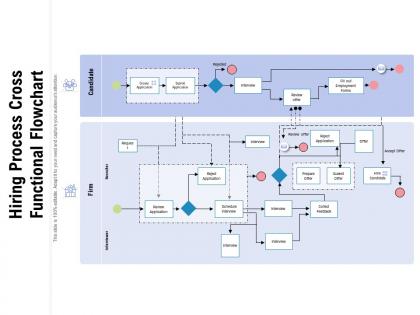
Hiring process cross functional flowchart




Try Before you Buy Download Free Sample Product
 Impress Your
 Audience
 100%
100% Editable
 Save Hours
 of Time


Our Hiring Process Cross Functional Flowchart are explicit and effective. They combine clarity and concise expression.
People who downloaded this PowerPoint presentation also viewed the following :
Hiring process cross functional flowchart with all 2 slides:
Give your audience a fulfilling experience. They will find our Hiring Process Cross Functional Flowchart elevating.
FAQs for Hiring process
So basically you've got job posting, resume screening, then phone/video rounds, followed by final interviews, reference checks, and offer talks. Don't wing the criteria - I learned that one the hard way! Get your manager aligned early because discovering they want something totally different at the end is a nightmare. Screening saves you tons of time later, so don't rush it. Oh, and make a scoring system from the start and actually use it. Otherwise you'll end up comparing apples to oranges when you're trying to decide between candidates.
Stop writing job posts like you're casting a net for everyone. Get specific about the actual work - what tools they'll use daily, problems they'll solve, real tasks not corporate buzzwords. Honestly, skip the "fast-paced environment" nonsense. Be clear about must-haves vs nice-to-haves because most posts sound like they want some mythical perfect person. Good candidates get scared off by that. Include your culture and growth stuff too since people want to know what they're walking into. Ask yourself: what would make someone actually excited about THIS role at YOUR company?
So employer branding is just how people see your company as a workplace. Good branding means the right candidates actually want to work for you instead of you chasing everyone down. It's like - when your reputation precedes you, recruiting gets way easier. I'd start by talking to your current team about what they'd honestly tell their friends about the job. Then make sure your job posts don't oversell or undersell what it's really like there. Honestly, most companies mess this up by making everything sound too corporate. Keep it real and you'll attract people who actually fit.
Dude, automated screening tools are seriously worth it - they'll save you so much time and keep things consistent. AI resume parsing pulls out qualified candidates fast based on whatever criteria you set. Plus chatbots can do the basic screening questions around the clock, which is clutch when you're buried in applications for popular roles. Video screening's pretty solid too for getting a feel before committing to full interviews. Just make sure you nail down your criteria first though - crappy inputs = crappy results, you know? Oh and don't go crazy trying to automate everything day one. Pick one tool and get comfortable with it.
So I always ask behavioral stuff - like how they'd handle disagreeing with a teammate or their preferred feedback style. Those questions tell you way more than you'd think. Having them grab coffee with potential colleagues is clutch too, honestly way better than formal interviews. Watch what they ask about since that shows their priorities. Multiple people should weigh in because everyone's gotta work with this person, not just you. Trust your gut but make sure you can actually explain why someone feels like a good fit.
Definitely test everything beforehand - trust me on this one. Send candidates super clear instructions about whatever platform you're using. Good lighting matters way more than you'd think, and keep your background simple. I once had a candidate's dog barking through half the interview... anyway, prep your questions ahead of time and build in extra buffer time since tech always acts up. Oh, and honestly? Structure it exactly like an in-person interview would go. Follow up within 24 hours with next steps so they're not left wondering.
Honestly, start by auditing where you're losing people in your current process - that'll show you the real problems. Post jobs beyond LinkedIn, hit up platforms that actually reach underrepresented folks. Your job descriptions matter too - make them inclusive from the get-go. Here's the thing though: structured interviews with the same questions for everyone are huge. Stops that whole "culture fit" nonsense (which usually just means hiring people who remind you of yourself). Oh, and train your hiring managers on unconscious bias. I know it sounds obvious but most companies totally skip this part. Diverse interview panels help too.
Honestly, start with time-to-fill and cost-per-hire since those are pretty straightforward to track. But here's the thing - quality of hire matters way more than speed. Check your new hire performance ratings and how long people actually stay. Candidate experience scores are huge too because people talk, especially in smaller industries. Also track if your hiring managers are happy with the process and whether your team's drowning in admin work. Pick maybe 3-4 metrics that actually move the needle for you instead of going overboard with data.
Honestly, start with standardized questions - same ones for everyone. Blind resume screening helps too if you can swing it. Don't let one person make all the calls; get multiple people weighing in because gut feelings are... not reliable. The "culture fit" thing is tricky - that's where bias loves to hide. Be super specific about what you actually mean by that. Track your hiring data by demographics too. I know it sounds boring, but you'll catch patterns you'd totally miss otherwise. Basically, strip out as much of the wishy-washy stuff as possible while still getting to know candidates properly.
Honestly, just talk to people more. Radio silence is the worst - even a quick "hey, still reviewing" beats nothing. Give them realistic timelines from day one and don't mess around with fake deadlines. One person should handle all communication so they're not getting passed around like a hot potato. During interviews, have actual conversations instead of firing off questions like you're reading a script. Oh, and definitely track how long you take to respond because it's probably way longer than you think. Personal touches matter too - nobody wants another "Dear Candidate" email.
Start with simple surveys after each interview - candidates usually like being asked about their experience, honestly. Schedule quick debrief calls with finalists too. Your recruiting team needs to loop back with hiring managers about what worked (or totally bombed) with each batch of candidates. Make it automatic instead of just remembering to do it sometimes. Set up those follow-up emails and actually read through responses with your team regularly. You'll start seeing patterns pretty quickly. Oh, and just ask people straight up what they thought - most are surprisingly honest about the whole thing.
Ugh, the worst mistakes are rushing everything and not knowing what you actually want. I did this once and wasted everyone's time - posted some vague job description then wondered why I got terrible candidates. Get multiple people involved in interviews to avoid your own blind spots. Always check references even if you're already mentally planning their first day! Structure your questions so you're comparing apples to apples between candidates. Oh, and here's the tricky part - you've got to move fast on good people but don't panic-hire just because you're desperate. That never ends well.
Honestly, don't wait until day one to start onboarding - begin during interviews. Let them meet potential teammates briefly and give them a real picture of what their first week looks like. My last company did this and candidates felt way more connected from the start. After they accept, pair them with a buddy and map out a 30-60-90 day plan. Check in regularly about how they're settling in. The whole point is making them feel like they belong before they even walk through the door. Oh, and definitely plan out those touchpoints from offer letter through month one.
Skills tests and performance reviews are your best bet - way better than just trusting resume fluff. Internal referrals are honestly where we've found our strongest people. Check their LinkedIn if they're active, or GitHub for tech folks. Any portfolio work or actual project results they can show you? That's what matters. Multiple data points beat single impressions every time. Oh, and don't sleep on feedback from people who've worked with them before - sometimes that's more telling than formal references.
Honestly, you've gotta completely flip your hiring game based on what's happening out there. Right now it's wild - everyone's throwing money at AI people while other jobs are disappearing. When candidates have all the power, you're stuck offering crazy salaries and rushing through interviews just to compete. But flip it around during high unemployment? You can actually be picky and take your sweet time. The whole thing is exhausting tbh. Just stay flexible and listen to what people actually want instead of assuming you know better.
No Reviews