


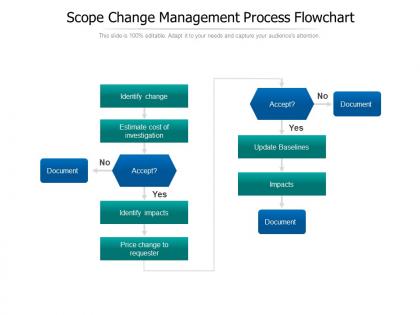
Scope change management process flowchart




Try Before you Buy Download Free Sample Product
 Impress Your
 Audience
 100%
100% Editable
 Save Hours
 of Time


Our Scope Change Management Process Flowchart allow active engagement. The audience will embrace your ideas.
People who downloaded this PowerPoint presentation also viewed the following :
Scope change management process flowchart with all 5 slides:
Our Scope Change Management Process Flowchart allow only the best. They are driven by a culture of excellence.




FAQs for Scope change
Look, scope change management basically saves your butt from total project chaos. Stakeholders will keep throwing "quick additions" at you otherwise - trust me on this one. You'll blow through deadlines and budgets fast without some kind of formal process to handle changes. Set up a change control board right away so every request gets properly reviewed before anyone starts working on it. Otherwise you're stuck with endless feature creep and surprise demands that completely derail everything. It keeps people accountable too, which honestly makes your life way easier.
Honestly, just be super upfront about why you need the change. People hate surprises way more than they hate extra work. When you explain the actual reason - like market stuff shifted or there's new requirements - they usually stop being defensive about it. I've watched entire teams go from pissed off to totally fine once they got the full picture. Budget and timeline impacts? Yeah, definitely mention those upfront too. Nobody wants to get hit with that later. Oh, and start these conversations early - don't wait until you've already decided everything and then tell people.
Oh man, you're gonna hit so many curveballs. Business requirements change constantly - that's just life. Then you've got compliance stuff popping up, stakeholders seeing your work and going "actually, can we..." Plus technical roadblocks you never saw coming. Budget cuts are brutal, though surprise funding isn't terrible obviously. Market shifts mess everything up too - competitors drop something and suddenly you're scrambling. Poor planning bites everyone eventually, don't feel bad about that one. Start a change log immediately and get approval processes locked down early. Trust me on this - future you will thank present you when chaos hits.
Make a formal scope change request covering what's changing, why, and how it'll affect your timeline/budget/resources. Honestly, I use this super basic template that makes people fill out all the details - you'd be amazed how many "critical" changes just vanish when folks actually have to write stuff down. Get written approval from stakeholders before doing anything. Update your project docs right after. The key is staying consistent with your process every single time, even when people push back. Oh, and keep a running log of everything because someone will definitely ask "wait, when did we agree to this?" later.
Oh man, stakeholder engagement is huge for managing scope changes. You really need them on your side when things start shifting around. Here's the thing - scope creep always happens, but engaged stakeholders actually help you figure out what's worth pursuing vs what's just shiny object syndrome. Plus they become your backup when you need to explain why Feature X is going to push the deadline back two weeks. I've seen too many PMs get stuck constantly defending their choices because they made decisions in a vacuum. Set up good communication early and make them part of evaluating changes, don't just drop decisions on them later.
Before you approve anything, break down the new work and estimate hours/costs - seriously, this is where people screw themselves over by rushing. Map out what gets delayed or needs rework because of dependencies. Calculate how it hits your critical path and resources. Don't forget the sneaky stuff like extra testing time. Document it all with before/after comparisons in a proper change request. Oh, and always add 15-20% buffer to your estimates. I learned this the hard way - scope changes never go as smoothly as you think they will.
Jira and Azure DevOps are solid choices for tracking scope changes - they've got built-in workflows and approval stuff. Monday.com works too. If you're already stuck with Microsoft everything, even a SharePoint list can work (though honestly, SharePoint makes me want to scream sometimes). The main thing is you need to see request status, link back to original requirements, and keep track of who signed off on what. Templates help a ton for submissions. But seriously, just pick whatever your team will actually bother using. Best tool in the world won't help if nobody touches it.
Okay so first things first - stop that scope creep right now and write down what's happening. Seriously, don't give in "just this once" because we both know how that story ends! Figure out exactly what extra work they're asking for. Then sit down with your stakeholders and spell out how this affects your timeline, budget, everything. Give them options: either approve a proper change request with more time and money, or we stick to what we originally agreed on. Be firm but don't be a jerk about it - honestly, I'd frame it like you're protecting the project from disaster rather than just saying no. And whatever you do, get any changes in writing first.
Document everything and get those sign-offs in writing - seriously, don't skip this step. I learned the hard way when a project went sideways because of a "handshake agreement" nobody remembered later. Write up exactly what's changing and why, plus how it affects your timeline and budget. Send it to ALL stakeholders (you'd be surprised who gets forgotten). Give people enough time to actually review it, then follow up for written approval. Email's fine, but honestly? A signed doc is way better. Keep copies of everything because you'll probably need them later when someone inevitably asks "wait, when did we agree to this?"
Dude, definitely dig into your old project data - it's honestly a game changer. Past projects will show you which changes pop up constantly and what usually triggers them. I swear certain client types are so predictable once you notice the patterns! Time and budget impacts become way clearer too. Start padding your initial estimates based on what you've learned, maybe like 15-20% buffer depending on the project type. Create some templates for the change requests you see over and over. Makes everything way less chaotic when you're not scrambling to figure out pricing every time.
So basically, scope change requests go through your official process - you document them, get approvals, update everything properly. Scope creep? That's when stuff just... happens. Like when someone drops "oh hey, can we also add this feature?" in a random meeting and suddenly you're building way more than planned. Honestly, stakeholders are terrible about this. Change requests are controlled and planned out. Creep will destroy your timeline and budget because nobody's tracking it. My advice? Always force those casual "quick asks" through your formal change process, even if people whine about it.
Honestly, you've gotta stop treating changes like emergencies. Build buffer time into everything - your timeline, budget, the works. When scope shifts happen (and they will), you won't be scrambling. The mindset thing is huge though. Get your team thinking of changes as opportunities instead of disasters. I'd start doing retrospectives where you actually celebrate how everyone rolled with recent curveballs. Also, people handle change way better when they understand why decisions get made - keeps them from feeling yanked around. Set up change processes that move fast but aren't sloppy. Oh, and next sprint planning? Add a "what could go sideways" discussion.
Track your approval times first - that's where you'll spot the biggest bottlenecks. Also watch how many changes get approved vs rejected, plus budget variance from those approved changes. The sneaky one? Scope creep that happens without formal requests (happens way more than people admit). Timeline accuracy for changes matters too, though I'd say approval time tells you the most about what's broken in your process. Start checking these monthly and patterns will jump out pretty quick. Oh, and definitely track how often people bypass the whole system entirely.
Honestly, training is a game-changer for scope changes. Gets everyone following the same playbook instead of winging it. Your team learns how to document requests properly and actually assess what changes mean. Stakeholders stop thinking they can just squeeze in "one tiny tweak" without consequences - which, let's be real, is never actually tiny. When people understand the framework, changes don't just randomly happen anymore. You'll want refresher sessions maybe every quarter though. People have goldfish memories with this stuff, even the smart ones.
Dude, ignoring scope changes is like asking for disaster. Your timeline gets completely wrecked and costs go through the roof. I've watched entire projects just fall apart because of this - it's honestly painful to see. Team morale tanks when they're constantly chasing new requirements. Stakeholders start losing trust too when nothing gets delivered on time. Here's what actually works: set up a proper change control process right from the start. Sounds boring, I know, but stick to it religiously. Even those "tiny" requests need to go through the formal process - that's usually where scope creep starts sneaking in.
No Reviews