

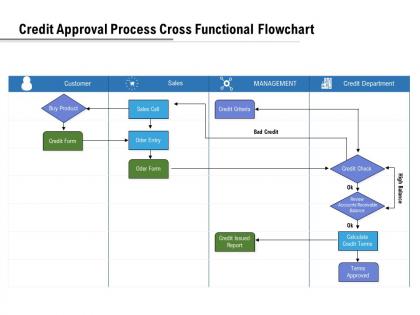
Credit approval process cross functional flowchart




Try Before you Buy Download Free Sample Product
 Impress Your
 Audience
 100%
100% Editable
 Save Hours
 of Time


Our Credit Approval Process Cross Functional Flowchart are explicit and effective. They combine clarity and concise expression.
People who downloaded this PowerPoint presentation also viewed the following :
Credit approval process cross functional flowchart with all 2 slides:
Give your audience a fulfilling experience. They will find our Credit Approval Process Cross Functional Flowchart elevating.
FAQs for Credit approval process
So they'll mainly look at your credit score, income, and how stable your job is. Debt-to-income ratio matters too - basically how much you owe vs what you make. Payment history is huge, plus how long you've had accounts open and what types of credit you use. Any recent bankruptcies or missed payments? Yeah, that's gonna hurt. Though honestly, a bigger down payment can sometimes help if other stuff isn't perfect. Definitely pull your credit report first so you're not surprised by anything weird on there. Better to fix issues before they see them.
Honestly, your credit score is like the gatekeeper for loans. Anything 700+ and you're golden - better rates, higher amounts, the works. Below that? Lenders get sketchy about it. Even 50 points can totally change what they offer you, which is kinda crazy when you think about it. It's not just about getting approved either - your score determines how much they'll let you borrow and what you'll end up paying. Before you apply for anything, definitely check where you stand. Sometimes there's quick stuff you can fix to boost it.
So basically lenders want proof you can actually pay them back - makes sense, right? They'll ask for pay stubs, tax returns, bank statements, all that fun stuff. Honestly it matters more than your credit score half the time, which surprised me when I learned that. You could have perfect credit but if you can't prove steady income, you're screwed. They want to see you're making at least 3-4 times your monthly debt payments. Get those documents together early though - and make sure they're recent or they'll just ask for newer ones anyway.
So basically they take all your monthly debt payments - credit cards, car loans, student loans, mortgage, even alimony if that applies - and divide by your gross income. Like if you're paying $2,000 in debts and making $6,000, that's 33%. Most want it under 36-43% depending on what you're applying for, though some banks are way more strict than others. They check this before approving anything, so honestly? Pay down what you can first if you're borderline. Makes the whole process smoother.
Hey! So you'll need their basic stuff first - full name, SSN, DOB, current address. Employment details too, plus income verification. Banking info's required, and they need to consent to the credit check (obviously). Make sure the application's actually complete - missing fields are such a pain and just drag everything out. References might be needed depending on your company's rules. Once you've got all that documentation verified, just send it over to underwriting. They handle the rest from there. Pretty straightforward process once you get the hang of it!
Loan approval standards are all over the place honestly. Mortgages are super strict about debt-to-income ratios and credit scores because we're talking massive amounts of money. Personal loans don't have collateral backing them up, so they want higher credit scores but are more flexible otherwise. Auto loans are easier since your car secures the loan - learned that one the hard way when I bought my first car. Business loans? Totally different game. They care way more about your company's cash flow and business credit than your personal stuff. You've gotta match your application to whatever that specific loan type prioritizes most.
Dude, credit scoring is getting crazy advanced now. Banks can look at stuff like your utility bills, rent payments, even your Netflix habits to figure out if you're good for the money. Real-time banking data makes everything super fast too. Some places are doing fingerprint verification which feels kinda sci-fi honestly. The best part? You'll get approved (or rejected, sorry) in minutes instead of waiting around for days. Way more data points than those old credit scores that basically just looked at your credit cards and mortgage history.
So basically lenders care about three main things: your credit score, steady income, and how much debt you already have. I'd start by paying down what you owe - kills two birds with one stone since it helps your score and lowers monthly payments. Get all your income paperwork together now because that step always takes longer than expected. Don't open any new credit cards or whatever before applying since those inquiries hurt your score. Oh, and definitely pull your credit report first to catch any random errors. Trust me on that last one.
Usually it's income that's too low, crappy credit, or your debt payments eat up too much of what you make each month. Sometimes you just don't have enough credit history - which is super annoying because how are you supposed to build it without getting approved first? Recent late payments will definitely hurt you. So will applying for a bunch of credit cards in a short time span. Honestly, lenders get nervous about job changes too. Before you apply anywhere, grab your credit report and see what's actually on there. Pay down some debt if you can. Having solid pay stubs ready helps a ton. Those basics cover most of the common rejection reasons.
So when you apply for credit, they pull your report and check a few main things. Payment history is huge - like, that's what they care about most. They also look at how much debt you're carrying versus your limits, plus how long you've had credit and what types. Your FICO score gives them a quick read on everything - 670+ is solid, though honestly the whole thing feels kinda random sometimes. Even if your score isn't amazing right now, just keep making payments on time. That'll help way more than you'd think.
So collateral is basically what you put up to secure a loan - like your house, car, or business equipment. If you can't pay back the money, the lender gets to take that stuff and sell it to cover what you owe them. Pretty brutal but that's how it works. Banks love collateral because it makes lending way less risky for them, which means you'll probably get approved easier and score better interest rates. Just make sure whatever you're putting up is worth at least as much as you're trying to borrow. Otherwise you're just wasting everyone's time.
So whenever new regulations drop, banks basically panic and either tighten or loosen their lending standards. Capital requirements change? Fair lending rules get updated? You'll see approval criteria shift almost overnight. The thing is, banks are terrified of getting slapped with fines (and honestly, who can blame them), so they usually overreact at first. Your approval odds might tank temporarily while everyone scrambles to figure out the new rules. I always tell people to stay on top of regulatory news - helps you predict when these shifts are coming so you're not caught off guard.
Your customer service team is literally the face of your whole credit approval process. They're dealing with all the questions about requirements, chasing down missing paperwork, and handling those "why haven't I heard back yet??" calls. Honestly, they can totally make or break someone's experience since they're usually the only real person applicants talk to in an otherwise robotic system. Train them on typical approval timelines and give them live access to application statuses - nothing's worse than getting a vague "we're still looking at it" when you're stressed about financing. Short answer: invest in good CS training.
Dude, alternative credit data is a game changer for approval rates. You're not just stuck looking at credit scores anymore - bank account history, utility bills, rent payments, even phone bills all show how people actually pay their stuff. Banking patterns especially tell you a ton about someone's habits. People with thin credit files who'd normally get rejected? Now you can actually see if they're good for it. Oh and obviously stay compliant with fair lending rules when you're building this into your models - that part's non-negotiable.
Okay so first thing - fix your credit and pull together like 2-3 years of financials. Business plan too, obviously. The paperwork is honestly such a drag but whatever, you gotta do it. Your debt-to-income needs to look decent, and be ready to explain exactly what you're using the money for. Oh and definitely shop around because lenders are all over the place with their requirements. Don't try to hide any sketchy stuff either - way better to be upfront than have them find it later. Just start this whole thing way earlier than you think you need to, trust me.
No Reviews