

Ensuring Business Success By Maintaining A Healthy Partner Relationship Complete Deck





Try Before you Buy Download Free Sample Product
 Impress Your
 Audience
 100%
100% Editable
 Save Hours
 of Time


Partner relationship maintaining PRM provides tremendous benefits to the organizations, such as business reputation, business expansion, etc. Check out our professionally designed Ensuring Business Success by Maintaining a Healthy Partner Relationship template that will assist the organizations in improving their business performance. This presentation begins with an overview section companies can use the section to highlight revenue generation details, sales performance, customer churn rate, etc. Slides such as the need for more robust partner maintenance, shareholders expectations, how we will meet them, and building new revenue streams will help the companies address the target audience about partner maintaining the relationship, shareholders expectations, and ways to meet them, etc. Companies can use sections to develop healthier relations with partners, namely partner selection segmentation and relationship maintenance, plans, roadmaps, and improving sales performance. Slides such as support structure, communication plan, and the checklist will assist the companies in maintaining effective communication, channel management, and identifying the right partner for their business. At last, the dashboard and scorecard section will help firms in measuring and maintaining partner performance, capabilities, sales performance, etc. Download it now.
People who downloaded this PowerPoint presentation also viewed the following :
Content of this Powerpoint Presentation
Slide 1: This slide introduces Ensuring Business Success by Maintaining a Healthy Partner Relationship. State Your Company Name and begin.
Slide 2: This is an Agenda slide. State your agendas here.
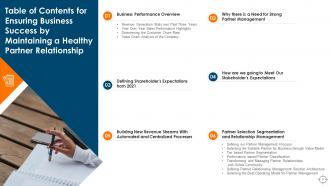
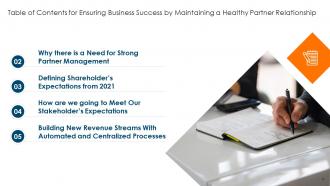
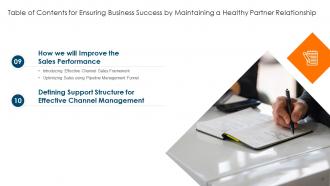
Slide 3: This slide presents Table of Content for the presentation.
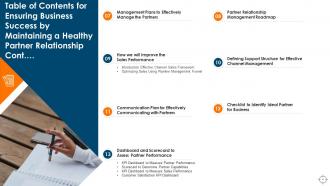
Slide 4: This is another slide continuing Table of Content for the presentation.
Slide 5: This slide shows title for topics that are to be covered next in the template.
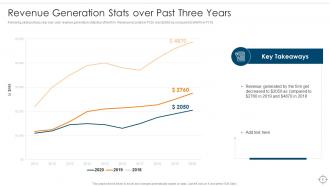
Slide 6: This slide presents Revenue Generation Stats over Past Three Years.
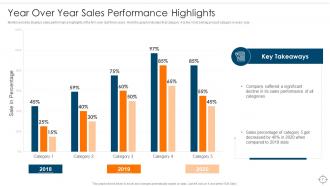
Slide 7: This slide displays Year Over Year Sales Performance Highlights.
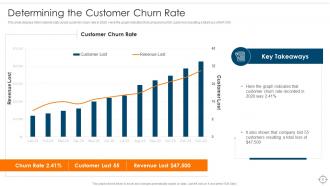
Slide 8: This slide represents stats about customer churn rate in 2020.
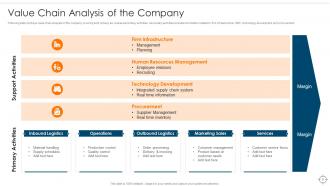
Slide 9: This slide portrays value chain analysis of the company covering both primary as well as secondary activities.
Slide 10: This slide shows title for topics that are to be covered next in the template.
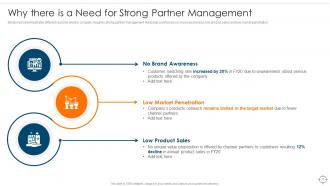
Slide 11: This slide presents Why there is a Need for Strong Partner Management.
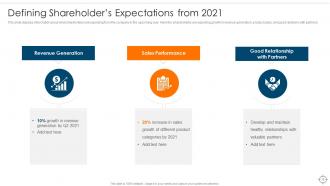
Slide 12: This slide displays information about what shareholders are expecting from the company in the upcoming year.
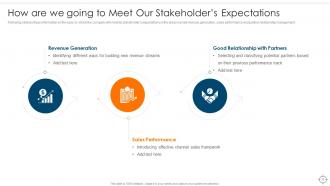
Slide 13: This slide represents How are we going to Meet Our Stakeholder’s Expectations.
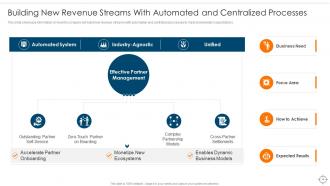
Slide 14: This slide showcases Building New Revenue Streams With Automated and Centralized Processes.
Slide 15: This slide shows title for topics that are to be covered next in the template.
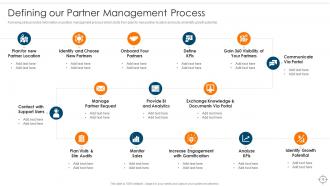
Slide 16: This slide presents Defining our Partner Management Process.
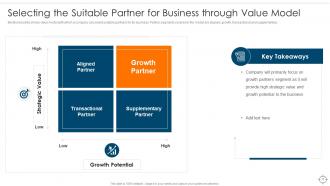
Slide 17: This slide displays Selecting the Suitable Partner for Business through Value Model.
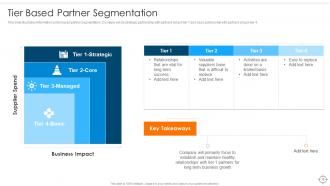
Slide 18: This slide illustrates information on tier based partner segmentation.
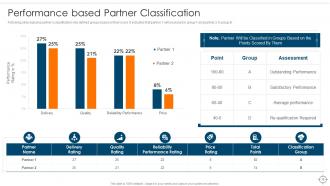
Slide 19: This slide represents partner’s classification into defined groups based on their score.
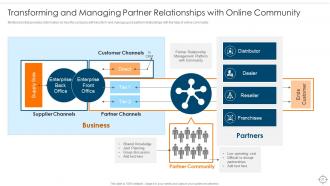
Slide 21: This slide showcases Transforming and Managing Partner Relationships with Online Community.
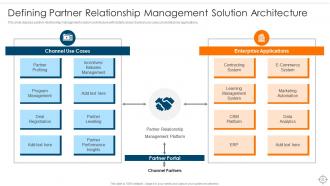
Slide 22: This slide shows Defining Partner Relationship Management Solution Architecture.
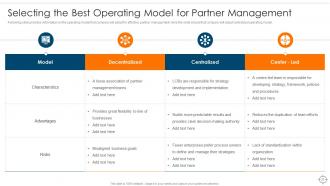
Slide 23: This slide presents Selecting the Best Operating Model for Partner Management.
Slide 24: This slide shows title for topics that are to be covered next in the template.
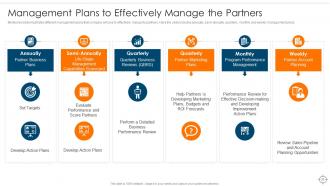
Slide 25: This slide displays Management Plans to Effectively Manage the Partners.
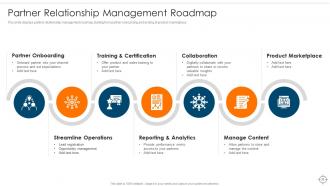
Slide 26: This slide represents partner relationship management roadmap starting from partner onboarding and ending at product marketplace.
Slide 27: This slide shows title for topics that are to be covered next in the template.
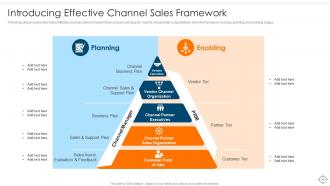
Slide 28: This slide presents information effective channel sales framework that company will adopt to meet its shareholder’s expectations.
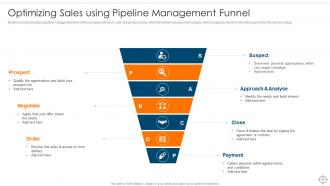
Slide 29: This slide displays Optimizing Sales using Pipeline Management Funnel.
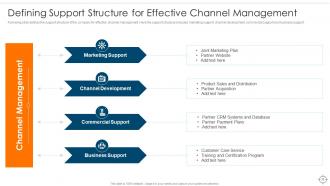
Slide 30: This slide represents Defining Support Structure for Effective Channel Management.
Slide 31: This slide shows title for topics that are to be covered next in the template.
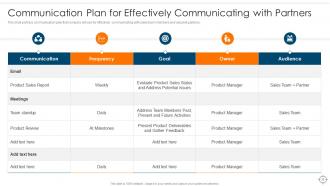
Slide 32: This slide showcases Communication Plan for Effectively Communicating with Partners.
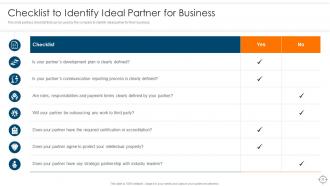
Slide 33: This slide presents Checklist to Identify Ideal Partner for Business.
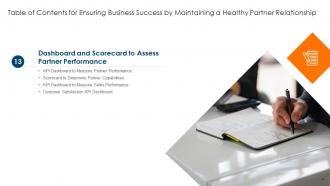
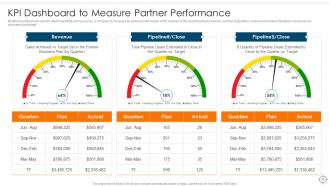
Slide 35: This slide displays Sales Achieved vs Target Set in the Partner Business Plan (by Quarter).
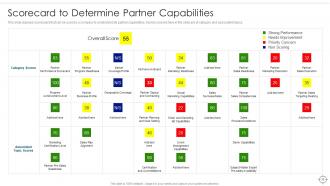
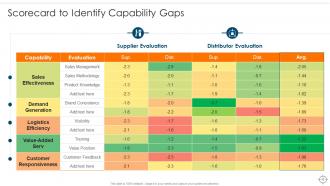
Slide 36: This slide represents scoreboard that can be used by a company to understand its partner capabilities.
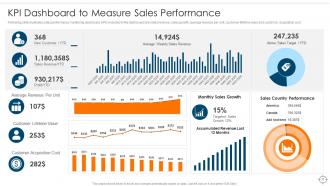
Slide 37: This slide showcases KPI Dashboard to Measure Sales Performance.
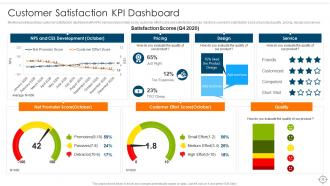
Slide 38: This slide presents customer satisfaction dashboard with KPIs namely net promoter score, customer effort score and satisfaction scores.
Slide 39: This slide is titled as Additional Slides for moving forward.
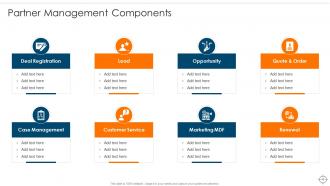
Slide 40: This slide presents Partner Management Components.
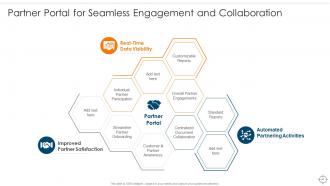
Slide 41: This slide displays Partner Portal for Seamless Engagement and Collaboration.
Slide 42: This slide represents Scorecard to Identify Capability Gaps.
Slide 43: This slide displays Icons for Ensuring Business Success by Maintaining a Healthy Partner Relationship.
Slide 44: This slide contains Puzzle with related icons and text.
Slide 45: This is a Timeline slide. Show data related to time intervals here.
Slide 46: This is Our Goal slide. State your firm's goals here.
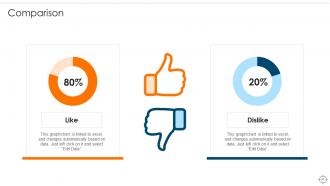
Slide 47: This is a Comparison slide to state comparison between commodities, entities etc.
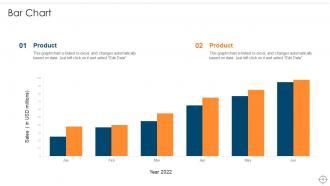
Slide 48: This slide presents Bar chart with two products comparison.
Slide 49: This slide shows Post It Notes. Post your important notes here.
Slide 50: This slide provides 30 60 90 Days Plan with text boxes.
Slide 51: This is a Thank You slide with address, contact numbers and email address.
Ensuring Business Success By Maintaining A Healthy Partner Relationship Complete Deck with all 56 slides:
Use our Ensuring Business Success By Maintaining A Healthy Partner Relationship Complete Deck to effectively help you save your valuable time. They are readymade to fit into any presentation structure.










FAQs for Ensuring Business Success By Maintaining A Healthy Partner
Start with partner onboarding and set up regular check-ins - sounds boring but trust me, it matters. You need joint business planning sessions and some way to track performance together. Oh, and don't forget clear escalation paths when things go sideways. Map out where you're currently touching base with partners first. That'll show you the gaps. Really though, the biggest mistake I see is companies just dumping this on someone who's already swamped. Get dedicated people for relationship management or it won't work.
Honestly, start with partner onboarding - digitize that first instead of trying to fix everything at once. A decent CRM built for partners beats the hell out of juggling spreadsheets and endless email threads. You can automate the boring stuff and actually see performance metrics in real-time. AI analytics will show you which partnerships are making money vs just keeping everyone "busy." Self-service portals are clutch too - partners can grab marketing materials and training docs without bugging you constantly. Real-time deal tracking and centralized communication make everything way smoother. Just pick one problem area and start there.
Partner-generated revenue is your main number - everything else flows from that. Also watch partner acquisition costs and how long it takes new partners to actually start producing. Deal registration rates matter too. Happy partners sell way more, so don't skip satisfaction scores. I'd throw in channel conflict tracking and joint marketing performance. Oh, and certification completion rates if you do that program. Here's the thing though - balance quantity stuff (number of active partners) with quality metrics like average deal size. Start with maybe 3-4 core ones instead of going crazy with dashboards right away. You can always add more later once you've got the foundation solid.
Dude, cultural stuff can totally torpedo partnerships if you're not careful. Different cultures have completely different ways of communicating - like what seems direct to you might feel super rude to them, while their roundabout style seems sketchy to you. Some cultures want to build relationships first before any business talk, others just jump right into negotiations. Time perception is wild too. I learned this the hard way once, actually. But seriously, spend time learning their cultural norms upfront. Adjust how you communicate with them. You'll avoid so many awkward situations later.
Honestly, good communication will save your ass every time. Regular check-ins are a must - don't just assume your partner knows what you're thinking because they definitely don't. I've watched so many partnerships blow up over stuff that could've been fixed with one honest conversation. Small frustrations turn into huge resentments if you let them sit there. Be upfront about problems early, celebrate the good stuff together, and actually schedule those partner meetings (then use them for real talk, not boring updates). Trust me on this one.
Honestly, you've gotta nail down exactly what you both want from day one and actually write it down. Do those joint planning sessions where you hash out revenue goals, expansion plans, whatever metrics matter to you guys. I've watched so many partnerships blow up because everyone just assumed they were aligned - spoiler alert, they weren't. Set up quarterly check-ins to see how things are tracking. Your partner's success should feed into yours and vice versa. Regular touchpoints keep everyone accountable. Trust me on this one.
Honestly, the biggest pain points are when expectations don't match up, communication sucks, and you can't see what's actually working. Your partners are dealing with tons of vendors - you're not their only priority, which is frustrating but makes sense. Without good tracking, you're basically flying blind on ROI. Regular check-ins help a ton, and getting a solid PRM system is worth the investment. Set clear goals together from day one. Oh, and this sounds obvious but treat them like real partners, not just another way to push your product. Makes a huge difference in how they'll prioritize you.
Honestly, you gotta nail the onboarding or you're screwed from the start. Give them a solid welcome packet with all your systems and contacts - most partnerships tank because people just throw new partners in without any guidance. Set up check-ins for the first 90 days and assign someone who actually knows your business (not just whoever's available). Day one, they need access to everything - tools, training docs, the works. Oh and be proactive about helping them out. Don't wait until they're already frustrated and ready to bail.
Honestly, catch stuff before it blows up - that's half the battle right there. Try creating space where people can actually say what's bugging them without everyone getting all prickly about it. I'd focus on how it's messing with work instead of making it personal, you know? Always bring solutions too, not just problems. Write down what you agree on because people have selective memory sometimes. Regular check-ins help catch the weird tension before it gets messy. Think of conflicts as fixing the partnership, not like everything's falling apart.
So basically, regular check-ins with partners are a game changer. You'll spot problems way before they blow up into bigger issues. Like, instead of finding out three months later that they're pissed about your slow email responses, you catch it early. Monthly calls work great - just ask direct questions about what's bugging them. Quick surveys help too, though honestly some people won't fill those out. The real trick is actually doing something when they complain, not just nodding along. It's way better than just sending updates and hoping everything's fine.
Okay so basically when you're partnering up, you're now sharing sensitive stuff with companies outside your control - which is kinda scary tbh. Get those data agreements locked down first: who sees what, how it's stored, what happens when things go wrong. The annoying reality? You're only as protected as whoever has the worst security on your team. Some partners are... let's just say their IT isn't great. Make sure your contracts include NDAs, data processing rules, and regular security check-ins right from the start. Don't wait until later to figure this out.
Think of rewards like relationship currency - they give partners a real reason to pick your program over everyone else's. Revenue bonuses work great. So do tier perks and exclusive resources. Partners will actually put in effort when there's something worthwhile in it for them. You want behaviors like new customer sign-ups or finishing training? Make those things rewarding. Honestly, I'd start by just asking your best partners what they'd want - they'll tell you exactly what moves the needle. Psychology isn't rocket science here.
So AI matching is getting crazy good at predicting which partnerships will actually make money. Partner portals don't suck anymore either - they've got personalized dashboards and onboarding that actually works. Real-time data integration is everywhere now because companies want to see partner performance across everything instantly. Also, "ecosystem orchestration" is the new buzzword (basically managing deals where multiple partners work together - sounds fancy but it's just coordination). Honestly? Start looking at platforms that pull data from everywhere and automate the boring stuff. Manual processes are dead in the water.
Look, your partners basically become part of your customer service squad. Train them right and keep communication flowing - customers won't even notice they're dealing with different companies. Happy partners actually care about helping your shared customers, which makes a huge difference honestly. Quick problem-solving happens when partners know your processes inside and out. Oh, and don't skip those regular check-ins with partners. Standardized onboarding is clutch too. Trust me, your customer satisfaction scores will thank you later. It's one of those things that seems obvious but so many companies mess it up.
So there's actually a bunch of good options for PRM training. LinkedIn Learning and Coursera have solid partner management courses your team can do whenever. ASAP (that's the Association of Strategic Alliance Professionals) does certifications and workshops - honestly their stuff is pretty decent. Oh, and Salesforce and HubSpot give away free PRM training since they want people actually using their platforms right. I'd probably start with some online courses for the basics, then maybe get a couple key people certified through ASAP for the deeper stuff. That combo usually works well.
-
The best part about SlideTeam is their meticulously prepared presentations (complete-decks and single-slides both), infused with high-quality graphics and easy to edit. All-in-all worthy products.
-
Huge collection of high-quality templates. Worth each penny.