

Equity secondaries pitch deck powerpoint presentation slides





Try Before you Buy Download Free Sample Product
 Impress Your
 Audience
 100%
100% Editable
 Save Hours
 of Time


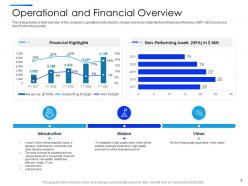
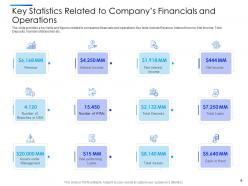
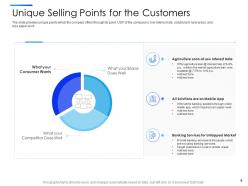
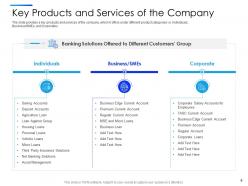
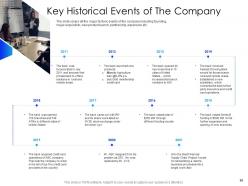
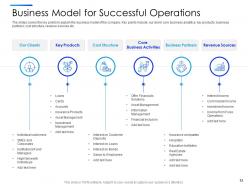
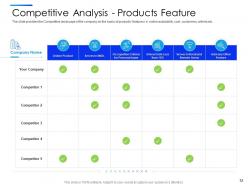
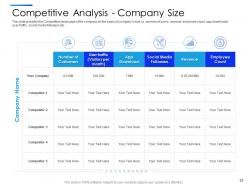
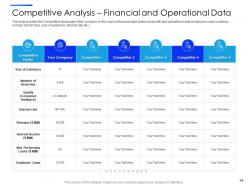
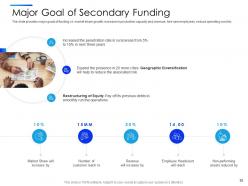
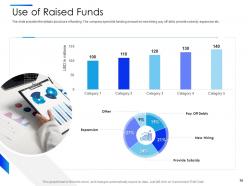
Introducing Equity Secondaries Pitch Deck PowerPoint Presentation Slides. Highlight the company’s various aspects, including an operational and financial overview, by using this hybrid financing pitch deck PPT complete deck. Explain the key issues that customers face with the products along with the solutions. The presentation also highlights the company’s significant achievements and the model for successful business operations. Highlight the company’s unique selling proposition for the customers and critical resources of the revenue generation by incorporating the easy-to-use PPT complete deck. Take the assistance of modern-designed PowerPoint templates to describe the market potential, target customers, and market strategies for growth. Showcase the competitive analysis by product feature, market size, and product rating using our PowerPoint themes design. Present the funding, valuation history of the company, and allocation of raised funds by employing our content-ready PPT slideshow Download this modern designed hybrid financing PPT slides to create a scholarly presentation.
People who downloaded this PowerPoint presentation also viewed the following :
Equity secondaries pitch deck powerpoint presentation slides with all 61 slides:
Use our Equity Secondaries Pitch Deck Powerpoint Presentation Slides to effectively help you save your valuable time. They are readymade to fit into any presentation structure.
















FAQs for Equity secondaries pitch deck
Equity secondaries involve selling existing shares already issued by companies, while primary offerings create new shares that raise capital directly for the company. These transactions enable early investors, employees, and institutional shareholders to achieve liquidity without diluting current ownership, with many private equity firms and venture capitalists finding that secondaries provide strategic exit opportunities while maintaining company growth trajectories.
Equity secondaries provide crucial liquidity for private equity investments by enabling investors to sell their stakes before fund maturity, addressing the traditional illiquidity challenge of PE commitments. These transactions allow institutional investors like pension funds and endowments to rebalance portfolios, access capital, or exit underperforming investments, while buyers gain exposure to seasoned assets, ultimately creating a more flexible and efficient private equity ecosystem.
Investors identify equity secondary opportunities through comprehensive due diligence, analyzing portfolio company fundamentals, valuation discounts, and seller motivations. Strategic evaluation of underlying assets, management quality, and market positioning, combined with understanding timing pressures from institutional sellers, enables investors to acquire quality stakes at attractive valuations, ultimately delivering superior returns in an increasingly active secondary market.
Equity secondary pricing is influenced by company performance, market conditions, liquidity needs, buyer demand, and portfolio quality. Investment banks and institutional buyers evaluate these factors alongside current market multiples, transaction urgency, and sector trends, with many sellers finding that timing and competitive bidding processes ultimately deliver optimal valuations and strategic exits.
The secondary market provides crucial valuation benchmarks for private companies by establishing market-clearing prices through actual transactions between investors. These price points, while often at discounts to primary rounds, offer realistic valuation floors and help calibrate company valuations during fundraising, ultimately delivering greater pricing transparency and market validation for private equity stakeholders.
**INPUT**: What are the risks and benefits associated with investing in equity secondaries? **OUTPUT**: Equity secondaries present both enhanced liquidity access and portfolio diversification benefits, alongside risks including limited due diligence windows, valuation challenges, and reduced control over investment timing. While institutional investors gain immediate exposure to seasoned companies and potentially discounted valuations, they face information asymmetries and market timing constraints, with many finding that strategic secondary investments ultimately deliver faster portfolio deployment and risk-adjusted returns in increasingly competitive private markets. *[Word count: 60]*
Secondary transactions typically affect original investors by providing liquidity opportunities, portfolio rebalancing options, and potential partial exits without requiring company-wide events like IPOs. These transactions enable early investors, employees, and institutions to monetize portions of their holdings while maintaining strategic positions, with many finding that secondaries deliver enhanced portfolio management flexibility, improved cash flow timing, and continued upside participation in high-growth companies.
Common equity secondary structures include direct secondary sales, tender offers, strip sales, preferred-to-common conversions, and structured liquidity programs. These mechanisms enable shareholders to monetize positions while providing buyers strategic entry points, with many private equity firms and institutional investors finding that structured approaches deliver enhanced liquidity, risk diversification, and portfolio optimization across varying market conditions.
Legal frameworks for equity secondaries vary significantly across jurisdictions, with differences in disclosure requirements, regulatory approval processes, investor protection standards, and tax implications. While the US emphasizes SEC compliance and accredited investor rules, European markets focus on MiFID II transparency requirements, and Asian jurisdictions like Singapore prioritize institutional investor protections, ultimately creating complex cross-border considerations for global secondary transactions.
Current trends shaping equity secondary markets include increased institutional participation, technology-driven pricing transparency, GP-led transactions, and accelerated liquidity demands from investors. These developments streamline traditional processes by reducing settlement times, enhancing price discovery, and creating more flexible exit opportunities, with many pension funds and endowments finding that secondary markets deliver faster capital redeployment and improved portfolio optimization.
Institutional investors approach equity secondaries with sophisticated due diligence processes, portfolio diversification strategies, and large-scale capital deployment, while individual investors typically focus on smaller transactions with limited analytical resources. Through dedicated teams and advanced valuation models, institutions like pension funds and endowments can negotiate better terms, access exclusive deals, and manage risk more effectively, ultimately delivering superior returns and strategic portfolio optimization.
Market conditions significantly influence equity secondaries attractiveness through liquidity constraints, valuation discrepancies, and exit timing pressures on institutional investors. During market volatility or downturns, pension funds, endowments, and family offices increasingly turn to secondaries for immediate liquidity and portfolio rebalancing, while buyers find enhanced opportunities with attractive pricing and strategic asset acquisition in an otherwise challenging investment landscape.
Companies facilitate liquidity through equity secondary transactions by establishing employee stock purchase programs, creating internal marketplaces for share trading, and partnering with specialized secondary market platforms. These mechanisms enable current shareholders to monetize their equity stakes while maintaining company control, with many private companies finding that structured secondary programs enhance employee retention, attract top talent, and provide flexible capital management solutions.
Equity secondaries can shift governance dynamics by transferring voting rights and board representation from existing shareholders to new investors, potentially altering strategic decision-making processes and corporate control structures. While these transactions may dilute founding teams' influence, they often bring experienced institutional investors who enhance governance practices, strategic oversight, and operational expertise, ultimately strengthening long-term company performance and stakeholder value.
Technology has revolutionized the equity secondary market by introducing electronic trading platforms, algorithmic trading systems, real-time data analytics, automated settlement processes, and enhanced regulatory reporting capabilities. These innovations streamline transactions, reduce operational costs, and minimize settlement times from days to hours, with institutional investors and asset managers finding that digital infrastructure delivers greater transparency, improved liquidity, and significant competitive advantages.
-
Nice and innovative design.
-
Good research work and creative work done on every template.
-
Excellent design and quick turnaround.
-
The content is very helpful from business point of view.
-
Amazing product with appealing content and design.
-
Best Representation of topics, really appreciable.
-
Enough space for editing and adding your own content.
-
Editable templates with innovative design and color combination.
-
Awesomely designed templates, Easy to understand.