


Escalation in project management powerpoint presentation slides





Try Before you Buy Download Free Sample Product
 Impress Your
 Audience
 100%
100% Editable
 Save Hours
 of Time


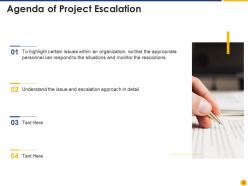
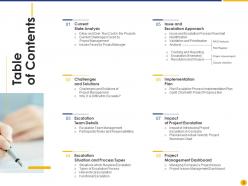
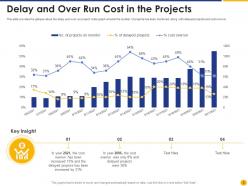
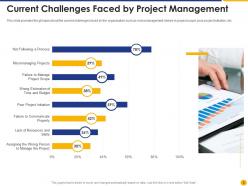
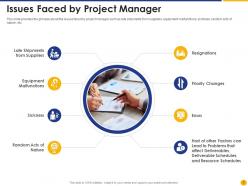
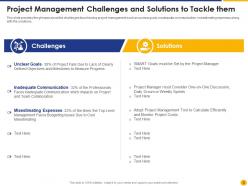
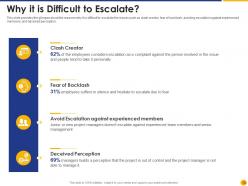
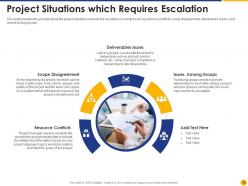
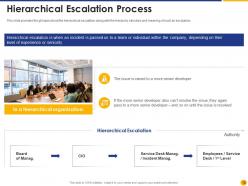
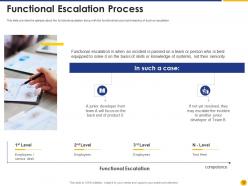
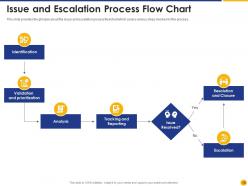
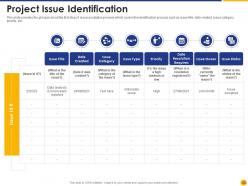
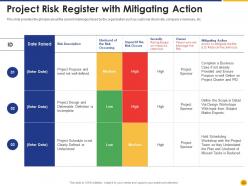
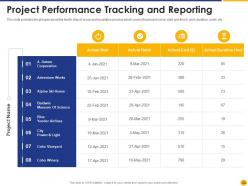
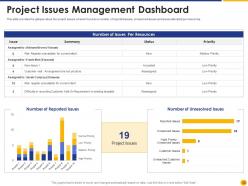
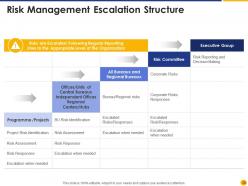
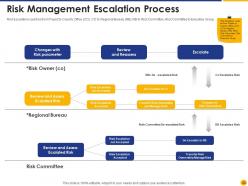
Introducing our escalation in project management PowerPoint presentation slides. Improve the management stature of your company with the help of our task management PowerPoint deck. Assimilate this project management PPT layout to identify the overruns and costs of any delay. This particular program escalation PowerPoint design allows you to organize and display the current challenges to the project management in your company. Deploy this product management PPT theme to provide a forum for the discussion on the solutions to tackle the underlying issues of the management. Help increase the growth of your management again with the utilization of our project growth management PowerPoint deck. Employ this product management PPT layout to display project risks with the appropriate mitigation action plans. Our management hiking PPT design lets you make required variations to icons and colors. Choose our administration advancement PowerPoint design to showcase organization and assurance. Download our project management PPT slides to explore true perfection.
People who downloaded this PowerPoint presentation also viewed the following :
Escalation in project management powerpoint presentation slides with all 54 slides:
Use our Escalation In Project Management Powerpoint Presentation Slides to effectively help you save your valuable time. They are readymade to fit into any presentation structure.
















FAQs for Escalation in project management
Key components include clear escalation triggers, defined authority levels, standardized communication protocols, documented resolution procedures, and performance tracking mechanisms. These elements work together by establishing transparent pathways for issue resolution, ensuring appropriate stakeholder involvement, and maintaining accountability throughout the process, with many organizations finding that structured escalation reduces resolution times while improving customer satisfaction and operational efficiency.
Organizations identify escalation triggers through systematic risk assessment, stakeholder feedback analysis, milestone tracking, resource monitoring, and early warning indicators. These monitoring mechanisms enable project managers to detect budget overruns, timeline delays, and scope changes before they become critical issues, ultimately delivering proactive resolution strategies and maintaining project success across departments.
Communication serves as the foundation of successful escalation management, enabling clear issue documentation, stakeholder alignment, expectation setting, and transparent progress tracking throughout the resolution process. Effective communication protocols ensure that critical information flows seamlessly between support tiers, management levels, and customers, ultimately delivering faster resolutions and enhanced customer satisfaction while minimizing organizational disruption.
Escalation management frameworks vary significantly across industries based on regulatory requirements, customer expectations, and operational complexity, with healthcare prioritizing patient safety protocols, financial services emphasizing compliance timelines, and retail focusing on customer retention strategies. These industry-specific approaches enable organizations to streamline resolution processes while meeting sector standards, ultimately delivering faster outcomes and enhanced stakeholder satisfaction.
Common pitfalls include delayed escalation due to fear of admitting failure, unclear escalation criteria leading to confusion, bypassing immediate supervisors creating organizational tension, over-escalating minor issues that waste resources, and poor communication during handoffs. These missteps often result in prolonged resolution times, damaged stakeholder relationships, and reduced team confidence, with many organizations finding that establishing clear protocols and regular training significantly improves escalation effectiveness.
Leaders foster timely escalation culture by establishing clear escalation criteria, rewarding early problem identification, and removing fear of blame through transparent communication protocols. Through regular training sessions and open-door policies, organizations create psychological safety where employees feel empowered to escalate issues, ultimately delivering faster problem resolution and enhanced operational efficiency across teams.
Key metrics for escalation management effectiveness include escalation volume, resolution time, customer satisfaction scores, repeat escalation rates, and cost per escalation. These measurements enable organizations to streamline processes by identifying bottlenecks, reducing resolution timeframes, and enhancing customer experiences, with many service-oriented businesses finding that tracking these metrics delivers improved operational efficiency and stronger customer retention.
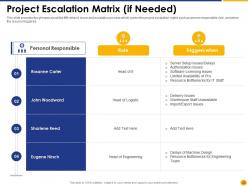
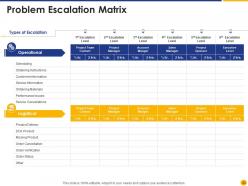
Determining appropriate escalation levels involves assessing issue severity, potential business impact, time sensitivity, and required expertise levels. Organizations typically establish escalation matrices that consider factors like customer tier, financial implications, and operational disruption, with many finding that clear criteria around revenue impact, compliance risks, and service level agreements enable faster resolution and improved customer satisfaction.
Tools supporting escalation management include automated ticketing systems, workflow automation platforms, AI-powered routing software, real-time monitoring dashboards, and communication integration tools. These technologies streamline issue tracking, enable intelligent priority assessment, and facilitate seamless handoffs between departments, with many organizations finding that automated escalation reduces response times while ensuring critical issues reach appropriate stakeholders efficiently.
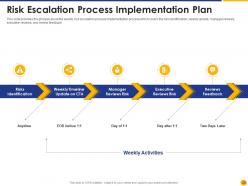
Escalation management contributes to risk mitigation by ensuring critical issues reach appropriate decision-makers quickly, preventing minor problems from becoming project-threatening crises, and establishing clear protocols for resource allocation during emergencies. Through structured escalation frameworks, project managers can address bottlenecks, scope changes, and stakeholder conflicts systematically, ultimately delivering improved project outcomes and stakeholder confidence.
Essential skills include active listening, problem-solving, emotional intelligence, conflict resolution, and technical expertise in relevant systems or processes. Team members also need strong communication abilities, decision-making skills, and knowledge of escalation protocols. Training programs focusing on de-escalation techniques, customer psychology, and stress management enable staff to handle difficult situations professionally, while cross-functional knowledge helps them coordinate with other departments, ultimately delivering faster resolutions and improved customer satisfaction.
Organizations ensure timely escalation resolution through automated routing systems, clear service level agreements, real-time tracking dashboards, dedicated escalation teams, and regular progress monitoring. These mechanisms streamline issue prioritization, establish accountability frameworks, and enable proactive communication, with many companies finding that structured escalation processes reduce resolution times by 40-60%, ultimately delivering enhanced customer satisfaction and operational efficiency.
Poor escalation management severely undermines team morale by creating frustration, confusion, and feelings of helplessness when critical issues remain unresolved, while simultaneously derailing project timelines and quality standards. Organizations with ineffective escalation processes experience increased employee turnover, missed deadlines, and budget overruns, with many teams finding that unaddressed bottlenecks cascade into larger operational failures, ultimately compromising client relationships and competitive positioning.
Post-escalation reviews improve future crisis handling by identifying response gaps, analyzing communication breakdowns, and documenting successful intervention strategies. These comprehensive assessments enable organizations to refine escalation protocols, enhance team preparedness, and strengthen stakeholder communication processes, with many companies finding that systematic post-crisis analysis significantly reduces response times and improves outcomes in subsequent incidents.
**INPUT**: What strategies can be implemented to streamline the escalation process? **OUTPUT**: Effective escalation streamlining strategies include automated routing systems, clear escalation matrices, predefined response timelines, cross-functional collaboration tools, and real-time tracking dashboards. These approaches enhance operational efficiency by reducing resolution times, minimizing miscommunication, and ensuring appropriate resource allocation, with many organizations finding that streamlined escalation ultimately delivers improved customer satisfaction and competitive advantage. **Word Count**: 54 words
-
I discovered this website through a google search, the services matched my needs perfectly and the pricing was very reasonable. I was thrilled with the product and the customer service. I will definitely use their slides again for my presentations and recommend them to other colleagues.