


Strategic Guide To Manage And Control Warehouse Costing Powerpoint Presentation Slides




Try Before you Buy Download Free Sample Product
 Impress Your
 Audience
 100%
100% Editable
 Save Hours
 of Time


Warehouse management refers to organizing and controlling every operation within the warehouse. Grab our Strategic Guide to Manage and Control Warehouse Costing template. It is professionally crafted to help an organization manage the warehouses operational expenses to increase the overall profitability. Our Inventory Management deck helps reduce the overall costs of business by streamlining processes and utilizing space plus resources efficiently. It initially covers a storage optimization strategy to improve inventory visibility in the warehouse and reduce overstocking goods. Additionally, Our Warehouse Automation PPT covers inventory management techniques like ABC analysis, LIFO FIFO method, and HML analysis. It also showcases various techniques to help the organization identify and reduce warehouse theft. The Warehouse Stock Management module incorporates inventory-picking optimization techniques to minimize warehouse expenses and reduce manual human errors. It further highlights various warehouse automation technologies for reducing manual errors and operational costs. Furthermore, our Warehouse Shipment Presentation highlights various KPIs that can help to track the warehouse expenses with the impact of these strategies on warehouse direct, indirect and fixed costs. Lastly, it shows a dashboard that can help track warehouse shipments and payments. Get access now.
People who downloaded this PowerPoint presentation also viewed the following :
Content of this Powerpoint Presentation
Slide 1: This slide introduces Strategic Guide to manage and Control Warehouse Costing. Commence by stating Your Company Name.
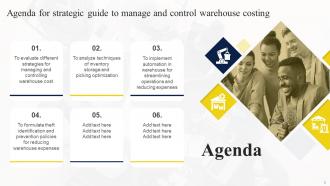
Slide 2: This slide depicts the Agenda of the presentation.
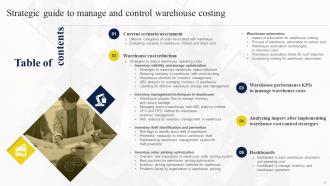
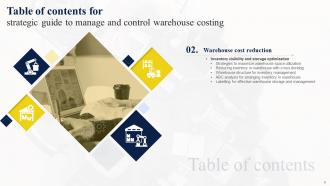
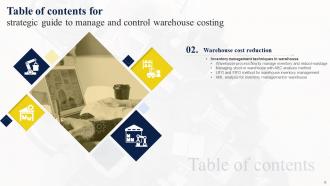
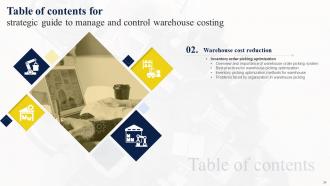
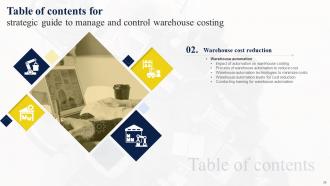
Slide 3: This slide incorporates the Table of Contents.
Slide 4: This slide highlights the Title for the Topics to be discussed further.
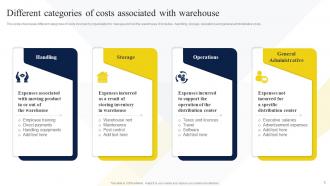
Slide 5: This slide showcases different categories of costs incurred by organization to manage and run the warehouse.
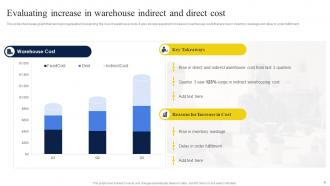
Slide 6: This slide focuses on Evaluating increase in warehouse indirect and direct cost.
Slide 7: This slide reveals the Heading for the Components to be discussed next.
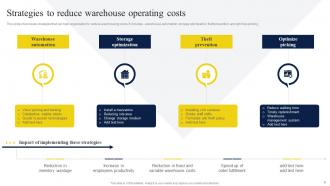
Slide 8: This slide showcases strategies that can help organization to reduce warehousing costs.
Slide 9: This slide mentions the Title for the Ideas to be covered further.
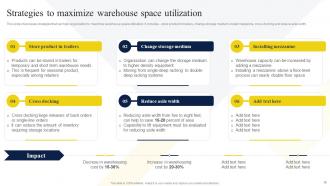
Slide 10: This slide deals with the Strategies to maximize warehouse space utilization.
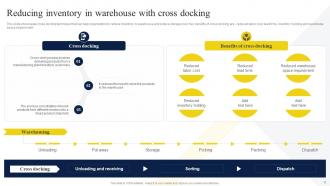
Slide 11: This slide showcases cross docking technique that can help organization to reduce inventory in warehouse and reduce storage cost.
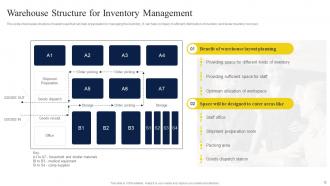
Slide 12: This slide outlines the Warehouse Structure for Inventory Management.
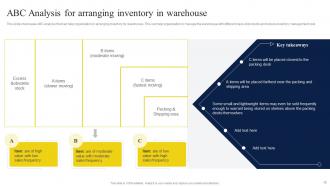
Slide 13: This slide portrays ABC analysis that can help organization in arranging inventory for warehouse.
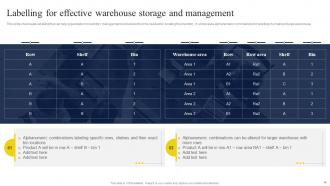
Slide 14: This slide emphasizes on Labelling for effective warehouse storage and management.
Slide 15: This slide indicates the Heading for the Ideas to be covered further.
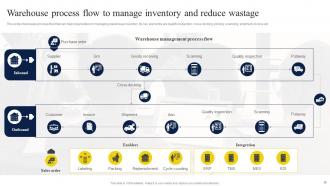
Slide 16: This slide showcases process flow that can help organization in managing warehouse inventory.
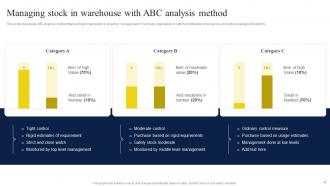
Slide 17: This slide represents ABC analysis method that can help organization in inventory management.
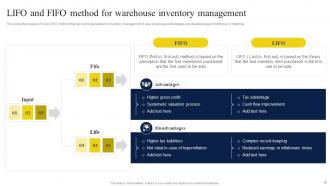
Slide 18: This slide talks about LIFO and FIFO method for warehouse inventory management.
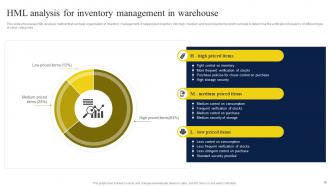
Slide 19: This slide displays the HML analysis for inventory management in warehouse.
Slide 20: This slide depicts the Title for the Components to be discussed further.
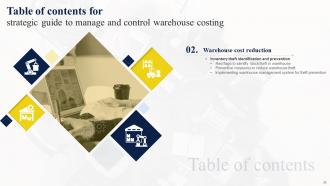
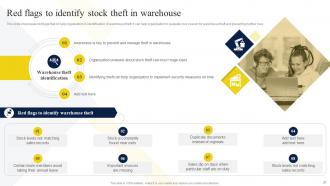
Slide 21: This slide focuses on the Red flags to identify stock theft in warehouse.
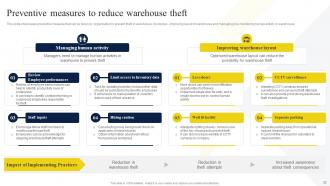
Slide 22: This slide highlights the Preventive measures to reduce warehouse theft.
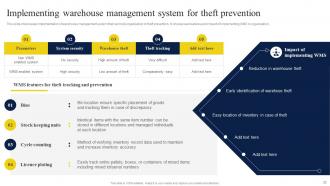
Slide 23: This slide showcases implementation of warehouse management system that can help organization in theft prevention.
Slide 24: This slide mentions the Heading for the Topics to be covered in the upcoming slide.
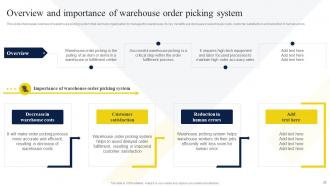
Slide 25: This slide elucidates the Overview and importance of warehouse order picking system.
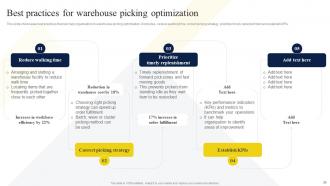
Slide 26: This slide highlights the Best practices for warehouse picking optimization.
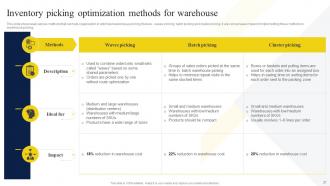
Slide 27: This slide deals with Inventory picking optimization methods for warehouse.
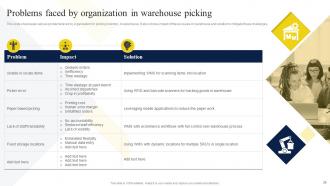
Slide 28: This slide lists the Problems faced by organization in warehouse picking.
Slide 29: This slide indicates the Title for the Topics to be covered further.
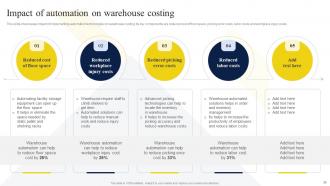
Slide 30: This slide showcases impact of implementing automation technologies on warehouse costing.
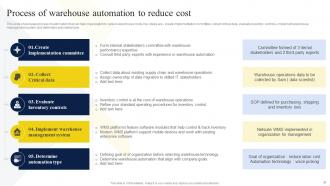
Slide 31: This slide illustrates the Process of warehouse automation to reduce cost.
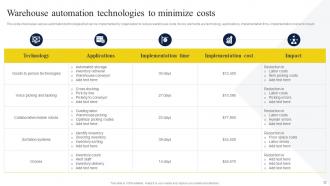
Slide 32: This slide emphasizes on the Warehouse automation technologies to minimize costs.
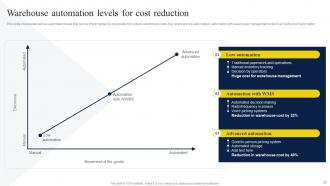
Slide 33: This slide reveals the Warehouse automation levels for cost reduction.
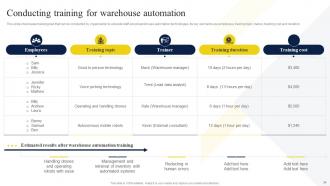
Slide 34: This slide displays the Conducting training for warehouse automation.
Slide 35: This slide incorporates the Heading for the Componnets to be discussed further.
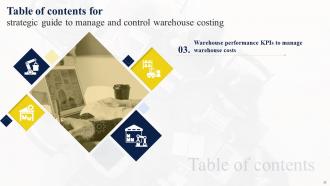
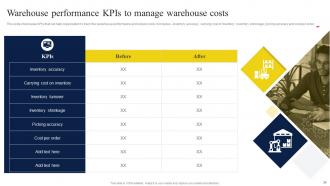
Slide 36: This slide shows the KPIs that can help organization to track the warehouse performance and reduce costs.
Slide 37: This slide contains the Title for the Ideas to be covered in the following template.
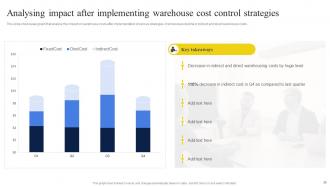
Slide 38: This slide deals with Analysing impact after implementing warehouse cost control strategies.
Slide 39: This slide reveals the Heading for the Ideas to be discussed next.
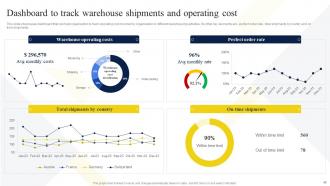
Slide 40: This slide illustrates the Dashboard to track warehouse shipments and operating cost.
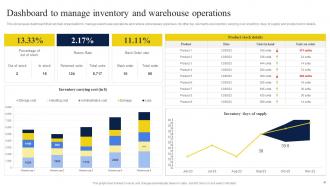
Slide 41: This slide represents the Dashboard to manage inventory and warehouse operations.
Slide 42: This is the Icons slide containing all the Icons used in the plan.
Slide 43: This slide displays the Additional information.
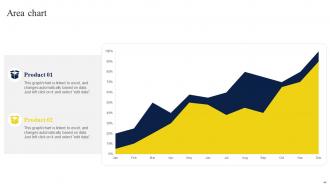
Slide 44: This slide portrays the Area chart.
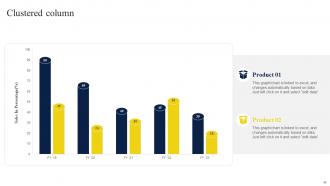
Slide 45: This slide presents the Clustered column.
Slide 46: This slide elucidates the vision, mission, and goal of the firm.
Slide 47: This is the Quotes slide for motivation.
Slide 48: This is the 30 60 90 Days plan slide for effective planning.
Slide 49: This is the About us slide. State your company-related information here.
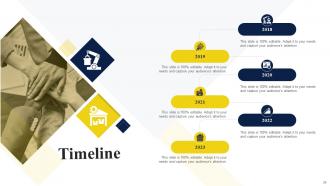
Slide 50: This slide reveals the Timeline of the organization.
Slide 51: This is Meet our team slide. State your team-related information here.
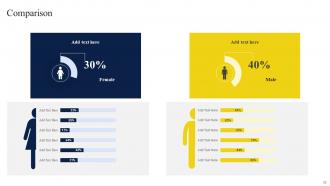
Slide 52: This slide is used for the purpose of Comparison.
Slide 53: This is the Venn diagram slide.
Slide 54: This slide contains the Post it notes for reminders nad deadlines.
Slide 55: This is the Thank You slide for acknowledgement.
Strategic Guide To Manage And Control Warehouse Costing Powerpoint Presentation Slides with all 60 slides:
Use our Strategic Guide To Manage And Control Warehouse Costing Powerpoint Presentation Slides to effectively help you save your valuable time. They are readymade to fit into any presentation structure.











FAQs for Strategic Guide To Manage And Control Warehouse Costing
Effective warehouse cost management includes labor optimization, inventory control, space utilization, technology integration, and operational efficiency tracking. These components work together by streamlining workflows, reducing waste, and maximizing resource allocation, with many logistics companies finding that strategic combinations of automated systems and data analytics deliver significantly lower operational costs while enhancing service quality.
Technology and automation reduce warehouse operational costs by streamlining inventory management, optimizing picking routes, and minimizing labor-intensive processes through robotics and AI-powered systems. These solutions enable warehouses to achieve faster order fulfillment, reduce human error rates, and maximize storage efficiency, with many logistics companies finding that automated systems deliver significantly lower operational expenses while enhancing overall productivity.
Inventory management significantly reduces warehouse expenses by optimizing stock levels, minimizing carrying costs, preventing overstocking, and reducing waste through better demand forecasting. Effective inventory control enables warehouses to lower storage costs, reduce labor expenses, and improve space utilization, with many distribution centers finding that strategic inventory management delivers up to 20% cost savings while enhancing operational efficiency.
Common hidden costs in warehouse operations include employee overtime, equipment maintenance, inventory shrinkage, energy inefficiencies, and technology upgrades. These expenses often accumulate through inefficient labor scheduling, outdated automation systems, and poor space utilization, with many logistics companies finding that addressing these areas through strategic planning and modern warehouse management systems ultimately delivers significant cost reductions and operational transparency.
Analyzing warehouse layout optimizes space by identifying underutilized areas, improving product flow patterns, reducing travel distances for workers, and strategically positioning high-turnover items near shipping zones. Through layout analysis, organizations streamline picking operations, minimize labor costs, maximize storage density, and reduce order fulfillment times, ultimately delivering enhanced operational efficiency and significant cost savings in increasingly competitive logistics environments.
Key warehouse performance metrics include inventory turnover rates, order accuracy percentages, labor productivity ratios, storage utilization rates, and cost per order fulfillment. These measurements enable organizations to streamline operations, reduce overhead expenses, and enhance customer satisfaction, with many logistics companies finding that comprehensive metric tracking delivers significant competitive advantages and operational transparency.
Strategic workforce management significantly impacts warehouse costs through optimized scheduling, cross-training programs, performance-based incentives, and automation integration that reduces labor redundancy. These approaches streamline operations by minimizing overtime expenses, improving productivity rates, and enhancing inventory accuracy, with many distribution centers finding that strategic workforce planning delivers up to 15-20% cost reductions while maintaining service quality.
Warehouses can implement LED lighting systems, automated HVAC controls, energy-efficient equipment, solar panel installations, and smart building management systems to reduce consumption. These strategies streamline operations by minimizing electricity usage, optimizing temperature control, and leveraging renewable energy sources, with many logistics companies finding that strategic energy management delivers 20-40% cost reductions while enhancing operational efficiency.
Seasonality and demand fluctuations significantly impact warehouse cost management by creating variable labor needs, fluctuating storage requirements, and unpredictable operational expenses throughout different periods. These variations challenge organizations to balance fixed infrastructure costs with dynamic staffing, inventory levels, and equipment utilization, with many companies finding that flexible workforce strategies and scalable storage solutions ultimately deliver better cost control and operational efficiency.
Transportation costs significantly impact warehouse expenditures by influencing location decisions, inventory levels, and distribution strategies, often representing 20-30% of total logistics expenses. Strategic warehouse placement near major transportation hubs enables companies to minimize freight costs, reduce delivery times, and optimize supply chain efficiency, with retailers and manufacturers finding that proximity to highways, ports, and rail terminals ultimately delivers substantial cost savings and competitive advantages.
A WMS enhances cost management by optimizing inventory levels, streamlining labor allocation, and reducing operational inefficiencies through automated tracking and real-time analytics. These systems enable warehouses to minimize storage costs, accelerate order fulfillment, and improve resource utilization, with many logistics companies finding that strategic WMS implementation delivers significant cost reductions while enhancing operational transparency.
Best practices for negotiating supplier and service provider contracts include establishing clear performance metrics, securing volume-based discounts, implementing flexible payment terms, conducting regular market benchmarking, and building long-term partnership agreements. These strategies streamline procurement processes by reducing administrative overhead, minimizing price volatility, and enhancing service quality, with many warehouse operators finding that strategic supplier relationships ultimately deliver 15-25% cost reductions while improving operational reliability.
Just-in-time inventory practices reduce warehouse cost management by minimizing storage requirements, decreasing carrying costs, and eliminating waste from overstock situations. Through strategic supplier coordination and demand forecasting, manufacturing and retail companies streamline operations, reduce labor expenses, and optimize space utilization, ultimately delivering lower operational costs and improved cash flow efficiency.
Employee training minimizes warehouse operational costs by reducing errors, improving safety compliance, enhancing equipment handling efficiency, and accelerating task completion rates. Well-trained staff streamline inventory management, reduce product damage, and optimize workflow processes, with many distribution centers finding that comprehensive training programs deliver significant cost savings while enhancing overall productivity and workplace safety.
Regular audits enhance warehouse cost management by identifying inefficiencies in labor allocation, equipment utilization, and inventory processes, while uncovering hidden expenses and operational bottlenecks. Through systematic evaluation, logistics companies and retail operations streamline workflows, reduce waste, and optimize resource deployment, ultimately delivering improved profit margins and competitive operational efficiency in increasingly complex supply chain environments.
-
Easily Editable.
-
“Thanks to SlideTeam. Now I can make smart presentations in a fraction of time without any hassle.”