


Evaluating Key Risks In Procurement Process For Supply Chain Distribution Complete Deck




Try Before you Buy Download Free Sample Product
 Impress Your
 Audience
 100%
100% Editable
 Save Hours
 of Time


Procurement risks occur when purchasing or sourcing products, services, or resources becomes unreliable. Grab our Evaluating Key Risks in Procurement Process for Supply Chain Distribution template. It helps the company determine the risks associated with acquiring goods or services, which are assessed, mitigated, and monitored. Our Supplier Assessment deck evaluates the current scenario by analyzing the current business situation and determining critical steps in the procurement process. Further, it identifies key risks associated with the procurement process and examines the impact of such risks. These risks include inadequate need analysis, poor supplier selection, supply chain disruption, procurement without negotiations, etc. It then showcases vital measures to mitigate risks in the procurement process optimizing supply chain disruptions, improving supplier selection, etc. Our Risk Management presentation also shows a timeline for employing an e-procurement solution. Additionally, it highlights the impact of managing procurement risks, implementing training plans, and employing automation. The E-Procurement module exhibits various KPI metrics to measure procurement process performance. Lastly, it outlines different dashboards for monitoring and managing risks in procurement and supply chain distribution channels. Get access now.
People who downloaded this PowerPoint presentation also viewed the following :
Content of this Powerpoint Presentation
Slide 1: This slide introduces Evaluating Key Risks in Procurement Process for Supply Chain Distribution. Commence by stating Your Company Name.
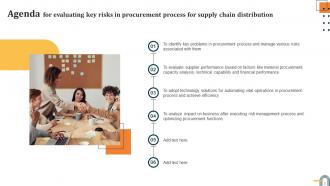
Slide 2: This slide depicts the Agenda of the presentation.
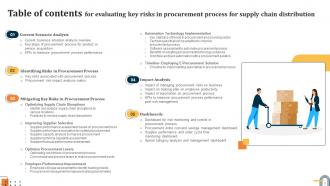
Slide 3: This slide incorporates the Table of contents.
Slide 4: This slide highlights the Title for the Topics to be discussed next.
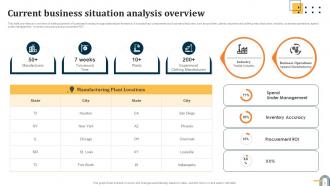
Slide 5: This slide provides an overview of exiting scenario of business to analyze organizational performance.
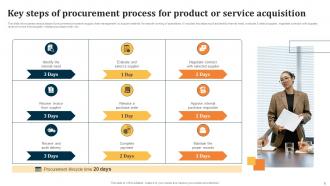
Slide 6: This slide showcases various steps of procurement process in supply chain management to acquire material for smooth running of operations.
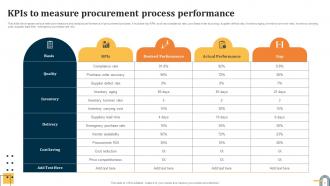
Slide 7: This slide highlights the KPIs to measure procurement process performance.
Slide 8: This slide mentions the Heading for the Components to be discussed next.
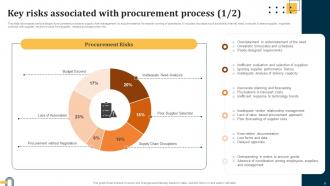
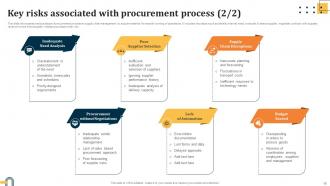
Slide 9: This slide reveals the various steps of procurement process in supply chain management to acquire material for smooth running of operations.
Slide 10: This slide continues the Key risks associated with procurement process.
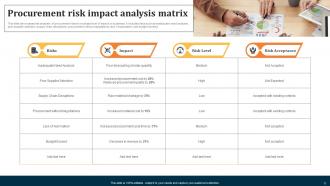
Slide 11: This slide illustrates the Procurement risk impact analysis matrix.
Slide 12: This slide indicates the Title for the Ideas to be discussed next.
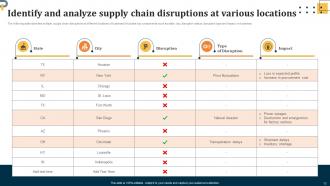
Slide 13: The following slide identifies multiple supply chain disruptions at different locations of business.
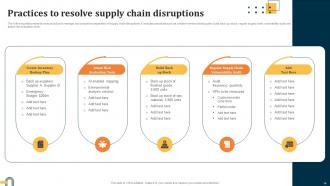
Slide 14: The following slide presents various tactics to manage and proactive preparation of supply chain disruptions.
Slide 15: This slide depicts the Heading for the Ideas to be covered further.
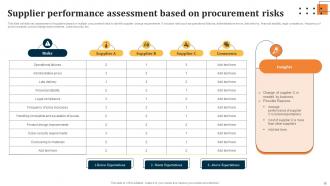
Slide 16: This slide exhibits risk assessment of suppliers based on multiple procurement risks to identify supplier change requirements.
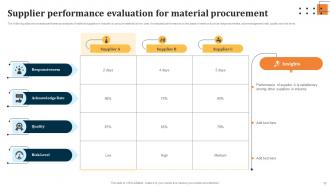
Slide 17: The following slide showcases performance analysis of material suppliers in industry to procure material at low cost.
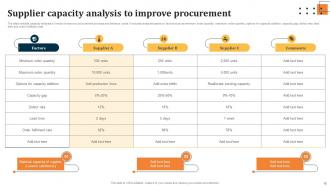
Slide 18: The slide portrays capacity analysis of vendor to improve procurement process and minimize costs.
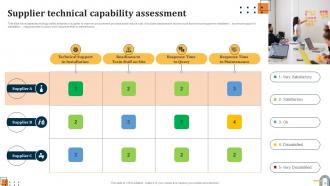
Slide 19: This slide deals with the Supplier technical capability assessment.
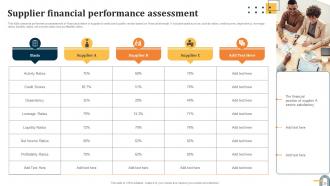
Slide 20: This slide presents performance assessment of financial position of supplier to select and qualify vendor based on financial strength.
Slide 21: This slide shows the Title for the Components to be discussed next.
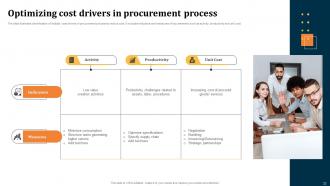
Slide 22: The slide illustrates identification of multiple cost drivers of procurement process to reduce cost.
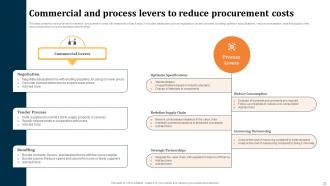
Slide 23: The slide elucidates various levers to minimize procurement costs with measures of each step.
Slide 24: This slide displays the Heading for the Topics to be covered further.
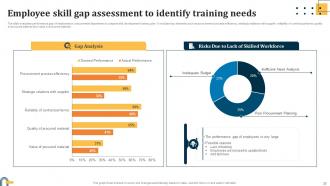
Slide 25: The slide evaluates performance gap of employees in procurement department to prepare skill development training plan.
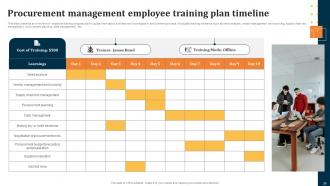
Slide 26: This slide emphasizes on the Procurement management employee training plan timeline.
Slide 27: This slide depicts the Title for the Contents to be covered next.
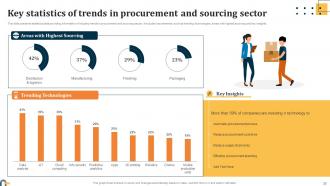
Slide 28: This slide presents statistical data providing information of industry trends in procurement and sourcing sector.
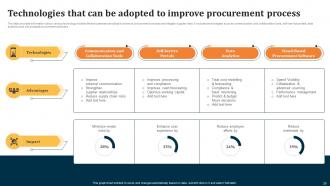
Slide 29: The slide provides information about various technology tools/software business can adopt to enhance procurement process and mitigate supplier risks.
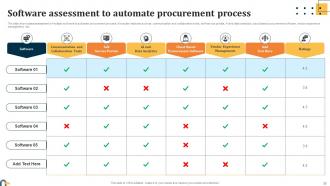
Slide 30: This slide deals with the Software assessment to automate procurement process.
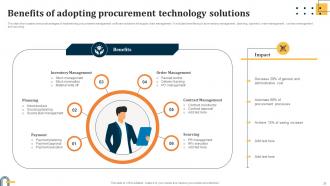
Slide 31: The slide shows the various advantages of implementing procurement management software solutions for supply chain management.
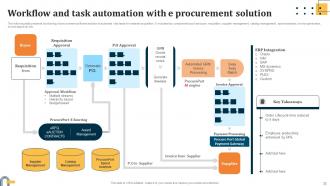
Slide 32: The following slide reveals the functioning of procurement software solution to automate vital tasks for material acquisition.
Slide 33: This slide depicts the Heading for the Topics to be discussed next.
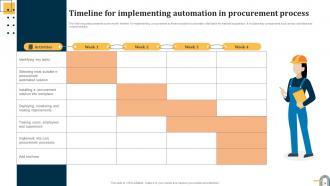
Slide 34: The following slide represents a one month timeline for implementing procurement software solution to automate vital tasks for material acquisition.
Slide 35: This slide includes the Title for the Ideas to be covered further.
Slide 36: This slide showcases various steps of procurement process in supply chain management to acquire material for smooth running of operations.
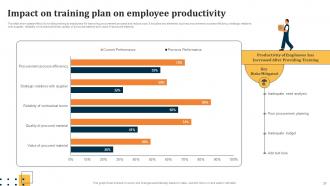
Slide 37: This slide focuses on the Impact on training plan on employee productivity.
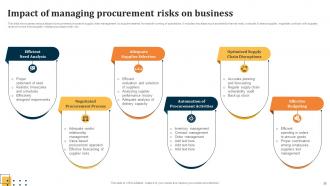
Slide 38: This slide illustrates effect on business after automating vital activities of procurement process.
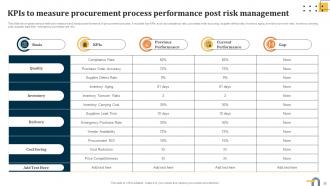
Slide 39: This slide portrays the KPIs to measure procurement process performance post risk management.
Slide 40: This slide displays the Heading for the Ideas to be covered in the upcoming template.
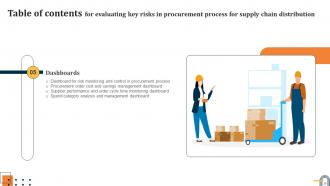
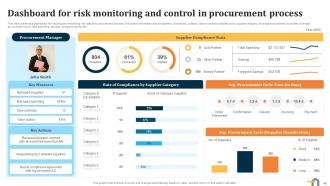
Slide 41: This slide presents a dashboard for tracking and monitoring risk status in procurement process.
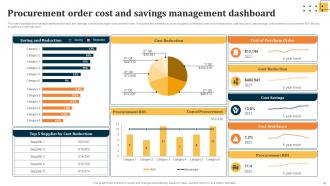
Slide 42: This slide deals with the Procurement order cost and savings management dashboard.
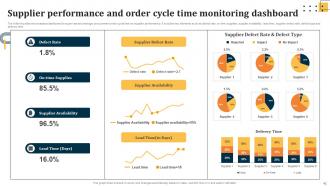
Slide 43: This slide elucidates the Supplier performance and order cycle time monitoring dashboard.
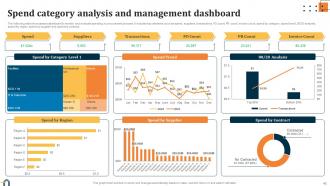
Slide 44: The following slide represents a dashboard to monitor and evaluate spending in procurement process.
Slide 45: This is the Icons slide containing all the Icons used in the plan.
Slide 46: This slide depicts the Additional information.
Slide 47: This slide represents the Clustered column with line.
Slide 48: This is the About us slide. State the company-related information here.
Slide 49: This slide emphasizes on the organization's mission, vision, and goals.
Slide 50: This is the 30 60 90 Days plan slide for efficient planning.
Slide 51: This is Our team slide for showcasing information related to the team members.
Slide 52: This slide is used for the purpose of comparison.
Slide 53: This slide elucidates information related to the Financial topic.
Slide 54: This is the Venn diagram slide.
Slide 55: This slide displays the Location of the firm.
Slide 56: This is the Quotes slide for inspiration.
Slide 57: This slide shows the Timeline of the firm.
Slide 58: This is the Puzzle slide with related imagery.
Slide 59: This is the Idea generation slide for encouraging new ideas.
Slide 60: This is the Magnifying glass for minute details.
Slide 61: This is the Thank You slide for acknowledgement.
Evaluating Key Risks In Procurement Process For Supply Chain Distribution Complete Deck with all 57 slides:
Use our Evaluating Key Risks In Procurement Process For Supply Chain Distribution Complete Deck to effectively help you save your valuable time. They are readymade to fit into any presentation structure.










FAQs for Evaluating Key Risks In Procurement Process For Supply Chain
Primary procurement risks in supply chain distribution include supplier reliability issues, quality control failures, cost fluctuations, delivery delays, and regulatory compliance challenges. These risks can significantly impact operations through disrupted production schedules, increased costs, and compromised product quality, with many organizations finding that diversified supplier networks and robust vendor assessment processes help minimize exposure while maintaining competitive advantage.
Inadequate supplier vetting creates procurement risks through poor quality control, supply disruptions, compliance failures, and financial instability among partners. Without thorough assessment, companies face unexpected production delays, regulatory penalties, and reputational damage, with manufacturing and retail sectors particularly finding that insufficient due diligence ultimately compromises operational efficiency and competitive advantage.
Market volatility significantly amplifies procurement risks by creating price fluctuations, supply uncertainties, demand shifts, and currency exchange variations that disrupt distribution channels. These market dynamics force organizations to navigate unpredictable supplier costs, inventory challenges, and delivery timelines, with many companies finding that strategic diversification and flexible sourcing ultimately deliver greater resilience and competitive advantage.
Supplier diversity significantly enhances supply chain resilience by reducing single-source dependencies, mitigating geographic concentration risks, and expanding alternative sourcing options during disruptions. Through strategic diversification across regions, suppliers, and capabilities, organizations minimize vulnerability to localized events, supply bottlenecks, and market volatility, while fostering innovation and competitive pricing, ultimately delivering greater operational stability and business continuity.
Procurement risks can trigger significant cost increases through emergency sourcing, price volatility, inventory shortages, contract penalties, and operational delays across distribution networks. These disruptions force organizations into reactive purchasing at premium rates, while extended lead times and supplier failures create cascading financial impacts, with many companies finding that strategic risk mitigation ultimately delivers substantial cost savings and competitive resilience.
Technology mitigates procurement risks through predictive analytics, real-time monitoring, automated compliance checks, supplier diversification platforms, and blockchain transparency. These solutions enable organizations to anticipate disruptions, track supplier performance continuously, ensure regulatory adherence, and maintain visibility across global networks, with many companies finding that integrated systems reduce costs while enhancing resilience and competitive advantage.
Common compliance risks in procurement include regulatory non-adherence, supplier qualification failures, contract violation penalties, documentation inadequacies, and ethical breaches like corruption or conflicts of interest. These risks escalate through complex global supply chains, with many organizations finding that automated compliance monitoring, regular supplier audits, and standardized procurement protocols significantly reduce violations while enhancing operational transparency and stakeholder trust.
Geopolitical factors significantly influence procurement risks by creating trade barriers, tariff uncertainties, regulatory changes, and supply route disruptions that can destabilize sourcing strategies. These political tensions force organizations to diversify supplier bases across multiple regions, reassess cost structures, and develop contingency plans, with many manufacturers and retailers finding that geopolitical awareness has become essential for maintaining competitive advantage.
Organizations can implement risk mapping, supplier audits, financial health monitoring, performance tracking systems, and scenario planning to identify procurement risks. These strategies enable businesses to evaluate supplier stability, assess market volatility, and monitor compliance issues across their supply chains, with many companies finding that proactive risk assessment ultimately delivers enhanced operational resilience and competitive advantage.
Poor inventory management significantly amplifies procurement risks by creating supply shortages, excess carrying costs, demand forecasting errors, and supplier dependency issues that disrupt distribution flows. These challenges compound across manufacturing, retail, and healthcare sectors, where inadequate stock levels lead to production delays, missed sales opportunities, and ultimately higher procurement costs, with many organizations finding that strategic inventory optimization delivers enhanced supplier relationships and competitive advantage.
The COVID-19 pandemic significantly amplified procurement risks by exposing supply chain vulnerabilities through factory shutdowns, logistics disruptions, demand volatility, and supplier financial instability. Organizations increasingly recognized the need for supply chain diversification, enhanced risk monitoring, and strategic supplier partnerships, with many finding that investing in digital procurement platforms and multiple sourcing strategies delivers greater resilience and competitive advantage.
Data analytics improves procurement risk decision-making by providing real-time visibility into supplier performance, identifying potential disruptions through predictive modeling, and enabling automated risk scoring across vendor portfolios. Through advanced analytics platforms, organizations can monitor supply chain vulnerabilities, optimize supplier diversification strategies, and respond proactively to market fluctuations, ultimately delivering enhanced operational resilience and competitive advantage.
Key procurement risk KPIs for distribution include supplier performance metrics, cost variance tracking, delivery reliability rates, quality defect measurements, and supply chain disruption frequency indicators. These metrics enable organizations to proactively identify vulnerabilities, optimize vendor relationships, and maintain operational continuity, with many logistics companies finding that comprehensive KPI monitoring reduces procurement-related delays by significantly improving supplier accountability and strategic decision-making.
Natural disasters contribute to procurement risks by disrupting transportation networks, damaging supplier facilities, creating material shortages, and forcing costly emergency sourcing decisions. These disruptions particularly impact manufacturing, retail, and automotive sectors, with companies increasingly finding that diversified supplier networks, strategic inventory buffers, and robust contingency planning help maintain operational continuity while minimizing financial losses.
Organizations can enhance procurement risk management by implementing supplier diversification, conducting regular risk assessments, establishing robust contract management, creating contingency plans, and leveraging technology for real-time monitoring. These practices enable companies to minimize disruptions, reduce costs, and maintain operational continuity, with many manufacturing and retail organizations finding that strategic supplier relationships combined with predictive analytics ultimately deliver competitive advantage and supply chain resilience.
-
Easy to edit slides with easy to understand instructions.
-
Really like the color and design of the presentation.
-
World-class PowerPoint designs that are fully customizable!
-
Great product with highly impressive and engaging designs.