


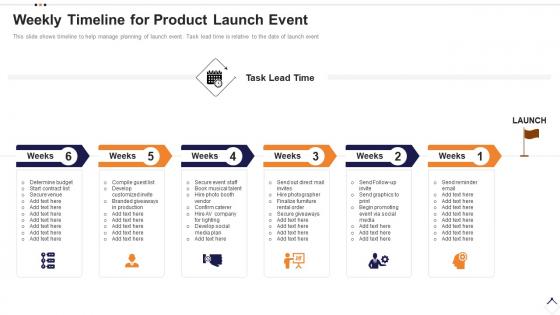
Execution plan for product launch weekly timeline for product launch event




Try Before you Buy Download Free Sample Product
 Impress Your
 Audience
 100%
100% Editable
 Save Hours
 of Time


This slide shows timeline to help manage planning of launch event. Task lead time is relative to the date of launch event
People who downloaded this PowerPoint presentation also viewed the following :
Execution plan for product launch weekly timeline for product launch event with all 9 slides:
Use our Execution Plan For Product Launch Weekly Timeline For Product Launch Event to effectively help you save your valuable time. They are readymade to fit into any presentation structure.








FAQs for Execution plan for product launch weekly timeline for
So basically you've got 5 main phases to think through: pre-launch stuff (market research, building the actual product), getting your team ready internally, some kind of soft launch or beta, the real launch, then tweaking everything after. Here's the thing though - that pre-launch work is gonna eat up way more time than you think. Like 60-70% of everything. I learned this the hard way lol. Work backwards from when you want to launch and be generous with your timelines. Something always goes sideways. Short phases keep you moving, but don't pack them too tight or you'll hate yourself later.
So basically, a launch timeline keeps everyone from tripping over each other. Engineering knows when to wrap features, marketing can plan campaigns, sales gets their pitch deck ready - you know the drill. Without it, you're stuck with that "wait, wasn't this supposed to be done?" mess we've all dealt with. Map out where teams hand stuff off to each other first. That's honestly the most crucial part. If dev hits a roadblock, everyone else can pivot instead of sitting around wondering what's happening. Just start with the big milestones and work backwards from launch day.
Honestly, break it down by stage or you'll go crazy. Pre-launch is all about beta feedback scores, how many features you've actually shipped, and qualified leads from your teaser content. Launch week? Total chaos, but focus on conversion rates, daily actives, and - this one's crucial - support tickets (trust me on this). After launch gets more strategic: customer acquisition costs, retention, monthly revenue growth. Here's the thing though - don't track everything. I learned this the hard way. Pick maybe 3-4 metrics per phase and actually do something with the data instead of just staring at dashboards all day.
Dude, market research is clutch for timing everything. I learned this the hard way after launching into complete silence once - brutal. Start collecting data like 3-6 months out so you can actually pivot if needed. You're looking for demand validation first (obviously), but also stuff like seasonal buying patterns and how long people take to make decisions. Competitors' moves matter too. Some industries have these weird cycles where everyone buys in Q4 or whatever. The whole point is avoiding that awful feeling of launching when nobody's paying attention.
Start with the outside stuff - busy seasons in your industry, what competitors are doing, holidays that might boost or tank your launch. Then honestly look at your team's readiness (we've all seen those "totally ready" disasters). Are there any big conferences coming up you could piggyback on? That's usually gold for visibility. The goal is hitting that sweet spot where everyone's paying attention but you're not fighting ten other launches for eyeballs. Oh, and don't let your marketing team overpromise on deadlines - they always do that.
Dude, don't rush user testing - that's where everything falls apart. Legal and compliance always take forever, way longer than you think. Marketing needs like months to actually build hype, not weeks. Scope creep will absolutely destroy your timeline if you let it. Also terrible idea to launch during holidays or when competitors are doing big announcements. Honestly, just add 20% buffer time to everything because something will go wrong. App store reviews, random executive requests, whatever. And actually stick to your feature freeze! I learned this the hard way lol.
Work backwards from launch day - that's honestly the only way to stay sane. Map everything to your key milestones: pre-launch buzz, announcement day, launch week, then follow-up. I always add buffer time because launches are chaos and something will definitely go wrong lol. Different phases need different content - teasers early on, feature deep-dives for the announcement, user testimonials during launch week. Oh and get your content done at least a week before you need it live. Trust me on that one - you'll be scrambling with a million other things those final days.
Gantt charts are your friend here - Asana, Monday.com, or ClickUp all work really well for showing dependencies and hitting those key milestones. Google Sheets can actually do the trick too if you're not trying to get fancy with it. When you're presenting to the big shots though, Roadmunk or ProductPlan make everything look way more professional (executives eat that stuff up). Just make sure whatever you pick, everyone can jump in and update things easily. Launch timelines are basically guaranteed to change every other day, and you don't want to be that person constantly asking "hey, where are we on this?"
Oh yeah, feedback totally messes with your timeline - but in a good way usually. Beta testing might reveal some huge usability problem you never saw coming, so you'll need extra time to fix it. Sometimes though, users go crazy for your main feature and you realize all those extra bells and whistles can wait. I learned this the hard way on my last project actually. The trick is building in buffer time from the start when you plan your feedback milestones. That way you're not scrambling when users tell you something needs work. Short answer: yes it shifts things, but plan for it.
Honestly, you've gotta create those regular touchpoints or people just check out. Weekly check-ins with stakeholders are clutch - even when it feels like nothing's happening, share updates anyway. Celebrate the small wins too. The middle part is where most launches die because everyone's over the initial hype but you're still weeks from being done. Mix up who's doing what so people don't get bored. Oh, and build in buffer time from the start - I can't stress this enough. When you're always firefighting, momentum just evaporates and everyone gets burned out.
Oh man, get your legal team involved from day one - seriously, don't wait. Trademark searches can drag on for weeks, and if you're dealing with FDA stuff? Good luck with that timeline. Contract reviews with vendors always take longer than expected too. GDPR and privacy compliance is another headache, especially if you're launching internationally. Export controls are a thing if you're going global. Honestly, just have legal build you a custom checklist based on your specific product and markets. Trust me, the earlier you start this process, the less you'll hate yourself later when launch day approaches.
Dude, get those sign-offs or you're screwed later. I'm talking written approval at concept, design, pre-launch, and go-live - not just "yeah sounds good" in a meeting. Trust me on this one. We got burned hard when legal hadn't actually approved something we thought was fine. Three weeks down the drain! Changes cost way more the further along you get, obviously. Put approval deadlines right in your project timeline with specific dates. Don't just hope it'll work out. People conveniently "forget" what they agreed to when things get crazy, so documentation saves your ass every time.
Apple usually takes 6-9 months from iPhone announcement to launch, building crazy hype the whole time. Tesla does this too but drags it out way longer (which honestly backfires sometimes). For B2B stuff like Slack or Notion, they're working more like 3-4 month cycles from beta to release. All of them do early buzz building and tons of beta testing though. I'd pick 2-3 launches in your space and break down their phases - that's gonna give you the most realistic timeline to work with. Way better than guessing.
Build buffer time right into your schedule, especially around the risky stuff. Think about what'll probably go sideways - suppliers flaking, regulatory headaches, tech breaking - and pad those deadlines. We got burned last launch because of some compliance thing that honestly wasn't that surprising in hindsight. Set up check-ins where people can raise red flags early instead of waiting till everything's on fire. The trick is planning for problems from day one, not scrambling to fix your timeline later. Oh, and make sure someone's actually owning the risk tracking - it won't happen automatically.
Okay so pre-launch is basically organized chaos. First thing - get your messaging and pricing locked down, then prep all your marketing stuff. Your launch team needs crystal clear roles because trust me, that's where everything falls apart if people don't know who's doing what. Run beta tests with a few customers and brief your sales team (seriously, don't skip this part). Set up analytics tracking and prep support for the incoming flood of questions. I'd start teasing the launch maybe 2-3 weeks out to build some buzz. But honestly? Have a backup plan ready because something will definitely break at the worst possible moment.
-
Unique design & color.
-
Awesomely designed templates, Easy to understand.
-
Excellent work done on template design and graphics.