


Executive Balanced Scorecard Powerpoint PPT Template Bundles





Try Before you Buy Download Free Sample Product
 Impress Your
 Audience
 100%
100% Editable
 Save Hours
 of Time


Our Executive Balanced Scorecard Powerpoint PPT Template Bundles are topically designed to provide an attractive backdrop to any subject. Use them to look like a presentation pro.
People who downloaded this PowerPoint presentation also viewed the following :
Executive Balanced Scorecard Powerpoint PPT Template Bundles with all 16 slides:
Use our Executive Balanced Scorecard Powerpoint PPT Template Bundles to effectively help you save your valuable time. They are readymade to fit into any presentation structure.







FAQs for Executive Balanced Scorecard Powerpoint
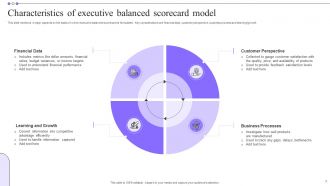
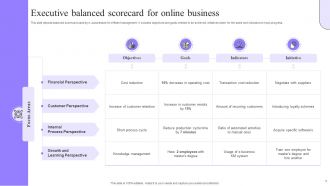
Executive Balanced Scorecards include financial performance metrics, customer satisfaction indicators, internal process efficiency measures, and learning and growth capabilities. These strategic components enable organizations by aligning operational activities with strategic objectives, streamlining performance tracking across departments, and delivering comprehensive visibility into business health, with many executives finding that this integrated approach ultimately enhances decision-making and competitive advantage.
The Executive Balanced Scorecard differs from traditional systems by integrating financial metrics with customer satisfaction, internal processes, and learning growth perspectives, rather than focusing solely on financial outcomes. This comprehensive approach enables executives to track leading indicators alongside lagging measures, ultimately delivering strategic alignment and long-term competitive advantage over traditional backwards-looking financial reporting.
Strategic alignment serves as the foundational framework that ensures all organizational activities, metrics, and objectives connect directly to the company's overarching strategic vision and goals. Through systematic cascading of strategic priorities across financial, customer, internal process, and learning perspectives, executives can monitor how operational initiatives translate into strategic outcomes, ultimately delivering enhanced organizational focus, improved resource allocation, and measurable competitive advantage in increasingly complex business environments.
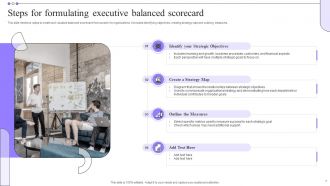
Organizations effectively implement an Executive Balanced Scorecard by establishing clear strategic objectives, selecting meaningful KPIs across financial, customer, internal process, and learning perspectives, and ensuring regular review cycles with actionable insights. Through systematic data integration and executive alignment, companies streamline decision-making, enhance performance transparency, and accelerate strategic execution, with many finding that consistent monitoring ultimately delivers improved accountability and competitive advantage.
The Executive Balanced Scorecard enhances decision-making by providing comprehensive performance visibility across financial, customer, internal process, and learning perspectives, enabling data-driven strategic choices rather than intuition-based decisions. This integrated approach helps executives identify performance gaps, allocate resources strategically, and balance short-term results with long-term growth objectives, ultimately delivering faster responses to market changes and improved organizational alignment.
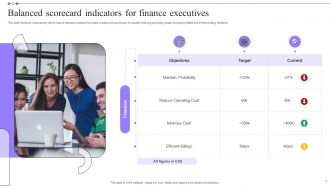
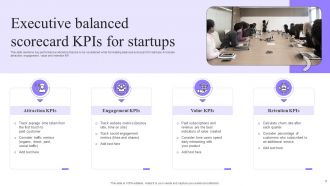
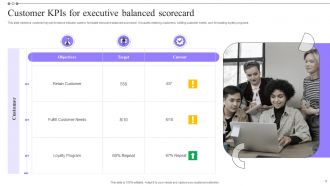
Selecting appropriate KPIs for an Executive Balanced Scorecard involves aligning metrics with strategic objectives across financial, customer, internal process, and learning perspectives, ensuring each KPI directly supports organizational goals and provides actionable insights. Organizations typically choose 3-5 KPIs per perspective that balance leading and lagging indicators, with many companies finding that metrics like revenue growth, customer satisfaction scores, and operational efficiency ratios deliver comprehensive strategic visibility.
Common challenges include misaligned metrics across departments, difficulty quantifying intangible assets, resistance to performance transparency, and inadequate data collection systems. These implementation hurdles often surface in organizations transitioning from traditional financial reporting, with many executives finding that success requires strategic communication, cross-functional collaboration, and sustained leadership commitment to drive meaningful organizational change.
Technology facilitates Executive Balanced Scorecard tracking through automated data collection, real-time dashboards, predictive analytics, and integrated reporting systems. These solutions streamline performance monitoring by consolidating financial and operational metrics, enabling faster decision-making and strategic adjustments, with many organizations finding that automated scorecard systems deliver enhanced transparency and competitive advantage.
Yes, the Executive Balanced Scorecard adapts seamlessly across industries by customizing perspectives, metrics, and strategic objectives to sector-specific requirements and challenges. Healthcare organizations focus on patient outcomes and regulatory compliance, while manufacturing companies emphasize operational efficiency and supply chain optimization, with financial services prioritizing risk management and customer acquisition, ultimately enabling each industry to align performance measurement with their unique strategic priorities and competitive landscape.
Stakeholder perspectives significantly shape Executive Balanced Scorecard design by determining key performance indicators, strategic objectives, and measurement frameworks across financial, customer, internal process, and learning dimensions. Different stakeholders, including investors, customers, employees, and regulatory bodies, prioritize distinct outcomes, with many organizations finding that incorporating diverse viewpoints creates more comprehensive scorecards that balance competing interests and drive sustainable performance.
Feedback and continuous improvement enable Executive Balanced Scorecards to evolve strategically by identifying performance gaps, validating strategic assumptions, and refining key performance indicators across financial, customer, internal process, and learning perspectives. This iterative approach helps organizations adapt to market changes, optimize resource allocation, and enhance decision-making capabilities, with many executive teams finding that regular scorecard reviews ultimately deliver sustained competitive advantage and improved organizational performance.
Organizations ensure Executive Balanced Scorecard relevance through regular strategic reviews, dynamic KPI adjustments, stakeholder feedback integration, and continuous alignment with evolving business objectives and market conditions. Through quarterly assessments and annual strategic updates, companies can recalibrate metrics, incorporate emerging priorities, and maintain strategic focus, with many finding that flexible scorecards deliver sustained competitive advantage.
Best practices for communicating an Executive Balanced Scorecard include using visual dashboards, conducting regular review meetings, tailoring messages to different stakeholder groups, providing context for metrics, and ensuring transparent progress updates. Organizations across sectors like healthcare and manufacturing find that combining standardized reporting formats with interactive presentations enhances stakeholder engagement, while quarterly business reviews with clear performance narratives ultimately deliver better alignment and strategic decision-making.
An Executive Balanced Scorecard supports strategic planning by translating vision into measurable objectives across financial, customer, internal process, and learning perspectives, ensuring comprehensive strategy alignment. This framework enables executives to identify strategic gaps, allocate resources effectively, and monitor progress through key performance indicators, ultimately delivering enhanced organizational focus and competitive advantage in increasingly complex business environments.
Organizations without Executive Balanced Scorecards often experience fragmented decision-making, misaligned departmental goals, and limited visibility into how operational activities connect to strategic objectives. This absence typically results in reactive management approaches, inconsistent performance measurement across business units, and difficulty identifying root causes of performance gaps, ultimately hampering competitive positioning and sustainable growth.
-
“As you have innovative ideas and they are all customizable, this saves a huge chunk of your time to prepare well-read presentations.”
-
Loved the fact that SlideTeam provides clean, high-definition, and professional PowerPoint products.