

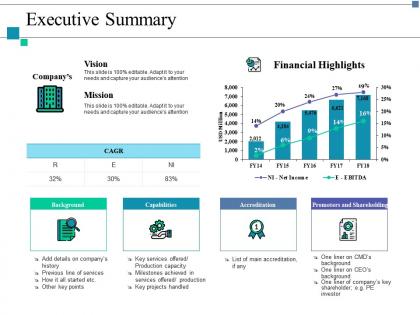
Executive summary accreditation ppt layouts example introduction





Try Before you Buy Download Free Sample Product
 Impress Your
 Audience
 100%
100% Editable
 Save Hours
 of Time


Ensure intensity of focus with our Executive Summary Accreditation Ppt Layouts Example Introduction. Don't allow distractions to intrude.
People who downloaded this PowerPoint presentation also viewed the following :
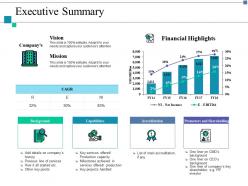
Executive summary accreditation ppt layouts example introduction with all 5 slides:
Examine jaded concepts with our Executive Summary Accreditation Ppt Layouts Example Introduction. Convert boredom into excitement.



FAQs for Executive summary accreditation ppt
Key components include organizational overview, compliance status, quality metrics, stakeholder feedback, and improvement initiatives. These elements streamline the accreditation process by demonstrating institutional effectiveness, regulatory adherence, and continuous enhancement strategies, with many accrediting bodies finding that comprehensive summaries significantly expedite evaluation timelines and enhance approval outcomes.
An effective executive summary influences accreditation decisions by clearly articulating organizational strengths, compliance measures, and strategic initiatives that align with accreditation standards. It streamlines the evaluation process by presenting key achievements, quality metrics, and improvement plans in a concise format, enabling accreditation bodies to quickly assess institutional readiness while demonstrating organizational commitment to excellence and continuous improvement.
Common mistakes include being too lengthy or detailed, lacking clear alignment with accreditation standards, omitting key stakeholder perspectives, and failing to highlight measurable outcomes and evidence. These oversights can significantly weaken an organization's application, with many institutions finding that concise, standards-focused summaries that emphasize concrete achievements and data-driven results ultimately deliver stronger accreditation outcomes and competitive positioning.
Data and statistics enhance executive summaries by providing quantifiable evidence, supporting key recommendations, establishing credibility, and demonstrating measurable outcomes through clear metrics and benchmarks. Strategic integration involves highlighting ROI percentages, market growth figures, and performance indicators that directly support business decisions, with many executives finding that well-presented data accelerates approval processes and strengthens stakeholder confidence.
Clarity and conciseness serve as foundational elements that determine whether executives engage with or dismiss an executive summary, directly impacting decision-making speed and resource allocation. These principles enable busy leaders to quickly grasp key insights, strategic recommendations, and financial implications, with many organizations finding that well-crafted summaries accelerate project approvals and enhance stakeholder buy-in significantly.
Organizations can align their goals with accreditation standards by conducting comprehensive gap analyses, mapping current objectives against required benchmarks, establishing measurable performance indicators, and creating strategic implementation timelines within their executive summaries. Through systematic integration of compliance metrics with business objectives, companies across healthcare, finance, and manufacturing streamline operations while meeting regulatory requirements, ultimately delivering enhanced stakeholder confidence and competitive market positioning.
Executive summaries become more compelling through strategic storytelling, quantifiable outcomes, clear alignment with accreditation standards, stakeholder testimonials, and visual data representations. These approaches streamline reviewer evaluation by presenting measurable improvements, demonstrating compliance transparency, and showcasing institutional impact, with many accreditation bodies finding that evidence-driven narratives significantly enhance assessment efficiency and approval rates.
Stakeholder feedback is crucial for executive summary accreditation as it ensures comprehensive coverage, identifies potential gaps, and validates key messaging across different organizational perspectives. Through collaborative input from leadership, department heads, and external partners, organizations create more robust summaries that address diverse evaluation criteria, ultimately strengthening their accreditation applications and demonstrating thorough stakeholder engagement to reviewing bodies.
Best practices for executive summary formatting include clear section headers, bullet points for key findings, consistent font styling, strategic white space usage, and compelling opening statements. These formatting elements enhance readability by streamlining information flow, highlighting critical insights, and maintaining professional presentation standards, with many executives finding that well-structured summaries deliver faster decision-making and stronger stakeholder engagement.
The executive summary's audience directly shapes its tone and structure through targeted language, technical depth, and strategic emphasis tailored to specific stakeholder needs. For C-suite executives, summaries prioritize high-level strategic outcomes and ROI metrics, while technical teams require detailed implementation specifics, and investors focus on market opportunities and financial projections, ultimately delivering more persuasive and actionable communications.
An executive summary can highlight organizational strengths through strategic positioning of key differentiators, measurable outcomes, innovative practices, leadership expertise, and competitive advantages that directly address accreditation criteria. This approach enables organizations to showcase their unique value proposition while demonstrating compliance, with many institutions finding that well-crafted summaries significantly enhance evaluator perception and streamline the accreditation process.
Organizations can address previous accreditation weaknesses through executive summaries by clearly outlining corrective actions taken, implementing comprehensive improvement strategies, demonstrating measurable progress with specific metrics, and showcasing enhanced compliance frameworks. This strategic approach enables institutions to present evidence-based solutions that directly respond to reviewer concerns, while highlighting organizational commitment to continuous improvement, ultimately strengthening their accreditation position and demonstrating accountability to stakeholders.
Executive summaries for internal use focus on operational details, performance metrics, resource allocation, and strategic decision-making, while accreditation summaries emphasize compliance standards, quality assurance protocols, and regulatory alignment. Internal summaries streamline management processes and enhance strategic planning, whereas accreditation versions demonstrate organizational excellence to external evaluators, ultimately delivering credibility and competitive advantage in regulated industries.
Technology enhances executive summary presentations through interactive dashboards, real-time data visualization, multimedia integration, and collaborative platforms that streamline stakeholder engagement. These digital tools enable executives to present dynamic financial projections, incorporate video testimonials, and facilitate instant feedback collection, ultimately delivering more compelling narratives and faster decision-making processes across organizations.
Follow-up documentation provides critical evidence and detailed analysis that validates the strategic recommendations, financial projections, and operational assumptions presented in an executive summary. These supporting materials, including market research, financial models, competitive analyses, and implementation timelines, enable stakeholders to verify claims and assess feasibility, ultimately delivering greater credibility and confidence in decision-making processes.
No Reviews