


Farm Services Marketing Strategy Powerpoint Presentation Slides Strategy CD V





Try Before you Buy Download Free Sample Product
 Impress Your
 Audience
 100%
100% Editable
 Save Hours
 of Time


Introducing our Farm Services Marketing Strategy PowerPoint Presentation a comprehensive strategy meticulously crafted to optimize your farm produce efforts. This presentation serves as a strategic roadmap, guiding you through understanding market trends, assessing demands, and evaluating production costs with the ultimate goal of driving sales, establishing brand awareness, and building robust relationships with your target audience. The Farm Produce Module within this template offers a detailed overview of your farm marketing firm, showcasing the diverse range of products offered and presenting the business model canvas. Moreover, the presentation outlines essential steps to create a highly effective marketing plan tailored specifically for promoting farm produce. Additionally, our Nutritional Food Items PPT deck provides innovative solutions to address challenges, highlighting the positive impact they can have on your business. To facilitate easy tracking and monitoring of key performance metrics, we have included a dashboard. Download this 100 percent editable presentation now to access our highly researched and skillfully designed product. Elevate your farm marketing strategies and unlock the potential for increased profitability and business success.
People who downloaded this PowerPoint presentation also viewed the following :
Content of this Powerpoint Presentation
Slide 1: This slide introduces Farm Services Marketing Strategy. State your company name and begin.
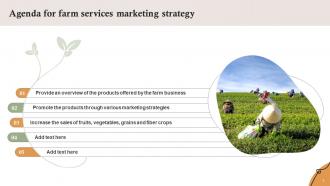
Slide 2: This is an Agenda slide. State your agendas here.
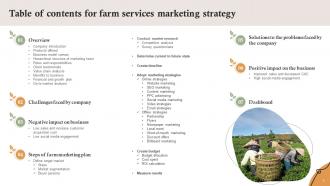
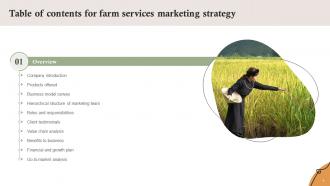
Slide 3: This slide shows Table of Content for the presentation.
Slide 4: This slide shows title for topics that are to be covered next in the template.
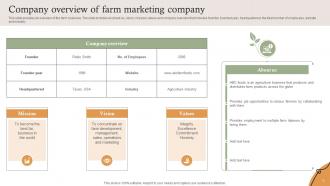
Slide 5: This slide provides an overview of the farm business.
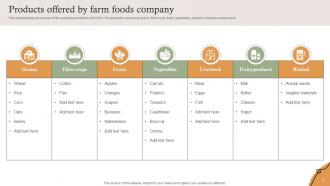
Slide 6: This slide presents an overview of the products provided by farm firm.
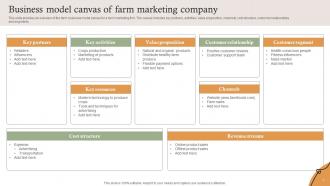
Slide 7: This slide provides an overview of the farm business model canvas for a farm marketing firm.
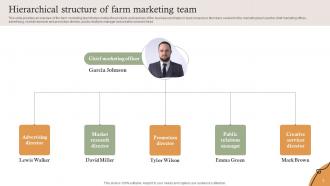
Slide 8: This slide displys farm marketing team that promotes the products and services of the business and helps in lead conversion.
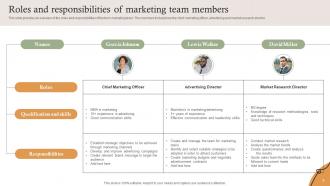
Slide 9: This slide provides an overview of the roles and responsibilities of the farm marketing team.
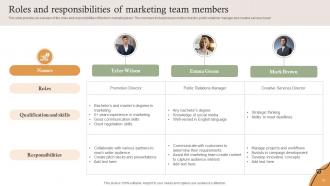
Slide 10: This slide presents the roles and responsibilities of the farm marketing team.
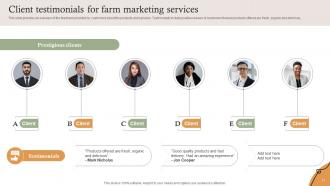
Slide 11: This slide provides feedback provided by customers about the products and services.
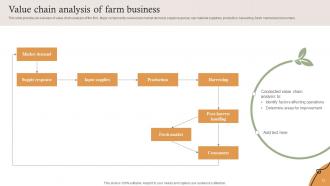
Slide 12: This slide describes an overview of value chain analysis of the firm.
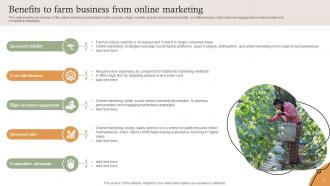
Slide 13: This slide provides an overview of the online advertising advantages to the company.
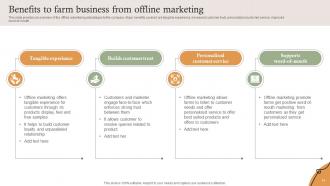
Slide 14: This slide presents an overview of the offline advertising advantages to the company.
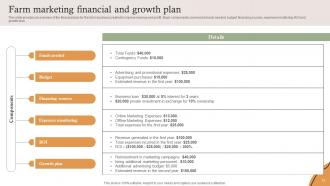
Slide 15: This slide provides an overview of the financial plan for the farm business created to improve revenue and profit.
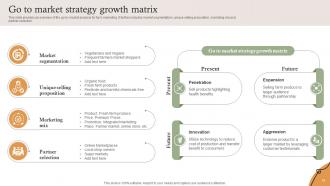
Slide 16: This slide presents an overview of the go-to-market analysis for farm marketing.
Slide 17: This slide shows title for topics that are to be covered next in the template.
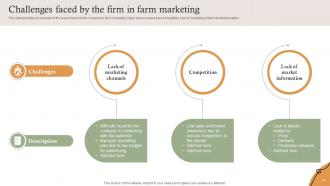
Slide 18: This slide provides an overview of the issues faced by the company in farm marketing.
Slide 19: This slide shows title for topics that are to be covered next in the template.
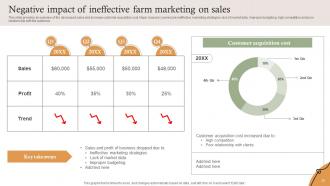
Slide 20: This slide provides an overview of the decreased sales and increase customer acquisition cost.
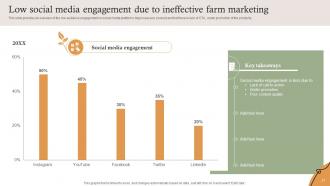
Slide 21: This slide displys an overview of the low audience engagement on social media platforms.
Slide 22: This slide shows title for topics that are to be covered next in the template.
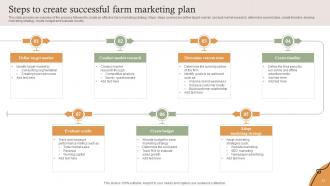
Slide 23: This slide provides an overview of the process followed to create an effective farm marketing strategy.
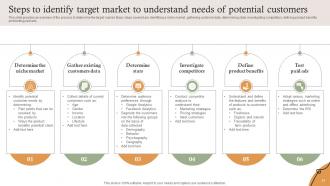
Slide 24: This slide presents an overview of the process to determine the target market.
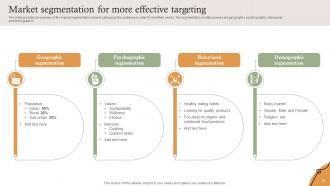
Slide 25: This slide displys market segmentation done to categorize the audience in order to meet their needs.
Slide 26: This slide provides customer profile created by the business to identify and connect with the ideal clients.
Slide 27: This slide shows title for topics that are to be covered next in the template.
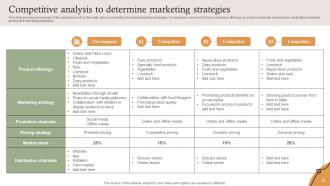
Slide 28: This slide provides comparison of our firm with various competitors to understand their strategies.
Slide 29: This slide displys market research survey that is conducted to determine customer experience.
Slide 30: This slide shows title for topics that are to be covered next in the template.
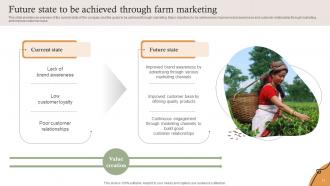
Slide 31: This slide provides an overview of the current state of the company and the goals to be achieved through marketing.
Slide 32: This slide shows title for topics that are to be covered next in the template.
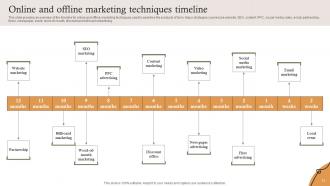
Slide 33: This slide presents timeline for online and offline marketing techniques used to advertise the products of farm.
Slide 34: This slide shows title for topics that are to be covered next in the template.
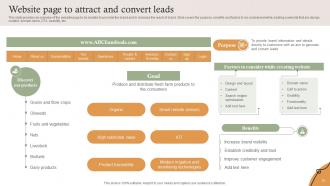
Slide 35: This slide presents website page to be created to promote the brand and to increase the reach of brand.
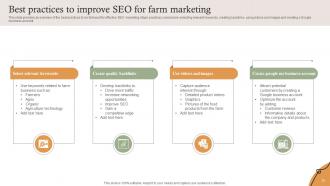
Slide 36: This slide provides an overview of the best practices to be followed for effective SEO marketing.
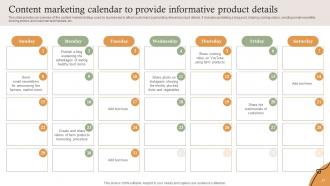
Slide 37: This slide displays content market strategy used by businesses to attract customers by providing relevant product details.
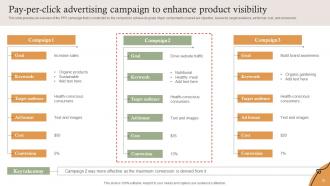
Slide 38: This slide provides an overview of the PPC campaign that is conducted by the company to achieve its goals.
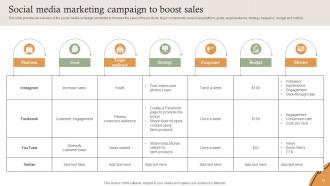
Slide 39: This slide displays social media campaign conducted to increase the sales of the products.
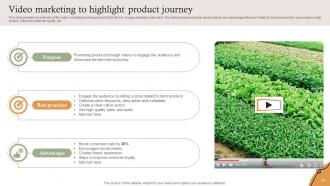
Slide 40: This slide provides an overview of the video marketing technique used by the firm to engage potential customers.
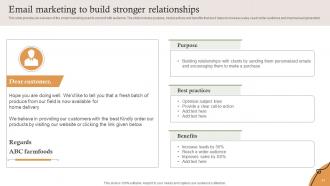
Slide 41: This slide describes an overview of the email marketing used to connect with audience.
Slide 42: This slide shows title for topics that are to be covered next in the template.
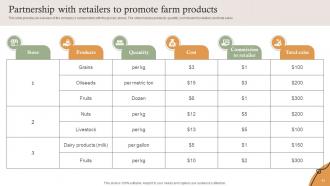
Slide 43: This slide provides an overview of the company’s collaboration with the grocery stores.
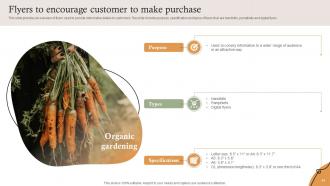
Slide 44: This slide presents an overview of flyers used to provide informative details to customers.
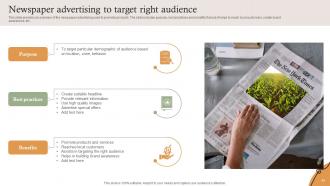
Slide 45: This slide provides an overview of the newspaper advertising used to promote products.
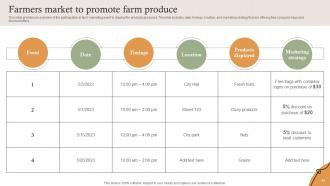
Slide 46: This slide presents participation in farm marketing event to display the products produced.
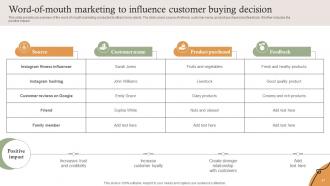
Slide 47: This slide provides an overview of the word-of-mouth marketing conducted to attract more clients.
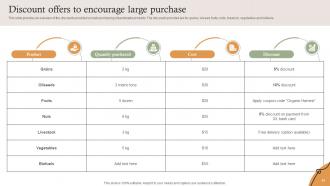
Slide 48: This slide displays discounts provided on bulk purchasing of perishable products.
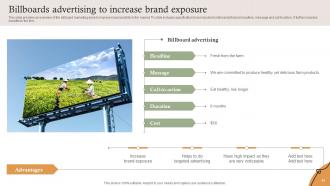
Slide 49: This slide provides an overview of the billboard marketing done to improve brand visibility in the market.
Slide 50: This slide shows title for topics that are to be covered next in the template.
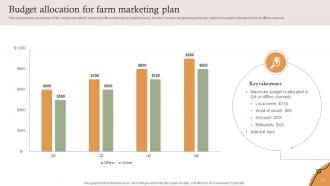
Slide 51: This slide provides an overview of the budget allocated to online and offline channels on quarterly basis.
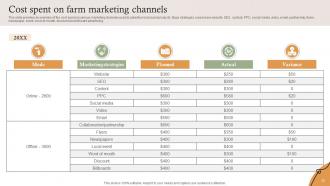
Slide 52: This slide presents an overview of the cost spent on various marketing channels used to advertise brand and products.
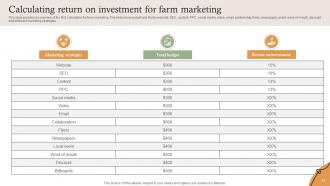
Slide 53: This slide provides an overview of the ROI calculation for farm marketing.
Slide 54: This slide shows title for topics that are to be covered next in the template.
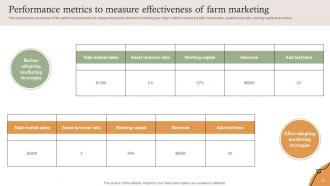
Slide 55: This slide presents an overview of the performance indicators to measure the results of the farm marketing plan.
Slide 56: This slide shows title for topics that are to be covered next in the template.
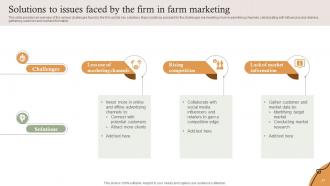
Slide 57: This slide provides an overview of the various challenges faced by the firm and its key solutions.
Slide 58: This slide shows title for topics that are to be covered next in the template.
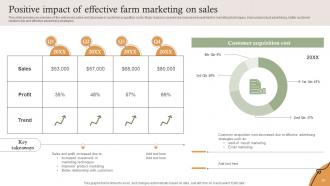
Slide 59: This slide provides an overview of the enhanced sales and decrease in customer acquisition costs.
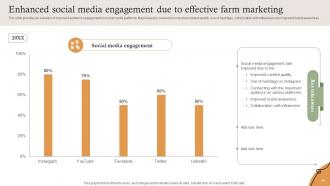
Slide 60: This slide presents improved audience engagement on social media platforms.
Slide 61: This slide shows title for topics that are to be covered next in the template.
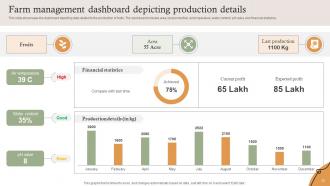
Slide 62: This slide showcases the dashboard depicting data related to the production of fruits.
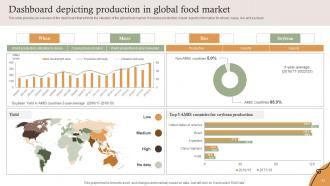
Slide 63: This slide provides an overview of the dashboard that exhibits the situation of the global food market.
Slide 64: This slide shows all the icons included in the presentation.
Slide 65: This slide is titled as Additional Slides for moving forward.
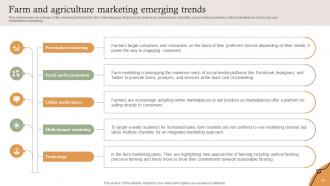
Slide 66: This slide provides an overview of the emerging trends for the farm marketing plan.
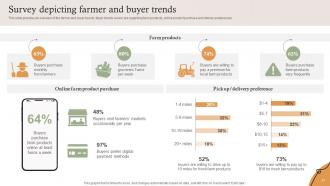
Slide 67: This slide presents an overview of the farmer and buyer trends.
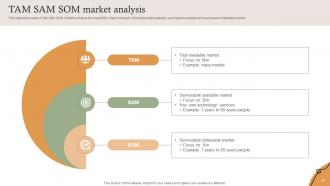
Slide 68: This slide showcases a TAM SAM SOM model to analyze the market for a farm company.
Slide 69: This slide describes Line chart with two products comparison.
Slide 70: This is a Timeline slide. Show data related to time intervals here.
Slide 71: This is a financial slide. Show your finance related stuff here.
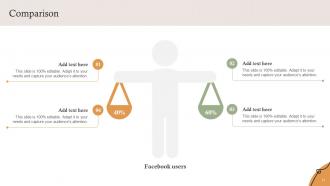
Slide 72: This is a Comparison slide to state comparison between commodities, entities etc.
Slide 73: This is a Thank You slide with address, contact numbers and email address.
Farm Services Marketing Strategy Powerpoint Presentation Slides Strategy CD V with all 81 slides:
Use our Farm Services Marketing Strategy Powerpoint Presentation Slides Strategy CD V to effectively help you save your valuable time. They are readymade to fit into any presentation structure.












FAQs for Farm Services Marketing Strategy Powerpoint Presentation Slides
Key elements include targeted customer segmentation, seasonal campaign planning, digital presence optimization, relationship-based sales approaches, and value-driven service positioning. These strategies enhance farm service providers' market reach by addressing specific agricultural needs, leveraging seasonal patterns, and building trust through consistent communication, with many agricultural businesses finding that personalized outreach and demonstrated expertise ultimately deliver stronger client retention and competitive advantage.
Social media reaches agricultural clients through targeted Facebook groups, LinkedIn farming communities, Instagram visual storytelling, YouTube educational content, and Twitter industry discussions. These platforms enable farm service providers to showcase expertise, share seasonal tips, demonstrate equipment capabilities, and build trust with farmers, ultimately delivering enhanced client relationships and expanded market reach in an increasingly digital agricultural landscape.
Customer education serves as a cornerstone of farm services marketing, building trust through demonstrating expertise, addressing complex agricultural challenges, and showcasing proven solutions tailored to specific crops and conditions. Through educational content, webinars, and field demonstrations, farm service providers establish credibility while helping farmers make informed decisions, ultimately delivering stronger client relationships and competitive differentiation in an increasingly technology-driven agricultural landscape.
Farms can measure marketing effectiveness through website analytics, social media engagement rates, lead generation tracking, customer acquisition costs, and return on investment calculations. By monitoring these metrics across digital platforms, email campaigns, and traditional advertising, agricultural businesses can optimize resource allocation, identify high-performing channels, and ultimately enhance customer outreach while reducing marketing expenses.
Content marketing for farm service businesses delivers increased brand visibility, enhanced customer trust, lead generation, educational value, and cost-effective promotion compared to traditional advertising methods. Through blogs, videos, and social media showcasing expertise in crop management, equipment maintenance, and seasonal farming tips, agricultural service providers build lasting relationships with farmers while demonstrating practical knowledge that drives business growth.
Partnerships with local agricultural organizations enhance marketing efforts by providing credible endorsements, expanding reach through established networks, and offering access to targeted farmer audiences who trust these institutions. These collaborations enable farm service providers to leverage shared resources, participate in agricultural events, and gain valuable market insights, while organizations benefit from members receiving quality services, ultimately creating mutually beneficial relationships that drive business growth.
Farm services face challenges including seasonal demand fluctuations, diverse customer needs across crop types, limited marketing budgets, and competing against established agricultural suppliers. These businesses must navigate price-sensitive farmers, regional market variations, and the need for specialized expertise, while many finding that building trust through consistent service delivery and local market knowledge ultimately delivers competitive advantage and customer loyalty.
Branding is crucial for farm services as it builds trust, differentiates offerings, and commands premium pricing in competitive agricultural markets. Effective strategies include developing consistent visual identity across all materials, showcasing expertise through educational content, leveraging customer testimonials from successful farms, and emphasizing reliability and results-driven outcomes, ultimately enabling agricultural service providers to establish lasting relationships and sustainable competitive advantage.
**INPUT**: What digital tools and platforms are most effective for marketing farm services? **OUTPUT**: Effective digital marketing platforms for farm services include social media channels like Facebook and Instagram, Google Ads for local search visibility, email marketing automation, professional websites with service portfolios, and industry-specific platforms like AgriSync. These tools streamline customer acquisition by showcasing expertise, targeting local farmers, and building trust through testimonials, with many agricultural service providers finding that integrated digital approaches significantly enhance client relationships and operational growth. [Word count: 60 words]
Customer feedback integration enhances farm services marketing through surveys, social media monitoring, direct consultations, and testimonial collection. These insights enable agricultural businesses to refine service offerings, address seasonal concerns, and develop targeted campaigns, with many farming operations finding that customer-driven improvements in equipment maintenance, soil analysis, and crop advisory services ultimately deliver stronger client relationships and increased market share.
**INPUT**: What trends in agriculture should marketers be aware of when developing their strategies? **OUTPUT**: Key agricultural trends include precision farming technologies, sustainable practices, direct-to-consumer sales channels, automation solutions, and data-driven decision making. These developments enable marketers to target tech-forward farmers seeking efficiency, environmentally conscious consumers demanding transparency, and agricultural businesses increasingly focused on operational optimization, ultimately delivering more personalized campaigns and competitive positioning strategies. **Word count: 54 words**
Seasonal variations significantly influence agricultural marketing by requiring flexible pricing strategies, targeted timing for product launches, and adaptive inventory management throughout planting, growing, and harvest cycles. Smart farm service providers leverage these patterns by offering pre-season equipment maintenance, peak-season support services, and off-season planning consultations, ultimately delivering year-round revenue streams while maximizing customer engagement during critical agricultural periods.
Email marketing enables farm service providers to deliver targeted communications about seasonal services, equipment maintenance reminders, and agricultural insights directly to farmers' inboxes. Through automated campaigns and personalized content, agricultural businesses can nurture client relationships, promote timely services like soil testing or crop protection, and ultimately build trust while driving consistent revenue growth throughout farming seasons.
Farm services can leverage data analytics to optimize marketing strategies by analyzing crop yield patterns, seasonal demand fluctuations, equipment usage data, and customer purchasing behaviors to predict service needs and timing. Through predictive analytics, agricultural service providers streamline resource allocation, enhance targeted outreach to farmers during peak seasons, and ultimately deliver more personalized services while reducing operational costs and improving customer satisfaction.
**INPUT**: What outreach methods are most effective for engaging with local farming communities? **OUTPUT**: Effective outreach methods include attending agricultural trade shows, partnering with local farm cooperatives, hosting educational workshops, leveraging community newspapers, and utilizing farming social media groups. These approaches streamline engagement by building trust through face-to-face interactions, delivering practical value, and connecting through established networks, with many agricultural service providers finding that consistent community presence ultimately enhances credibility and generates stronger client relationships. **Word count: 59 words**
-
A big thanks to SlideTeam! An incredible and diverse library of templates helped me with my business project presentation.
-
Keep doing the good work guys. Surpass the needs and expectations always!!