


Fashion Company Profile Powerpoint Presentation Slides CP CD





Try Before you Buy Download Free Sample Product
 Impress Your
 Audience
 100%
100% Editable
 Save Hours
 of Time


A global fashion retail company that offers clothing accessories for men, women, and kids. Committed to providing updated and stylish products and maintains a strong emphasis on sustainability and ethical practices. Check out our insightfully developed PowerPoint Presentation titled, Fashion Company Profile which provides details about the executive summary which further includes legal name, headquarters, year of foundation, founders, stock symbol, and product service offerings. Additionally, our Business Profile Presentation outlines details related to business operations which are mission and core values, facts and statistics, unique selling points, business model, global presence, history, etc. Moreover, the Corporate Profile PPT incorporates the competitive landscape of the company. It also includes yearly comparisons of monthly active customers, trips, and gross bookings. Furthermore, the Company Overview Deck showcases an overview of financial position through revenue, operating income, net income, balance sheet, and cashflows. Lastly, the Business Outline module entails business combinations, SWOT analysis, organizational structure, future strategy and goals, future expansion plans, SWOT analysis, and CSR goals and initiatives. Get access now.
People who downloaded this PowerPoint presentation also viewed the following :
Content of this Powerpoint Presentation
Slide 1: This slide introduces Fashion Company Profile. State Your Company Name and begin.
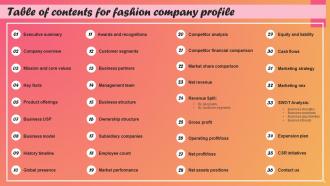
Slide 2: This slide shows a Table of Contents for the presentation.
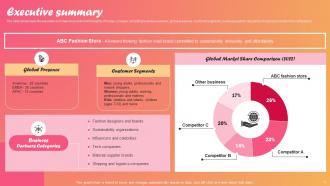
Slide 3: The slide showcases the executive summary to provide brief insights of Vestas company.
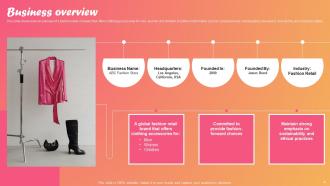
Slide 4: This slide shows an overview of a fashion retail company that offers clothing accessories for men, women and children.
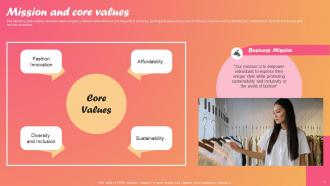
Slide 5: This slide outlines a fashion retail company’s mission statement and core values that act as the guiding principles of business.
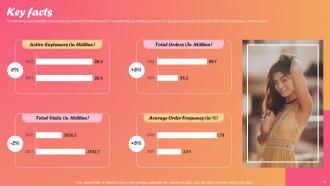
Slide 6: This slide highlights various stats about a fashion retail company.
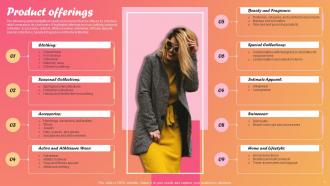
Slide 7: This slide caters to products and services that are offered by a fashion retail company to its customers.
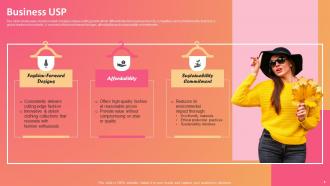
Slide 8: The slide puts a fashion retail company unique selling points.
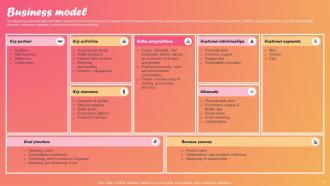
Slide 9: This slide illustrates information about a fashion retail company’s business model showing how enterprise operates and performs key tasks.
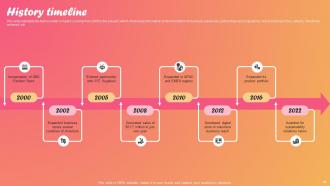
Slide 10: This slide highlights the fashion retail company’s journey from 2000 to the present.
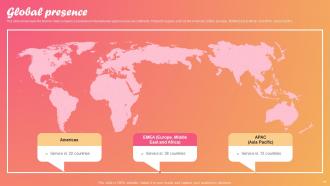
Slide 11: This slide entails the fashion retail company’s presence in international regions across all continents.
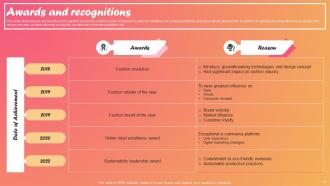
Slide 12: This slide mentions recent awards and recognition received by a fashion retail company.
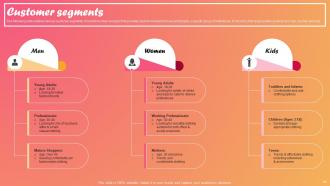
Slide 13: This slide outlines various customer segments of a fashion retail company that provides fashion-forward choices and targets a specific group of individuals.
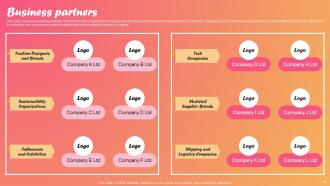
Slide 14: This slide portrays business partners of a fashion retail company that ensures proper functioning of business workflow operations.
Slide 15: This slide pertains to key executives of management team of a fashion retail company that are responsible to manage and ensure proper functioning of business.
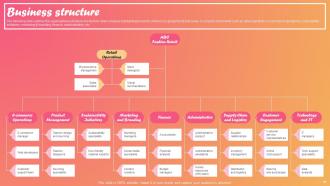
Slide 16: This slide presents the organizational structure of a fashion retail company highlighting hierarchy of teams by global functional areas.
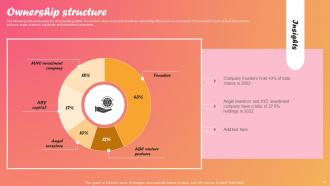
Slide 17: This slide represents the shareholding pattern of a fashion retail company that outlines ownership of the business.
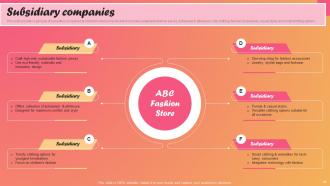
Slide 18: This slide provides a glimpse of subsidiary companies of a fashion retail company.
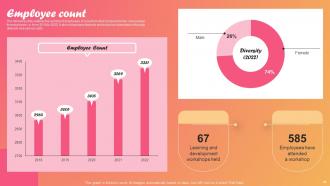
Slide 19: This slide outlines the number of employees of a fashion retail company for five consecutive financial years i.e. from 2018 to 2022.
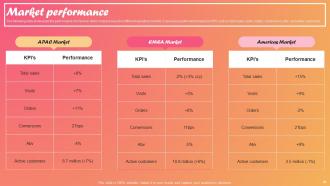
Slide 20: This slide elucidates the performance of a fashion retail company based on different operating markets.
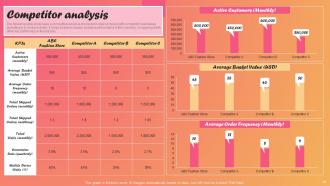
Slide 21: This slide puts a competitive analysis of a fashion retail company with competitor businesses operating in a similar industry.
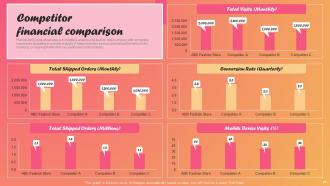
Slide 22: This slide demonstrates a competitive analysis of a fashion retail company with competitor businesses operating in a similar industry.
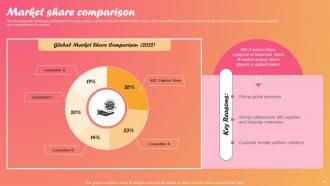
Slide 23: This slide presents comparison of business share in global market of a fashion retail company with competitive enterprises in similar industry.
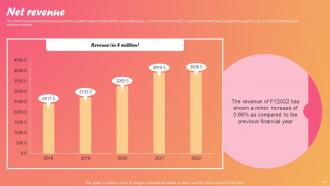
Slide 24: The slide represents the total revenue gained by a fashion retail company for five consecutive years, i.e. from FY2018 to FY2022.
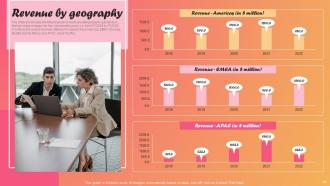
Slide 25: The slide showcases the total revenue of each operating regions gained by a fashion retail company for five consecutive years, i.e. from FY2018 to FY2022.
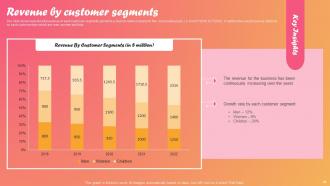
Slide 26: The slide shows the total revenue of each customer segments gained by a fashion retail company for five consecutive years, i.e. from FY2018 to FY2022.
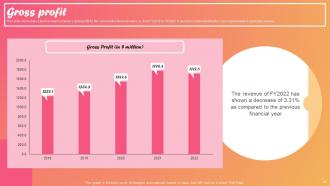
Slide 27: This slide outlines a fashion retail company’s gross profit for five consecutive financial years i.e. from FY2018 to FY2022.
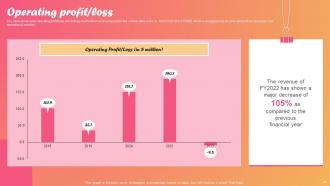
Slide 28: The slide entails operating profit/loss percentage of a fashion retail company for five consecutive years i.e. from FY2018 to FY2022.
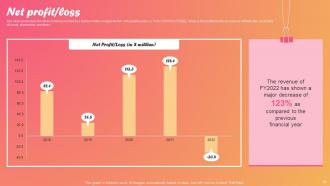
Slide 29: The slide mentions the net income/loss earned by a fashion retail company for five consecutive years i.e. from FY2018 to FY2022.
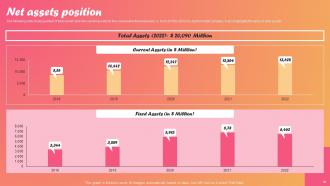
Slide 30: This slide puts position of total current and non-current assets for five consecutive financial years i.e. from 2018 to 2022 of a fashion retail company.
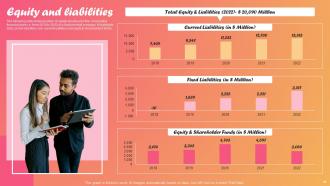
Slide 31: This slide marks position of capital structure for five consecutive financial years i.e. from 2018 to 2022 of a fashion retail company.
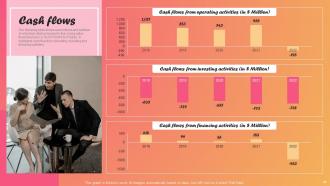
Slide 32: This slide illustrates cash inflows and outflows of a fashion retail company for five consecutive financial years i.e. from FY2018 to FY2022.
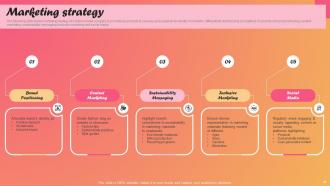
Slide 33: This slide highlights marketing strategy of a fashion retail company.
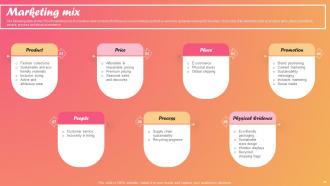
Slide 34: This slide shows 7Ps of marketing mix of a fashion retail company that focuses on promoting a product or service to generate revenue for business.
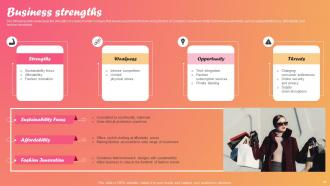
Slide 35: This slide showcases the strengths of a fashion retail company that showcases factors that are strong factors of company’s business model.
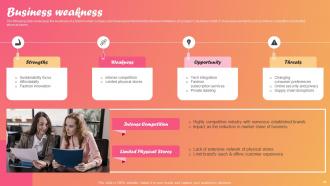
Slide 36: This slide caters to the weakness of a fashion retail company and showcases internal factors that are limitations of company’s business model.
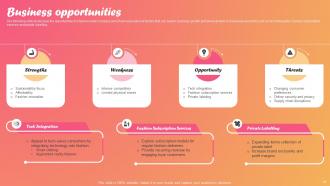
Slide 37: This slide consists the opportunities of a fashion retail company and showcases external factors that can lead to business growth and development.
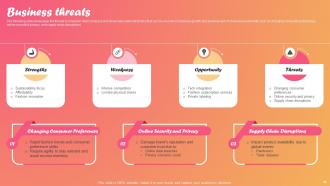
Slide 38: This slide elucidates the threats to a fashion retail company and showcases external factors that can be a hurdle in business growth and development.
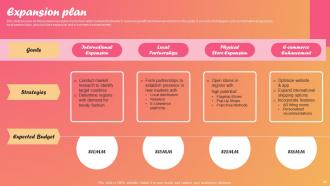
Slide 39: This slide focuses on future expansion plans of a fashion retail company that leads to business growth and development across the globe.
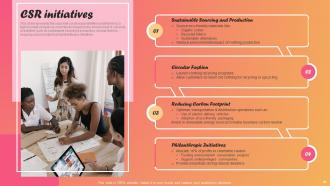
Slide 40: This slide represents the corporate social responsibilities undertaken by a fashion retail company to minimize its impact on the environment.
Slide 41: This slide highlights the various platforms to follow and contact a fashion retail company.
Slide 42: This slide shows all the icons included in the presentation.
Slide 43: This slide is titled Additional Slides for moving forward.
Slide 44: This slide provides a 30-60-90-day plan with text boxes.
Slide 45: This slide is a financial slide. Show your finance-related stuff here.
Slide 46: This slide shows Post-It Notes. Post your important notes here.
Slide 47: This slide contains a Puzzle with related icons and text.
Slide 48: This slide is a thank-you slide with address, contact numbers, and email address.
Fashion Company Profile Powerpoint Presentation Slides CP CD with all 56 slides:
Use our Fashion Company Profile Powerpoint Presentation Slides CP CD to effectively help you save your valuable time. They are readymade to fit into any presentation structure.













FAQs for Fashion Company Profile Powerpoint Presentation
A fashion company profile should include brand story and heritage, design philosophy and aesthetic vision, target demographic and market positioning, signature collections and product range, and sustainability practices. These elements work together by establishing emotional connection, differentiating from competitors, and communicating values, with many fashion brands finding that authentic storytelling combined with clear visual identity ultimately delivers stronger customer loyalty and market recognition.
A fashion company's mission and vision statements enhance its profile by establishing brand identity, communicating core values, and differentiating from competitors in an increasingly crowded marketplace. These strategic statements guide marketing campaigns, attract aligned consumers and talent, and build emotional connections with target audiences, while many fashion brands finding that clear purpose-driven messaging ultimately delivers stronger customer loyalty and sustainable competitive advantage.
Target audience analysis fundamentally shapes a fashion company's identity by defining brand positioning, aesthetic direction, pricing strategies, marketing channels, and product development priorities. Through detailed demographic and psychographic insights, fashion brands can align their visual identity, messaging tone, and collection themes with consumer preferences, ultimately delivering authentic brand experiences that resonate deeply and drive stronger market differentiation.
A fashion company can showcase its unique selling propositions through compelling brand storytelling, distinctive design philosophy, sustainability initiatives, exclusive materials or techniques, and customer testimonials. By highlighting specific differentiators like eco-friendly production processes, innovative fabric technologies, or celebrity endorsements, companies create memorable positioning that resonates with target audiences, ultimately driving brand loyalty and competitive advantage in an increasingly crowded marketplace.
Fashion brand aesthetics in company profiles should incorporate consistent color palettes, typography, high-quality product photography, lifestyle imagery, and brand storytelling elements that reflect the target demographic's aspirations. These visual strategies streamline brand recognition by showcasing signature design elements, seasonal collections, and brand heritage, with many fashion retailers finding that cohesive visual narratives ultimately enhance customer loyalty and competitive positioning.
Sustainability practices are increasingly critical for modern fashion companies, directly impacting brand reputation, consumer loyalty, regulatory compliance, and operational efficiency. These initiatives enhance competitive advantage by reducing environmental footprint, minimizing waste, and streamlining supply chains, with many fashion retailers finding that sustainable practices ultimately deliver cost savings and attract environmentally conscious consumers.
Fashion brand metrics should include revenue growth, market share expansion, customer acquisition rates, brand awareness scores, and social media engagement levels. These indicators demonstrate business performance through sales figures, demographic reach, and digital presence, with many successful fashion companies finding that combining financial data with engagement metrics ultimately delivers comprehensive insights into brand positioning and competitive advantage in an increasingly dynamic retail landscape.
A fashion company can effectively communicate its heritage through visual timelines showcasing key milestones, founder stories with personal narratives, archival imagery demonstrating evolution, and authentic brand values woven throughout the profile. These storytelling elements resonate by connecting emotional heritage with modern relevance, ultimately building deeper customer loyalty and brand differentiation in an increasingly crowded marketplace.
Fashion company profiles should acknowledge sustainability initiatives, digital-first shopping experiences, inclusive sizing and representation, personalized customization options, and social media integration. These trends resonate with modern consumers by demonstrating environmental responsibility, seamless omnichannel experiences, and authentic brand values, with many fashion retailers finding that highlighting these elements significantly enhances customer loyalty and competitive positioning.
Collaborations and partnerships can be highlighted through dedicated sections showcasing strategic alliances, joint ventures, supplier relationships, and co-branding initiatives with specific partner names and outcomes. These partnerships demonstrate market credibility and expansion capabilities, with many fashion companies finding that highlighting collaborations with retailers, influencers, and technology providers ultimately enhances brand positioning and competitive advantage.
Fashion companies should consider intellectual property protection for designs and trademarks, compliance with labor laws and ethical sourcing requirements, data privacy regulations for customer information, and advertising standards for marketing claims. These legal frameworks vary by jurisdiction, with many international brands finding that proactive compliance in areas like sustainability disclosures, employment practices, and consumer protection ultimately delivers competitive advantage and operational transparency.
B2B fashion profiles should emphasize manufacturing capabilities, supply chain efficiency, wholesale pricing structures, and technical specifications, while B2C profiles focus on brand storytelling, lifestyle alignment, customer experiences, and emotional connection. B2B presentations typically showcase production capacity, quality certifications, and partnership benefits for retailers, while B2C profiles highlight design aesthetics, brand values, and consumer engagement, with many fashion companies finding that separate, targeted profiles significantly enhance conversion rates across both markets.
Social media presence and online engagement serve as crucial brand-building tools that shape customer perception, drive sales, and establish market positioning for fashion companies. These platforms enable brands to showcase collections, connect directly with target audiences, and build loyal communities, with many fashion retailers finding that strategic social engagement significantly enhances brand visibility and ultimately delivers increased customer acquisition and competitive advantage.
Customer testimonials and case studies enhance fashion company profiles by building credibility, showcasing real-world results, and demonstrating brand impact across diverse customer segments. These authentic narratives provide social proof that resonates with potential clients, while detailed case studies highlight successful campaigns, styling transformations, or retail partnerships, ultimately delivering enhanced trust and competitive differentiation in an increasingly crowded marketplace.
Emerging fashion brands face challenges including limited brand recognition, lack of established credibility, insufficient market data, competitive differentiation difficulties, and resource constraints for professional presentation. These obstacles often result in profiles that fail to capture investor attention, struggle to communicate unique value propositions, and cannot effectively compete with established brands, ultimately hindering growth opportunities and strategic partnerships.
-
Content of slide is easy to understand and edit.
-
Slideteam offers pocket-friendly products. As a college student this is a really necessary thing to look at while paying for something.