

Fast Food Restaurant Chain Operational Plan




Try Before you Buy Download Free Sample Product
 Impress Your
 Audience
 100%
100% Editable
 Save Hours
 of Time


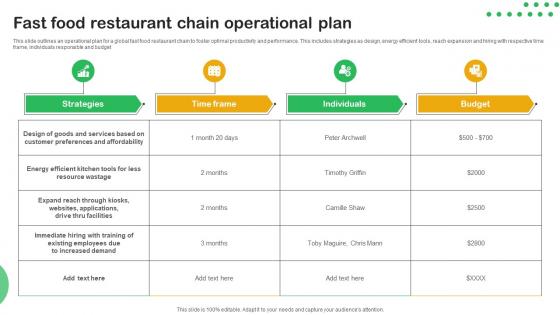
This slide outlines an operational plan for a global fast food restaurant chain to foster optimal productivity and performance. This includes strategies as design, energy efficient tools, reach expansion and hiring with respective time frame, individuals responsible and budget.
People who downloaded this PowerPoint presentation also viewed the following :
Fast Food Restaurant Chain Operational Plan with all 6 slides:
Use our Fast Food Restaurant Chain Operational Plan to effectively help you save your valuable time. They are readymade to fit into any presentation structure.





FAQs for Fast Food Restaurant
You'll need centralized distribution centers placed strategically to cut delivery times. Real-time inventory tracking is huge - automated systems that reorder based on sales patterns save your sanity. Temperature-controlled trucks and standardized packaging are basics. Honestly, coordinating thousands of locations gets chaotic fast, but that's where solid supplier relationships matter most. Find vendors who won't flake when demand spikes happen (and they will). Oh, and definitely map out your current supply chain first to spot the obvious bottlenecks. Strong partnerships with suppliers who can actually scale make or break the whole operation.
They basically measure everything down to the gram - recipes, portions, all of it. Employees get trained super hard on exact techniques until it becomes automatic. Most of the prep happens at central facilities, then franchisees have to follow these crazy detailed cooking procedures. They're always doing quality checks and sending mystery shoppers around too. Honestly, the whole system is pretty impressive when you think about it. If you want to copy this approach, just document everything you do and make checklists. That's really the foundation of the whole thing.
Dude, tech makes SUCH a difference for speed. Digital menus update instantly, kitchen displays cut out all that paper ticket chaos, and mobile ordering lets people skip lines completely. Your POS should connect everything - when someone orders on the app, it goes straight to the kitchen. Pretty crazy how smooth that's gotten lately. Predictive stuff helps too so you're not totally swamped during lunch rush. Honestly though? Start with fixing your order management first. That's usually where everything gets backed up and it'll give you the biggest bang for your buck.
Oh man, seasonal menus are such a pain to manage! You're constantly trying to predict how much people will want new stuff while getting rid of old inventory. Start coordinating with suppliers way early - like months ahead - because seasonal ingredients get competitive. Staff training takes forever too since they need to learn all the new prep work. Honestly, the worst part is timing everything perfectly so you don't end up with leftover holiday items nobody wants. Most places use data from previous years to guess demand now. My advice? Build in extra time for everything and have a solid plan for dumping excess stock when things go wrong.
Honestly, most chains just nail three things: scheduling software, cross-training, and decent incentives. The scheduling part is huge - they match staff to busy hours automatically, which saves them tons on labor costs. Cross-training is smart too because then anyone can jump on different stations when it gets crazy or someone calls out sick. They also create clear paths for promotion and throw in bonuses to keep good people around. Oh, and performance incentives work better than you'd think. If you're trying to figure this out for yourself, start with getting your scheduling right first. That'll make the biggest difference for your costs and keeping employees happy.
So most chains are actually pretty strict about this stuff. They've got temperature controls and make employees wash hands constantly - plus all those beeping timers that would honestly make me lose my mind working there. Digital thermometers everywhere, sanitizing stations every few feet. Staff has to do mandatory food safety training too. Most places even do their own surprise inspections on top of city requirements, which is smart. Oh and if you're ever wondering about a specific place, health scores are usually posted by the door or you can check online.
Honestly, the regulations will drive you crazy - food safety laws, labor stuff, all varies by country. Supply chains are a nightmare too since you're basically starting over finding reliable local suppliers. Your menu probably won't work either, which sucks but it's true. Like, what kills it in the US might be totally wrong for Asian markets. Local competitors already own their customers' hearts, so that's tough. Oh and everything costs way more than you think it will. I'd say do tons of research first and definitely find local partners who actually know how things work there.
Honestly, your POS system is probably a goldmine you're not even touching - peak hours, combo patterns, seasonal stuff, it's all there. Customer flow data helps you nail staffing so people aren't waiting forever (which they hate). Track your inventory turnover too because food waste will eat your profits alive. Rush hour predictions are clutch for prep timing. Oh, and sales data by location shows you what people actually want in different areas - might surprise you. Menu optimization based on what's actually selling vs what you think should sell? Game changer. Start there.
Honestly, customer trends are everything in this business - ignore them and you're dead in the water. Look at how fast chains pivoted when everyone went health-crazy, suddenly salads were everywhere. Same with plant-based stuff. Social media makes it insane now because trends blow up overnight. Most places constantly run limited-time offers to test the waters before making anything permanent. Smart move, really. You've gotta watch your sales data and what people are buzzing about online to catch trends early. Beat your competitors to it and you're golden.
Fast food chains are totally rethinking their suppliers based on sustainability now. Local sourcing is huge - cuts down on shipping emissions. Plus they're demanding eco-friendly packaging and making suppliers get environmental certifications. McDonald's went cage-free with eggs, which was smart PR honestly. Companies are also doing regenerative agriculture partnerships and literally dropping suppliers who don't meet their green standards. Oh, and if you're researching any chain's supply decisions, their sustainability reports are gold - that's where you'll see what's actually driving their vendor choices.
Look, franchising is way less money upfront and you don't deal with the day-to-day chaos. But you're basically giving up control for that steady cash flow. Corporate stores? Yeah, you'll need way more capital and management time, though you get to keep all the profits instead of just fees and royalties. Most successful chains actually do both - honestly makes the most sense financially. Franchising helps you grow fast using other people's money, while your own stores in good locations make you the most cash. My advice? Check how much money you actually have to work with first. That'll pretty much tell you which way to go.
Speed and consistency are what'll make or break you. Time your current processes first - figure out where things get stuck. Your kitchen workflow needs to be smooth so orders don't pile up during prep or assembly. Staff training matters too, but keep it friendly - customers can tell when someone's just going through the motions. Mobile ordering helps cut wait times, though honestly the tech stuff comes after you nail the basics. What really matters is that people get the same experience every time they come in. Nobody wants to wait 5 minutes one day and 20 the next.
Honestly, foot traffic is huge - you want spots near busy intersections or shopping centers where people actually go. Demographics are key too, make sure the income and age ranges fit your brand. Parking is weirdly important (trust me on this one). Competition can be tricky - sometimes clustering with other fast food works, but you don't want to go overboard. I'd definitely do traffic counts at different times of day. Oh, and walk around the area yourself to get a real feel for it. Numbers on paper don't tell the whole story.
Ugh, promos are like controlled chaos honestly. You'll need at least a month to plan everything out - supply chain alone takes 2-3 weeks for ingredients. Staff up 20-30% more during rush times or you're screwed. Kitchen layout might need changes if it's a complicated item, plus training everyone on new prep is a whole thing. Here's the annoying part though - forecasting demand is basically throwing darts blindfolded. Even your smartest guesses can be way off. My advice? Always order more supplies than you think. Better to have leftovers than angry customers waiting forever.
Honestly, culture makes a huge difference in how fast your team moves. Staff who actually give a damn will hit those drive-thru times without you breathing down their necks. Bad culture? You'll see it immediately - slow service, people calling out constantly, total mess. When everyone knows their role and feels like they're part of something bigger than minimum wage hell, they naturally work faster and screw up less. I mean, nobody wants to flip burgers forever, but if the vibe is decent they'll at least hustle while they're there. Fix your culture first and efficiency follows.
-
What an exhaustive collection of templates you guys have there in slideteam. Impressive!!!
-
Excellent template with unique design.