

Action Plan To Increase Sales Of Restaurant





Try Before you Buy Download Free Sample Product
 Impress Your
 Audience
 100%
100% Editable
 Save Hours
 of Time


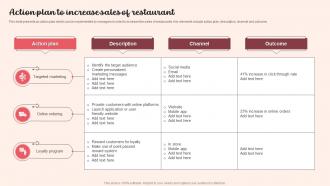
This slide presents an action plan which can be implemented by managers in order to increase the sales of restaurants. Key elements include action plan, description, channel and outcome
People who downloaded this PowerPoint presentation also viewed the following :
Action Plan To Increase Sales Of Restaurant with all 6 slides:
Use our Action Plan To Increase Sales Of Restaurant to effectively help you save your valuable time. They are readymade to fit into any presentation structure.





FAQs for Action Plan To Increase
Okay so you need four things for a decent sales strategy. First, figure out your target market - like actually know who these people are and why they'd pick you over everyone else. Then nail down your value prop. The sales process stuff is where most people mess up though - you gotta map out that whole funnel so leads don't just disappear into the void. And honestly? Don't sleep on tracking your numbers. I know it's boring but you need real KPIs to see if anything's actually working. Just start by looking at what you've got now and fix the biggest problem area first.
Dude, customer personas are a game changer. No more throwing pitches at the wall hoping something sticks. Interview your best customers first - that's where the gold is. Once you know what actually keeps your ideal buyers awake at 3am, you can speak directly to those problems instead of spouting generic benefits that make everyone's eyes glaze over. Your conversations get so much sharper. Honestly, it's like having insider knowledge about what makes people tick. You'll stop chasing leads that were never gonna buy anyway and focus on the ones who are ready to pull out their wallets.
Dude, you absolutely need market research for sales - it's like having a GPS instead of just wandering around lost. Survey your current customers first about why they actually bought from you. That data will show you who your ideal buyers are and what problems you're solving for them. Look at what your competitors are doing right (and wrong, honestly that's sometimes more useful). The whole point is figuring out what messaging actually works. I know it sounds boring but trust me, without this stuff you're just guessing. It'll totally change how you approach everything once you see the patterns.
Honestly, you've gotta dig into each industry's weird quirks first. Healthcare? They're slow as molasses because of all the compliance stuff. Tech companies want to see ROI demos yesterday. Finance will basically interrogate your references - they're paranoid about risk. Manufacturing takes forever to close (like 6-12 months), but they stick around once they're sold. Retail's tricky because everything revolves around seasons and they need stuff done fast. Here's what actually works: talk to your current clients in each space. Ask what hooked them initially and what made them hesitate. That'll tell you way more than any industry report.
Track your leading and lagging indicators - revenue growth and conversion rates are obvious, but pipeline velocity matters too (how fast deals move through stages). CAC vs lifetime value shows if you're actually making money long-term. Also watch sales cycle length, win rates by deal size, and activity stuff like calls per rep. The real insight comes from connecting those early signals to revenue patterns. Oh and start with maybe 3-4 key metrics instead of tracking everything - you can always pile on more data once you figure out what actually moves the needle.
Dude, start with CRM systems - they'll track your leads automatically so you don't have to. Email sequences are clutch too since they nurture prospects even when you're binge-watching Netflix. AI insights can actually tell you which deals might close (still feels weird saying that). The follow-up consistency alone is worth it because let's be real, we all forget to circle back sometimes. Pick one thing that's sucking up your time and automate just that first. Don't go crazy trying to automate everything at once - I learned that the hard way.
Ugh, the worst thing companies do is try to sell to literally everyone - pick your battles! Also don't leave your sales team out of the loop when you're planning this stuff. I see so many businesses set these crazy unrealistic quotas and wonder why everything falls apart. Market conditions change fast too, so whatever looks amazing on paper might be total garbage in reality. Honestly? Just talk to your current customers first and ask your sales reps what they're actually seeing out there. They know way more than any spreadsheet will tell you.
Here's what works for me: collect 3-4 solid customer stories you can pull out for different situations. Don't just list features - paint the picture of how another client dealt with the same mess your prospect is facing right now. Stories stick way better than throwing numbers at people. Make your prospect feel like the hero, not your product (this sounds cheesy but it actually matters). I usually start with something like "So we had this client who was dealing with..." then walk through what happened after they used our solution. It's honestly just how people process information better. Way more engaging than rattling off bullet points.
Dude, you really can't plan sales stuff without looking at your competition first. Price wars? Switch to selling value instead of just being cheap. They're hogging all the good channels? Time to get creative with how you reach people. I've watched sales teams chase dead ends for months just because they had no clue who else was pitching the same clients. Track what your main competitors are doing - their pricing, how they talk about their product, who they're going after. Then adapt your game plan. Oh, and maybe start with your top 3-5 competitors this quarter.
Look, most sales teams just make up pricing on the spot - which is why deals die. You need to figure out what your customers actually care about first, not what you think they should. Then match your pricing tiers to different types of buyers. Train your team on which approach to use when. Set clear rules for who can discount what and how to handle price pushback. Your pricing should make selling easier, not harder. Oh, and definitely track what's working - I've seen too many companies stick with pricing that kills deals. Use real data to tweak things as you go.
Get both teams to nail down what a qualified lead actually looks like first. Same CRM, same numbers - otherwise marketing's celebrating clicks while sales is griping about garbage leads. Been there, it sucks. Have their team leads sit in each other's weekly meetings. You'll catch the disconnect issues immediately. Regular check-ins where marketing shows campaign stuff and sales gives honest feedback on lead quality. Oh, and ditch separate department goals - make them both hit the same revenue targets. That changes everything pretty fast.
Honestly, your sales team sees everything first - they're dealing with objections daily and know what actually works vs what sounds good on paper. They spot competitor moves way before marketing does. I'd set up monthly check-ins or quick surveys after major deals close. But here's the thing - don't just collect their input and let it sit in a folder somewhere. Actually use it! Start with your top performers and ask what's broken and what's clicking. Their feedback will tell you if your messaging hits or misses, plus they'll call out pricing issues faster than any spreadsheet analysis.
Look, most strategies die because nobody actually trains the team on how to execute them. You spend months planning, then just assume your reps will figure it out? That's nuts. Your people need to learn the new processes, tools, objection handling - basically whatever your strategy demands. Development keeps them current too when markets shift. Here's what I'd do: bake training milestones right into your rollout schedule from day one. Don't just tack it on later as some afterthought. Otherwise you're basically setting money on fire.
Don't scrap your whole sales process - just add social selling to what you're already doing. I spend like 15-20 minutes daily on LinkedIn checking out prospects before I call them. Makes such a difference honestly. Between your usual touchpoints, engage with their posts and share stuff that actually helps people (not just company updates, ugh). Research first, then your cold outreach won't sound so... cold. Track what's working though - some social activities are just time wasters. The trick is staying visible without being that annoying salesperson who comments on everything.
Honestly, stay in touch even when you're not trying to sell them anything - that's what most reps get wrong. They close the deal then vanish, which is so dumb. Check in regularly just to see how things are going with your product. Quick responses when they have issues matter way more than you'd think. Maybe throw in some perks for your longtime customers or set up those quarterly reviews to show you actually care about their business succeeding. Sounds cheesy but making them feel heard instead of like just another number? That's where the real loyalty comes from.
-
“Ample and amazing variety of templates available, really helpful for making professional PPT for day to day workings.”
-
I faced no difficulty while searching for the slide I wanted. Honestly, the website’s interface is easy to use and can be navigated easily!