


Annual Business Action Plan To Increase Sales Performance




Try Before you Buy Download Free Sample Product
 Impress Your
 Audience
 100%
100% Editable
 Save Hours
 of Time


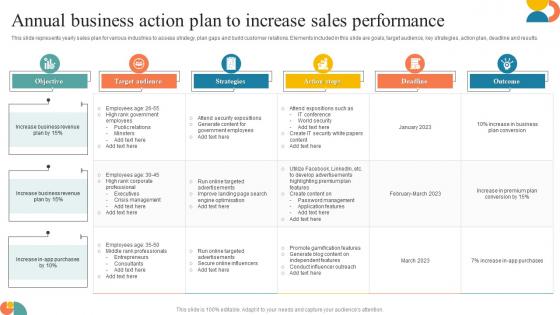
This slide represents yearly sales plan for various industries to assess strategy, plan gaps and build customer relations. Elements included in this slide are goals, target audience, key strategies, action plan, deadline and results.
People who downloaded this PowerPoint presentation also viewed the following :
Annual Business Action Plan To Increase Sales Performance with all 6 slides:
Use our Annual Business Action Plan To Increase Sales Performance to effectively help you save your valuable time. They are readymade to fit into any presentation structure.





FAQs for Annual Business Action Plan To
Here's what I'd focus on: first nail down exactly who you're selling to and what problem you're fixing for them. Map out your whole sales process too - seriously, most teams skip this step and then can't figure out why deals just die halfway through. Get everyone using the same messaging (this one's harder than it sounds). Track your conversion rates at each stage religiously. The biggest thing though? Making sure your whole team actually knows these basics inside and out. When everyone's on the same page, everything else gets way easier.
Look, buyer personas are game-changers for sales. You'll know exactly what pain points hit hardest and how they make decisions. This lets you customize your pitch instead of using some generic script everyone ignores. I always interview my best customers first - they'll tell you stuff you never would've guessed about why they actually bought. Plus you'll anticipate objections before they even come up. The timing and communication style becomes way more natural too. Some prospects want formal emails, others prefer casual texts. Without personas you're basically guessing at everything, which is exhausting and doesn't work.
Honestly, data analytics is like having a crystal ball for your sales game. Shows you what's actually working vs what you *think* is working. I used to just wing it and was probably wrong like 70% of the time - embarrassing but true! Now I track which lead sources actually convert, spot patterns in my best deals, and see exactly where people bail from my pipeline. Pretty eye-opening stuff. You'll want to focus on maybe 3-4 key metrics instead of drowning yourself in endless spreadsheets. Then double down on what's driving results and ditch the rest.
Honestly, just get them in the same room regularly - like actual meetings, not email chains that go nowhere. Make sure sales isn't promising unicorns while marketing's out there finding people who want horses. They need to obsess over the same numbers too, because if marketing only tracks lead volume and sales cares about quality, you're basically screwed from day one. Set up a feedback system where sales actually tells marketing which leads are gold. Then marketing can hunt down more of those exact people. Treat them like one team chasing revenue instead of two departments fighting over who gets the bigger budget.
Dude, the worst mistake is trying to appeal to literally everyone - you'll burn through cash chasing people who were never gonna buy anyway. Most people also skip doing their homework on the market and competition (guilty as charged lol). Setting crazy unrealistic goals just crushes team morale too. Oh, and not tracking what actually works? Recipe for disaster. Honestly, figuring out exactly who your ideal customer is should be step one. Everything else flows from there. Don't get fancy with tactics until you nail that down first.
Map out your customer segments first - that's the foundation. Enterprise folks want ROI breakdowns and formal pitches. SMBs? They just want quick demos and clear pricing, none of the fancy stuff. Think about it like talking to different people at a party. Technical buyers get excited about specs and features. Executives only care if it'll make them money or save time. I'd start with buyer personas for your top 3 segments, then test what actually works with each group. It's honestly just switching conversation styles based on who you're dealing with.
Track your conversion rates at each funnel stage, deal size, and how long sales cycles take. Revenue growth is obvious but honestly, activity metrics like calls and meetings booked matter more since they predict what's coming. Don't forget customer acquisition cost vs lifetime value - that's where you see if you're actually making money. Win/loss ratios by competitor help too. I'd set up a weekly dashboard so you catch problems early. Oh, and quota attainment obviously. Sales cycle length can be tricky to measure but it's worth it.
Honestly, get a good CRM first - that's your foundation. It'll track every customer interaction so you don't lose track of anything important. The AI stuff is actually pretty cool now too, like it can tell you which leads are worth your time. Automation handles all the boring follow-up emails and scheduling (thank god). You'll have way more time for actually talking to people instead of doing admin work. Oh, and the analytics will show you what's tanking your conversion rates. Just pick tools based on whatever's eating up most of your day right now.
Look, competitive analysis basically shows you where you actually stand versus everyone else. You can spot their pricing moves, find gaps in their messaging, and figure out where they're screwing up. I've watched way too many sales teams just wing it and then act shocked when deals fall through. Plus you'll know what objections are coming when customers start comparing you to the competition. The trick is actually doing something with this research - like I mean really using it to build better positioning and giving your team those battlecards they can pull out during real conversations. Makes a huge difference.
Honestly, storytelling beats boring feature lists every time. When you're pitching, drop in real customer stories instead of just listing benefits. Like "Company X cut their costs 40% after switching to us" - way more memorable than random stats. Our brains are wired for stories, so use that. The trick is matching your stories to whatever problem your prospect's dealing with. I'd start collecting those customer wins now and practice turning them into quick 2-minute stories. Works in any conversation, and people actually remember them later.
Stop chasing the next sale and actually build relationships instead. Check in regularly about their changing needs, share useful stuff even when you're not selling. Most reps completely ignore this step then act shocked when customers disappear after buying once. Listen to their feedback for real. Solve problems before they blow up, celebrate their wins, be honest about roadblocks. Always follow through on what you promise - sounds basic but you'd be surprised how many don't. Track how healthy each relationship is so you can catch red flags early.
Dude, economic shifts totally mess with your sales game. Your customers' budgets and priorities change overnight, so you've gotta adjust everything - messaging, pricing, who you're even targeting. Downturns? Focus on value and ROI instead of fancy features. Nobody cares about bells and whistles when they're slashing budgets! But when times are good, people actually want to hear about expansion and cool new stuff. Honestly, I've seen too many salespeople stick to the same pitch regardless of what's happening in the world. Stay glued to market trends and be ready to flip your strategy fast.
Role-play scenarios that match your real sales situations first - builds that muscle memory. Everyone needs to get the "why" behind each move, not just memorize what to say. I've watched teams totally bomb when prospects ask unexpected stuff because they only knew scripts. Work on objection handling that fits your specific strategy. Get your reps sharing what actually works in their conversations - that feedback's gold. Oh, and definitely have newbies shadow your best performers before they go out alone. Seeing the strategy work beats any training manual.
Honestly, your sales team knows way more than you think they do. They're out there getting rejected and hearing what actually works - that's gold. I'd set up something regular to tap into that, like quick weekly check-ins or those monthly surveys (whatever doesn't make them groan). We made this mistake once where we kept hammering on some product feature that literally no one gave a damn about. Could've saved months if we'd just listened earlier! Use what they tell you to tweak your messaging and pricing. Just don't wait around hoping they'll volunteer feedback - you gotta ask for it.
Dude, buyers are basically doing FBI-level research before they even hop on calls now. It's crazy how prepared they are. You'll want to focus on AI personalization and social selling - that consultative approach beats pushy sales tactics every time. Account-based selling is huge too. Oh, and don't just obsess over closing deals; customer success metrics matter way more than people think. Remote selling isn't going anywhere, so your digital game better be solid. Honestly? Pick one trend that fits your customers and test it for three months. Don't try everything at once.
-
Happy to found you SlideTeam. You guys are value for money. Amazing slides.
-
Crisp and neat slides. Makes it fun and easier to curate presentations.