


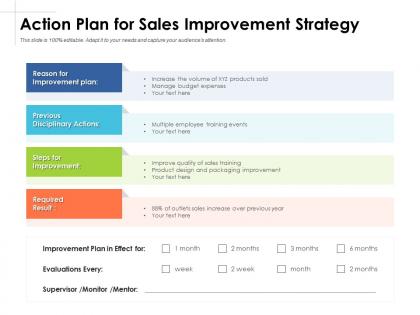
Action plan for sales improvement strategy




Try Before you Buy Download Free Sample Product
 Impress Your
 Audience
 100%
100% Editable
 Save Hours
 of Time


Our Action Plan For Sales Improvement Strategy are topically designed to provide an attractive backdrop to any subject. Use them to look like a presentation pro.
People who downloaded this PowerPoint presentation also viewed the following :
Action plan for sales improvement strategy with all 2 slides:
Use our Action Plan For Sales Improvement Strategy to effectively help you save your valuable time. They are readymade to fit into any presentation structure.
FAQs for Action plan for
So you'll want to nail down who your ideal customers are first - like what problems you're actually solving for them. Map out your whole sales process from finding leads to closing deals. Most people totally bomb this because they just improvise instead of having a real system, which is honestly pretty dumb. Document what you're doing now, then figure out the biggest holes. Oh, and track how everything's performing so you can tweak what's not working. Clear messaging about your value is huge too. Relationship management matters, but start with knowing your process inside and out.
Look, market research is basically your cheat sheet for selling without beating your head against the wall. Survey your best customers first - ask why they picked you over everyone else. You'll figure out who to target and what actually matters to them (spoiler: it's probably not what you think). Plus you get the inside scoop on competitor weaknesses and what people will actually pay. Honestly, I used to just wing it with assumptions that were completely wrong. The research shows you which messages work and which ones are total duds. Game changer for knowing where to focus your energy.
Look, you've gotta segment your customers or you're basically shooting in the dark. A startup founder needs a totally different pitch than some corporate procurement guy - they care about completely different things. I'd start by digging into your current customers and see what patterns jump out. Who's converting? Who's actually making you money? Then group them by industry, company size, whatever makes sense. It lets you craft better messages and honestly, stop wasting time on dead-end prospects. Focus your team on the high-value stuff instead of spraying and praying.
Honestly, most sales dashboards are just eye candy that don't actually help you sell more. Focus on the stuff that matters - which leads convert best, what messaging clicks with different buyer types, where people bail out of your funnel. Use predictive scoring to figure out which deals deserve your attention first. Weekly data deep-dives with your team are clutch for spotting patterns in your wins and losses. Oh, and track every touchpoint that actually moves deals forward, not just the vanity metrics. Customer journey analysis shows you exactly where prospects drop off so you can fix those leaks.
Honestly, start with getting both teams to actually define what counts as a "qualified lead" - sounds obvious but you'd be surprised how often they're not on the same page. Marketing needs to get the sales timeline and where deals usually fall apart. Sales can't just whine about lead quality without giving real feedback though. Set up shared metrics like revenue attribution so you're all working toward the same thing. Weekly pipeline reviews are clutch - keeps everyone honest and stops the finger-pointing when numbers tank. Oh, and make sure both teams are measured on the same goals, not just their individual stuff.
Track both sides of the coin - what's happening now and what's coming. Conversion rates, deal size, and sales cycle length show your actual revenue picture. But here's the thing - revenue data always lags behind your changes. Leading indicators like activity levels and qualified leads give you the real pulse. I'd set baselines before changing anything, then look at monthly trends instead of freaking out over weekly swings. Weekly stuff is just noise honestly. Simple dashboard, consistent reviews, and you're golden.
Dude, sales is so different now compared to like 5 years ago. CRM systems track literally everything your customers do. AI scores your leads automatically, which honestly saves tons of time. Cold calling? Pretty much dead - everyone's doing social selling on LinkedIn instead. Your buyers already know everything about your product before they even hop on a call with you. Email sequences run themselves now too. The trick is figuring out which tools actually help versus just adding more noise. I'd say look at what you're using currently and pick one obvious gap to fix this quarter. Data analytics stuff is huge right now if you're not already doing that.
Honestly, start with buyer personas - that's your foundation. C-suite folks want ROI numbers and fast results. IT managers? They're all about the technical details and how you'll actually implement this thing. Don't make the rookie mistake of using identical pitches for everyone (I see this way too often). Match your outreach style too. Executives usually prefer quick calls or LinkedIn pings. Technical buyers want meaty emails with all the documentation. Pick your top two personas first. Build specific talking points for each. Trust me, this targeted approach beats spray-and-pray every time.
Honestly, the biggest killer is not actually knowing who your customers are - like really knowing them, not just guessing. Sales and marketing teams that don't talk to each other create such a mess too. People always try copying what worked at their last job or last year, but that's usually a disaster. Setting crazy unrealistic goals just crushes everyone's motivation. Oh, and skipping competitor research is pretty dumb. You've gotta build in regular check-ins to pivot when stuff isn't working. Start with nailing your ideal customer first though - everything flows from there.
Dude, your sales strategy is basically worthless if your team can't actually pull it off. Markets change fast, products get updated, and honestly? People just forget techniques if they don't use them regularly. Your reps need constant practice with objection handling and consultative selling - otherwise they get rusty. I've seen teams crash because they thought one training session would last forever. Monthly skill sessions work well, just focus on one specific thing each time. Skills need to evolve with the market, or you'll get left behind.
Honestly, everything's moved toward building actual relationships now instead of that pushy "always be closing" BS. LinkedIn selling is massive - people are doing personalized videos, targeting specific companies with custom campaigns. AI tools help figure out which leads are worth your time, which is pretty sweet. The old-school aggressive approach? Dead. Now you gotta provide value first and actually help people before asking for anything. Oh, and content marketing is everywhere - prospects want to see you know your stuff. I'd pick one method that makes sense for your industry and test it on maybe 20% of your prospects first. Don't go all-in right away.
Think of social media as your secret research weapon, not just another place to spam content. Follow your prospects first and actually engage with their stuff - like, genuinely comment on their posts and share things that make sense. LinkedIn's obviously the go-to for B2B, but honestly Twitter and Instagram can be goldmines depending on what you're selling. Here's the thing though - you gotta listen before you talk. Social platforms give you crazy good intel on what's bugging them, company updates, even what they're into personally. Makes your outreach so much better. Set alerts for target accounts and stay consistent with engagement.
Honestly, start by really getting to know who you're selling to - their problems, how they shop now, all that stuff. Pricing and competitor research comes next. Map out your actual sales process too. Will you go direct, use partners, online? Whatever makes sense for your situation. Here's the thing that drives me crazy - so many companies skip training their sales team on what the product actually does for people. Like, how do you expect them to sell it? I'd probably create those buyer persona things first, then work backwards from there. Makes the whole strategy feel less overwhelming.
Market trends are basically your crystal ball for sales strategy. You've gotta watch how people's buying habits shift, what's happening with the economy, tech changes - all that stuff. Remember when everyone went remote? B2B software companies had to completely flip their playbooks overnight. I'd say check industry reports regularly and keep tabs on what competitors are doing. Customer feedback's gold too. The trick is staying nimble enough to pivot fast when things change. Nobody wants to get blindsided by the next big shift - learned that one the hard way myself.
Okay so psychographics is basically figuring out *why* people buy stuff, not just their basic info. Sure, demographics tell you someone's a 35-year-old manager. But psychographics? That's where you learn they're super into sustainability and actually care about work-life balance. Way more useful, honestly. Instead of just listing features at them, you can speak to what they genuinely value. Like, if they prioritize the environment, lead with that angle. Start by asking your best customers about their real priorities - not just business stuff, but what drives them personally. Makes your messaging hit different.
-
Professional and unique presentations.
-
Out of the box and creative design.
-
Commendable slides with attractive designs. Extremely pleased with the fact that they are easy to modify. Great work!
-
Unique design & color.
-
Great designs, Easily Editable.
-
Presentation Design is very nice, good work with the content as well.