


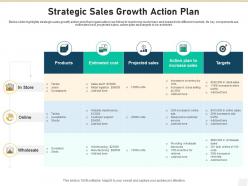
Strategic sales growth action plan





Try Before you Buy Download Free Sample Product
 Impress Your
 Audience
 100%
100% Editable
 Save Hours
 of Time


Below slide highlights strategic sales growth action plan that organisation can follow to reach new customers and expand into different markets. Its key components are estimated cost, projected sales, action plan and targets to be achieved.
People who downloaded this PowerPoint presentation also viewed the following :
Strategic sales growth action plan with all 2 slides:
Use our Strategic Sales Growth Action Plan to effectively help you save your valuable time. They are readymade to fit into any presentation structure.
FAQs for Strategic sales
Look, start with knowing exactly who you're selling to and what problem you solve for them. Map out your sales stages with clear next steps - none of that wishy-washy stuff. CRM tracking is huge (I know it's boring but trust me). Most deals literally die because nobody follows up properly, so build that into your process. Oh and here's the thing that'll make or break you - get marketing and sales talking to each other regularly. I've seen so many companies where these teams are basically speaking different languages. Coach your people consistently too. That's honestly where the magic happens.
Honestly, segmentation is a game changer because you're not blasting the same generic message to everyone. Group your prospects by stuff that actually matters - industry, company size, what keeps them up at night. A startup CFO has completely different priorities than some enterprise procurement person, you know? Your messaging hits way harder when it's relevant to their specific situation. Plus you'll stop burning time on leads that were never gonna buy anyway (learned that the hard way). Just pick 2-3 segments to start - don't go crazy with it right off the bat.
Dude, you gotta start with data analytics if you want your sales to actually work. Track what's converting - like which leads turn into real customers and what messages they respond to. ROI from different channels is huge too. Without this stuff you're just guessing, which honestly seems kinda dumb in 2024? The cool part is you can personalize everything for different customer types and spot trends before they happen. Oh and don't try tracking every single metric at first - pick your main goals then build around those. Way less overwhelming that way.
Honestly, social media is huge for sales if you do it right. LinkedIn's obviously the main one - I always check what prospects have posted lately and look for mutual connections before reaching out. Twitter and Instagram are solid too for staying visible. Just engage with their stuff genuinely for a few weeks first. Don't be that person who immediately pitches, you know? I actually know a rep who closed a deal just from commenting on someone's LinkedIn article. Wild, right? The trick is being helpful instead of salesy. Follow your target accounts and build some rapport before you make any moves.
Get those teams in the same room regularly - weekly meetings, joint planning, whatever it takes. Your buyer personas need to match up, and marketing's lead scoring has to align with what sales actually considers qualified. Oh, and create shared KPIs instead of conflicting department goals. I can't tell you how many times I've seen marketing celebrating while sales drowns in terrible leads! Sales needs to tell marketing what's actually resonating with prospects. Then marketing tweaks their messaging based on real feedback. It's honestly wild how broken this is at most companies.
Dude, customer feedback is pure gold for sales. I'd dig into their pain points and totally rework my pitch around what they're actually struggling with. Those support tickets and churn interviews? Mine that stuff for patterns. One rep I knew completely changed his demo focus after realizing customers didn't care about the features he was pushing. Smart move. Your prospects can tell when you're addressing real problems vs just throwing generic benefits at them. Update your scripts based on what you're hearing - it makes such a difference. Trust me, speaking their language beats corporate jargon every time.
Mix it up with role-playing scenarios - your team gets to practice without the pressure of real calls. Interactive workshops are way better than sitting through lectures (nobody stays awake for those anyway). Have them shadow your best performers, that's honestly where they'll learn the most. Regular coaching sessions help too, just keep the feedback specific. Oh, and make those quick reference sheets they can actually grab during calls. The biggest thing? Don't do it all at once. Space out the training and check back in with them. People forget stuff fast if you don't reinforce it.
Honestly, competitive analysis is like getting the answers before the test. Look at your top 3 competitors this week - check their websites, pricing, what customers say about them in reviews. You'll find holes in what they're offering that you can jump on. Their weak messaging? That's your chance to sound way better. When prospects start comparing you to them, you'll already know their pain points and can handle objections like a pro. Oh and definitely swipe their good ideas - everyone does it. Just remember to keep updating this stuff because these companies change direction all the time.
Honestly, start with the basics - conversion rates at each funnel stage, average deal size, and how long your sales cycles are running. Revenue's obvious but don't ignore the activity stuff either (calls, emails) since it shows who's actually grinding. Customer acquisition cost versus lifetime value is huge too - learned that one the hard way. The trick is picking maybe 4-5 metrics that actually matter for your goals. Otherwise you'll drown in data and accomplish nothing. Oh, and mix leading indicators with lagging ones so you're not just looking backwards all the time.
Dude, tech can seriously speed up your sales process. CRM systems keep track of all your customer stuff, and automation handles the boring follow-ups for you. There's even AI now that predicts which leads will actually buy - honestly kind of scary how good it's gotten. Video calls and digital proposals make everything way smoother for buyers too. Oh, and don't try to do everything at once. Just pick whatever's driving you crazy right now and find a tool for that first. You'll see the difference pretty quick.
Dude, pricing is seriously make-or-break for sales. Go too high and nobody buys, even if your margins look amazing. Too low? Sure, you'll move product but kill your profits - plus people start thinking your stuff is cheap. What you want is that goldilocks zone where conversions and profit both work. Honestly, I'd test different prices with small groups first before committing. See what actually works for your specific situation instead of guessing. Oh, and don't forget - sometimes a higher price actually makes people want it more. Weird psychology thing.
Honestly, the worst thing you can do is try changing everything at once - your team will just get overwhelmed. Get your salespeople on board first since they actually know what works out there. I've watched companies crash and burn expecting results in week one when this stuff takes months to really stick. Start with a small pilot group instead of going all-in right away. Also, don't just focus on revenue spikes - measure the right behaviors from day one. Listen to feedback before rolling it company-wide. Realistic timelines are huge here, trust me on that one.
Honestly, ditch the quick-win mentality and play the long game instead. Actually listen when prospects talk about their problems - sounds basic but most salespeople suck at this part. Follow up even when there's no deal brewing. Share useful stuff, ask about their goals, remember if they mentioned their kid's soccer tournament or whatever. Here's what I've learned: be helpful first, salesy second. Oh, and don't just chase new leads constantly. Spend like 20% of your time nurturing people you already know. Those relationships pay off way more than cold outreach ever will.
Dude, personalization is everything now. Generic pitches? They're basically dead. I learned this the hard way after sending way too many copy-paste emails that went nowhere. You've gotta dig into each prospect first - their industry, company problems, what their actual job involves. Then customize everything: emails, demos, the whole thing. I spend maybe 10-15 minutes stalking each lead beforehand (LinkedIn, company news, whatever they've posted recently). Honestly, most people skip this step because it feels like extra work. But that small research investment? Your response rates will thank you for it.
Look, nobody wants to sit through another boring feature rundown. Stories actually stick in people's heads though. When you tell a real customer success story, prospects can picture themselves in that situation - way better than just listing what your product does. I always match the story type to where they are in the process. Early on? Share struggle stories they'll relate to. Once they're comparing options, hit them with transformation stories. Complex stuff becomes simple when you wrap it in a narrative. Plus honestly, it makes your pitch memorable instead of sounding like every other salesperson they've heard.
-
Very well designed and informative templates.
-
Professional and unique presentations.
-
Awesome presentation, really professional and easy to edit.