


Fast Food Restaurant Profit And Loss Statement A Detailed Business Income Analysis For Fast Food BP SS




Try Before you Buy Download Free Sample Product
 Impress Your
 Audience
 100%
100% Editable
 Save Hours
 of Time


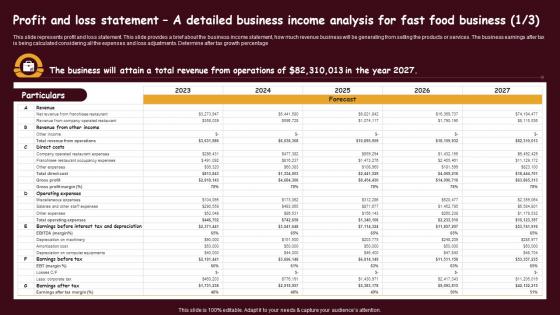
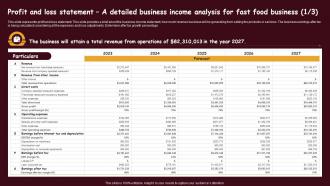
This slide represents profit and loss statement. This slide provides a brief about the business income statement, how much revenue business will be generating from selling the products or services. The business earnings after tax is being calculated considering all the expenses and loss adjustments. Determine after tax growth percentage.
People who downloaded this PowerPoint presentation also viewed the following :
Fast Food Restaurant Profit And Loss Statement A Detailed Business Income Analysis For Fast Food BP SS with all 11 slides:
Use our Fast Food Restaurant Profit And Loss Statement A Detailed Business Income Analysis For Fast Food BP SS to effectively help you save your valuable time. They are readymade to fit into any presentation structure.








FAQs for Fast Food Restaurant Profit And Loss Statement A Detailed Business Income Analysis For Fast
So you've got your main stuff like revenue from food and drinks, then cost of goods sold - that's your food costs and packaging. Labor's huge too, plus rent, utilities, all that. Honestly, food costs will probably stress you out the most since they're so variable. Portion control matters way more than you'd think. Marketing, insurance, equipment fixes, franchise fees if you go that route. I'd obsess over your food cost percentage though - most places try to keep it between 28-35% of revenue. That number basically determines if you're making money or not.
Yeah, labor costs will absolutely wreck your profits if you're not careful - they're usually your biggest expense after food. Aim for 28-32% and you'll be fine, but once you hit 35%? Ouch. Here's the thing though: you can't just slash hours like you would with ordering less chicken, because then service goes to hell and customers bail. I learned this the hard way lol. You gotta nail that balance - enough people during rush but not too many when it's dead. Check your labor percentage every week and actually look at your sales patterns instead of just winging the schedule.
So food cost percentage is basically how much of your sales goes to ingredients - you calculate it by dividing food costs by total sales, then times 100. Most fast food places should hit 28-35%, and honestly if you're way off that range, something's probably wrong with your pricing or you're wasting too much. Track it monthly because when this number starts climbing, your profits take a direct hit. There's less money left for everything else - payroll, rent, your actual take-home. I'd compare yours to industry benchmarks first, then figure out what's driving any weird spikes.
Break your POS into separate categories - food, drinks, delivery fees, catering, promos. That stuff matters way more in fast food than people think since margins are brutal. Your system should auto-sort transactions, but you'll still need to match everything with bank deposits. Third-party apps like DoorDash are annoying because they pay you after taking their cut. Run daily reports and check week-over-week numbers. Oh, and definitely audit your current setup first - I've seen so many places with everything miscategorized from day one.
Ugh, so many things hitting at once. People want better ingredients and custom everything now, which jacks up your costs big time. Health trends mean reformulating stuff with pricier ingredients too. Delivery apps are popular but honestly brutal - they'll take like 15-30% per order. Labor's expensive since everyone's short-staffed and you gotta pay more for decent kitchen people. I'd focus on figuring out which trends actually boost your sales numbers vs just bleeding money. Some of this stuff customers care about way more than others, you know?
Basically, franchises get hit with those 4-6% royalty fees plus marketing costs that independents don't deal with. Plus they're stuck buying from approved vendors which - ugh, talk about markup. Independent places can shop around for better prices on supplies, but they end up spending way more on local ads since they don't have corporate backing. Insurance costs them more too without group rates. My cousin runs a franchise and she's always complaining about those fees. When you're looking at P&L statements, just make sure you're separating out franchise costs properly.
Okay so basically - gross profit is what you make after paying for food costs, but net profit? That's what's actually left after rent, wages, utilities, all that fun stuff. Both matter because margins are already crazy thin in fast food. Your gross might look decent but if net sucks, you've got operational issues eating your profits. I'd check both every month - use gross to push suppliers for better deals, and watch net like a hawk to keep overhead from spiraling. Honestly, most people only look at one or the other and miss the whole picture.
Ugh, seasonal promos are such a double-edged sword. Your revenue spikes look amazing but margins get crushed since you're basically discounting everything. Those holiday drinks are the absolute worst - pumpkin spice sells like crazy but you're making pennies on each one. The tricky part is figuring out if you're actually bringing in new customers or just giving discounts to people who'd buy anyway. Time your inventory buys carefully and track total customer counts, not just promo sales. Otherwise you'll think you're killing it when really you're just bleeding money with fancy marketing.
Look at same-store sales first - that's growth from existing spots, not just opening new ones. Food costs should hit around 28-35% of sales, labor usually runs 25-30% but honestly varies a ton by location. Average transaction value is clutch too since it shows if people are actually willing to pay your prices. Oh and track this stuff monthly, not quarterly - you'll catch issues way faster. I'd benchmark against industry standards first, then watch for any weird trends. Labor's probably gonna be your biggest headache to control.
Oh man, cost variances will absolutely destroy your profit forecasts. Like, a 10-cent difference per item seems like nothing, right? But multiply that across thousands of sales and you're suddenly bleeding money. I've watched franchises completely miss their quarterly numbers because beef prices jumped or their staff was being way too generous with portions. Rising ingredient costs, waste, portion control issues - any of these can tank your bottom line fast. You really gotta track actual costs against what you projected every week. Soon as you spot a trend, adjust your prices or portions. Don't wait around hoping it'll fix itself.
Track your food costs every week - monthly's way too late to catch problems. Schedule staff around your actual sales data, not guesswork. Cross-train everyone so you're not stuck paying overtime when someone calls out sick. Waste is probably killing you more than you realize. Most restaurants just throw money away on spoilage and making too much food. Start logging waste daily and actually look at those numbers. It's annoying but worth it. Food cost percentage should be your main metric. Once that's under control, then worry about labor cost per transaction.
Dude, location is literally make-or-break for fast food. I've seen the exact same franchise concepts have totally different profit margins - like 15-20% swings - just because of where they're planted. High-traffic spots with good visibility bring in way more customers, but then your rent kills you. You gotta match your concept to the neighborhood too. Premium burger place in a low-income area? Dead. But basic chains absolutely crush it there. Oh and check competitor density - nobody needs three Subways on one block. Study the foot traffic patterns and local spending habits before you commit to anything.
Dude, biggest mistake I see? People mix food costs with labor costs and then wonder why their numbers are screwed. Break down your ingredients too - don't just lump everything together. Proteins separate from produce, packaging separate from everything else. Oh and waste! Fast food places get hit hard with spoilage but half the owners I know don't even track it properly. You gotta compare what you actually used versus what you bought - the difference will shock you honestly. Just be really detailed with your categories and yeah, track that waste like your life depends on it.
Dude, start with your POS integration - that's the easiest quick win. Real-time data beats waiting around for month-end reports every time. Your system will pull everything automatically from inventory, labor tracking, all that stuff. The analytics piece is honestly where it gets interesting though - you'll spot trends you'd never catch doing it by hand. Like which menu items actually make you money (spoiler: probably not what you think). Labor costs by time of day, cost variances as they happen. Fair warning - there's gonna be SO much data at first it's kinda nuts. But that's when you can really dial in your menu mix and compare locations properly.
Watch your food costs like a hawk - keep them under 30-35% or you're probably over-portioning or getting hit with price increases. Labor percentage matters just as much since staff costs can kill you fast. I always track average transaction value and customer count separately because they show different problems. Oh, and compare to the same week last year instead of last week - way more useful for spotting real trends versus seasonal stuff. Set up some basic alerts when these numbers go wonky so you can fix things before they spiral. Most restaurant owners wait too long to react.
-
The templates you provide are great! They have saved me tons of time and made my presentations come alive. Thank you for this awesome product. Keep up the good work!
-
Nice and innovative design.