

Female reproductive system with labelled diagram




Try Before you Buy Download Free Sample Product
 Impress Your
 Audience
 100%
100% Editable
 Save Hours
 of Time


Our Female Reproductive System With Labelled Diagram are topically designed to provide an attractive backdrop to any subject. Use them to look like a presentation pro.
People who downloaded this PowerPoint presentation also viewed the following :
Content of this Powerpoint Presentation
Did you know that women are born with all the potential egg cells they’re going to use in their lifetime? It’s a number estimated to be 2 million. When a female reaches puberty, the viable eggs mature and the number drops to 25% of the original number. This drop is concerning as well as an indicator of aging. As if women aren’t already at the risk of contracting serious diseases, post menopause, their health is prone to further deterioration. These are the living beings who are the givers of human life and caregivers of their families. Therefore, their well being needs to be placed first.
To begin with, the taboo around the female reproductive system and health, first, needs to be eliminated. A woman undergoes so many transitions in a life, yet, we as a society fail to address her psychological, physical, and emotional needs in the correct manner.
If only there was correct, scientific and accurate knowledge of what goes in the backdrop, i.e. the female reproductive system’s functioning. Then, we’d know that the strong and loving face a woman puts up everyday is despite the war waging within her biological system.
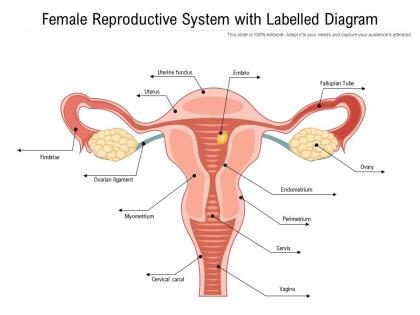
Educate your audience about the location of the internal organs with respect to a female's outward appearance with this PPT Slide.
Presenting SlideTeam’s effort to educate masses on the female reproductive systems that both learners and general audience can use. Showcase the nature’s architecture of female machinery that agonizes, comforts, and becomes a continued source of bliss for women on earth.It’s a fully editable diagrammatic presentation template designed to showcase nature’s fantastic baby bearer and understand it's working.
Template 1: Female Reproductive System with Diagram
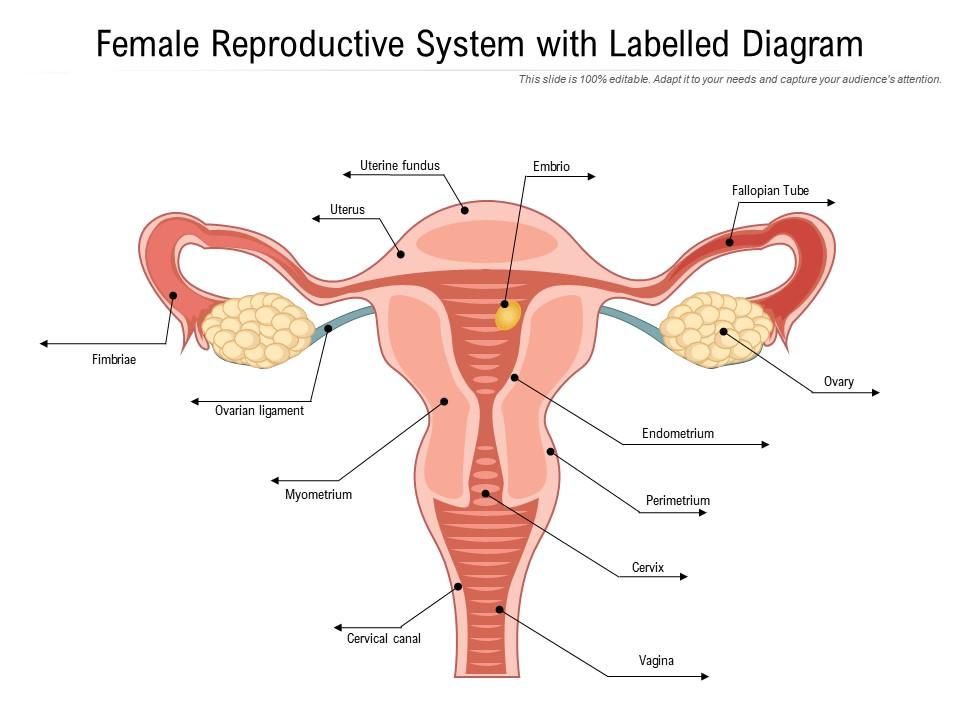
Represent the female reproductive system with this diagram that identifies all the organs part of it. Label each organ as you explain its purpose to your audience. You can even add facts related to ovaries, uterus, and it's unique functioning as you explain this powerful center of fertilization and fetus development. This PPT Diagram is particularly useful in educating about reproductive health and causes, thus wellbeing can be promoted due to it.
Here's another presentation layout to study female anatomy with particular identification of endometrium.
A Single Diagram to Remove Stigma
Educate your audience of intellectuals or the masses into how to take care of women and help the female kind themselves learn about what makes them unique. Download this PPT Layout to commence this awareness.
PS: If you are looking for a PPT Design to compare the two genders, especially from the perspective of how the reproductive system is designed in each, view this PPT Diagram.
Female reproductive system with labelled diagram with all 2 slides:
Use our Female Reproductive System With Labelled Diagram to effectively help you save your valuable time. They are readymade to fit into any presentation structure.
FAQs for Female reproductive system
So basically you've got ovaries that make eggs and hormones, then fallopian tubes that carry the eggs to your uterus. That's where a fertilized egg would implant if you got pregnant. Your cervix is like the connection between your uterus and vagina - kind of acts as a gateway. Don't forget the external stuff too like your vulva and clitoris. The whole thing cycles every month because of hormones, which is wild when you think about it. If you're studying this, I'd focus on how everything connects rather than just memorizing each part separately - makes way more sense that way.
Okay so basically your cycle is like a monthly report card for your hormones and overall health. When it's regular (21-35 days), that usually means everything's working well together. But irregular periods? That's often your body saying "hey, something's up" - could be PCOS, thyroid stuff, stress, or even just not eating well enough. Honestly, I think tracking is super underrated. Not just for knowing when your period's coming, but catching weird patterns before they become bigger problems. Just keep a simple diary or use an app - way easier to spot changes that way.
So basically your brain sends out FSH and LH signals that tell your ovaries what to do. Then your ovaries pump out estrogen and progesterone in response. It's honestly pretty cool how coordinated it all is when things are working normally. Estrogen builds up your uterine lining early in your cycle. After you ovulate, progesterone takes over to maintain everything. No pregnancy? Hormone levels crash and you get your period. Once you understand this whole dance, you can actually track your fertility better and spot when something feels weird - which trust me, comes in handy.
Honestly, age is the biggest thing - fertility starts dropping in your late 20s and really tanks after 35 because your eggs aren't what they used to be. But lifestyle stuff can mess you up too. Smoking and drinking too much will screw with your hormones, and being way over or underweight throws everything off. Don't sleep on stress either - I swear it's more powerful than people think. Even crazy workouts or crappy sleep can make your cycle go haywire. If you're trying, just nail the basics first. Get to a healthy weight, cut back on booze, ditch cigarettes if you smoke, and find ways to chill out.
Ugh, where do I even start? Irregular periods are super common, plus UTIs and yeast infections that just keep coming back. PCOS affects way more people than you'd think. Then there's the heavy stuff - endometriosis, fibroids, fertility struggles. I swear doctors used to just brush off period pain like it was no big deal, but that's changing thank god. Heavy bleeding that ruins your plans? Not normal. Cycles all over the place? Also worth checking out. Don't let anyone tell you to just deal with it if something feels wrong.
Okay so basically your ovaries pump out eggs every month, and the fallopian tubes are like these little highways guiding everything toward the uterus. The uterus itself is wild - it can stretch from tiny to baby-sized, then contract like crazy during labor. Your cervix opens and closes when needed (total gatekeeper vibes). The vagina handles all the traffic - sperm going in, periods coming out, babies being born. Honestly the whole system's pretty brilliant when you think about it. Focus on how each part's built exactly for what it does - that's usually what they test you on anyway.
So basically your ovary releases an egg around day 14 - though honestly everyone's different so don't stress if yours isn't textbook perfect. What happens is estrogen builds up, then you get this surge of luteinizing hormone that makes the follicle pop and release the egg. Pretty wild if you ask me! The egg only sticks around for like 12-24 hours before it's done. Cervical mucus changes are your best bet for tracking it, or those ovulation test strips work too.
So basically birth control messes with your cycle in different ways depending on what you use. The pill and hormonal IUDs change your hormone levels - they stop you from ovulating and make your cervical mucus thicker. This usually makes periods lighter and can help with cramps, which is honestly amazing. Condoms don't do anything to your hormones though, they just block sperm physically. Some people love how the pill makes their periods super predictable, but others hate the side effects and stick to non-hormonal stuff. If you're thinking about switching, definitely track your current symptoms first so you can tell your doctor what's been going on.
Ugh, PCOS can really wreck your cycle - like, periods become totally unpredictable or just disappear completely. Makes it super hard to know when you're actually ovulating. It's honestly one of the biggest reasons women struggle to get pregnant, though plenty still do! The hormones being all over the place also ups your chances of miscarriage and stuff like gestational diabetes during pregnancy. Oh, and the insulin resistance thing? That just makes everything worse - it's like a domino effect. But there's definitely hope! Lifestyle tweaks and fertility treatments work really well for most people when they're ready to try.
Girl, this stuff can really mess you up. Chlamydia and gonorrhea? They cause PID which basically destroys your fallopian tubes - hello infertility and ectopic pregnancies. HPV cranks up your cervical cancer risk. Herpes gives you those awful painful outbreaks that come back forever. Don't even get me started on untreated syphilis. The worst part? Most of these have zero symptoms at first, so they're doing damage while you're completely clueless. Seriously though, get tested regularly - I know annual exams suck but catching this stuff early makes treatment so much easier.
Oh man, there's actually tons of options now! IVF is the big one everyone knows - they fertilize eggs outside your body then put them back. But there's also IUI where they just insert sperm directly, plus egg freezing if you want to wait. Donor eggs/sperm are there too if needed. The genetic testing stuff is pretty wild now - they can screen embryos before implanting them. There's even ovarian tissue transplants, though that's newer. Honestly the whole field has exploded in the last few years. I'd definitely find a reproductive endocrinologist who can break down what makes sense for your specific situation.
Oh wow, pregnancy literally changes EVERYTHING down there! Your uterus can expand like 500 times bigger (wild, right?), and all that extra blood flow plus hormones like estrogen and progesterone just reshape your whole system. The cervix gets softer and longer. Your ovaries totally stop releasing eggs. Even your pelvic floor muscles get stretched out big time - which honestly nobody warns you enough about beforehand. Most stuff does go back to normal after you give birth, though how long that takes really depends on you and whether you're breastfeeding.
Ugh, the pain is usually the biggest red flag - like way beyond normal cramps that actually mess with your day. Heavy bleeding's another big one, plus it can hurt during sex or even just going to the bathroom. Between periods you might get that nagging pelvic pain that just won't quit, bloating, feeling wiped out. The tricky thing is these symptoms overlap with so much other stuff. Sometimes the pain shoots down to your back or legs too, which is weird but totally normal for endo. If it's getting worse or interfering with life, definitely push for a gyno appointment.
Look, gynecological checkups are basically like having a security system for your reproductive health. They screen for cervical cancer, STIs, and catch stuff like ovarian cysts or endometriosis before they get nasty. Honestly, it's also the perfect time to ask those weird questions you've been secretly googling instead of just wondering forever. Your doctor can help with birth control decisions, fertility planning - all that fun stuff. I know it's awkward but trust me, early detection makes treatment so much easier. Go annually unless your doctor says otherwise.
Honestly, start with good sex ed resources - Planned Parenthood's website is solid. Cover the basics: periods, birth control options, STI prevention, reproductive rights. Our school systems really failed us on this stuff, didn't they? Look for interactive tools and support groups too, especially ones that actually relate to your audience's background. Figure out what people already know vs. what they're missing. Then mix up how you share info - some folks learn better from videos, others need workshops or just simple pamphlets. Whatever clicks for them.
No Reviews