


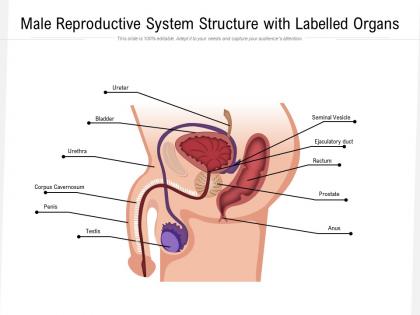
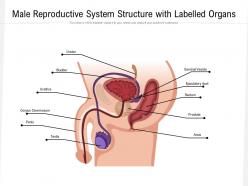
Male reproductive system structure with labelled organs




Try Before you Buy Download Free Sample Product
 Impress Your
 Audience
 100%
100% Editable
 Save Hours
 of Time


Our Male Reproductive System Structure With Labelled Organs are explicit and effective. They combine clarity and concise expression.
People who downloaded this PowerPoint presentation also viewed the following :
Male reproductive system structure with labelled organs with all 2 slides:
Give your audience a fulfilling experience. They will find our Male Reproductive System Structure With Labelled Organs elevating.

FAQs for Male reproductive system structure
So basically you've got the testes making sperm and testosterone, then there's the epididymis where sperm hang out and mature. The vas deferens are like highways transporting sperm around. Your seminal vesicles and prostate? They're churning out that seminal fluid. Penis does the obvious job. The scrotum's honestly pretty clever - it's this temperature-controlled pouch keeping everything at the right temp. Whole thing's designed to make, store, and deliver sperm. Pro tip: if this is for a test, trace the sperm's journey from start to finish. Teachers love that pathway stuff.
So basically your testes are like this crazy efficient sperm factory. Seminiferous tubules do all the heavy lifting - they're these coiled tubes lined with Sertoli cells that babysit sperm for 74 days while they develop. Between the tubes you've got Leydig cells pumping out testosterone, which honestly the whole system would crash without. The temperature thing is wild too - that's why they hang outside your body, staying 2-3°C cooler than normal. Each part of the tubule creates perfect little environments for different development stages. Pretty smart design if you ask me.
So sperm basically goes through boot camp in your epididymis for like 2-3 weeks - that's where they learn how to swim and actually fertilize stuff. Then the vas deferens is basically the express lane that shoots them up to the urethra when you ejaculate. Pretty wild how efficient the whole system is, honestly. It's a two-part thing: slow maturation, then rapid transport. Oh and here's something interesting - guys can have perfectly normal sperm production but still be infertile if their epididymis isn't working right. The body's weird like that sometimes.
So basically your seminal vesicles do most of the heavy lifting - they're pumping out about 60% of the fluid with fructose to feed the sperm, plus proteins and alkaline stuff to balance out vaginal acidity. Prostate chips in another 30% with this milky fluid that's got enzymes, zinc, citric acid. That's actually where the smell comes from, which is kinda wild if you think about it. The prostate fluid helps sperm swim better and liquefies everything after. Both glands work together to make this perfect little survival cocktail for sperm. Remember those percentages - they love testing on that stuff.
So basically your balls need to stay cooler than the rest of your body - like 2-3 degrees cooler for sperm to work right. There's this muscle called the cremaster that pulls them up when it's cold and lets them hang when it's warm. Pretty wild how automatic it is. The scrotal skin also wrinkles up or smooths out to help regulate things. My dad always said boxers were better than briefs and turns out he wasn't just being weird about it - tight underwear actually messes with fertility. If the temperature gets off, your sperm count tanks.
So basically the male urethra does double duty - it carries pee from your bladder and also semen during ejaculation. Your body's pretty smart about this though. There are muscles that contract to block urine flow when you're ejaculating, so you never get both at once (which would be... weird). The urethra goes through the prostate and penis, picking up different secretions as it goes. I always thought it was kind of amazing how the body coordinates all this stuff without you having to think about it. Anyway, that's the gist when you're explaining it to patients.
So basically, guys have most of their stuff on the outside - penis, testicles, all that. Women keep everything internal, which honestly makes way more sense from a protection standpoint. Guys are constantly making sperm once they hit puberty, but women work on a monthly cycle with their eggs. The whole male setup is pretty straightforward - make sperm, deliver it. Female anatomy is way more complex since it has to handle getting pregnant and actually growing a baby. Oh and don't forget about the prostate and other glands - they're kind of in-between, not fully external but not deep inside either.
So basically, your testes are like hormone factories pumping out testosterone and other stuff that runs the whole male reproductive show. Sperm production, sex drive, all those "manly" characteristics - testosterone's calling the shots. Most guys see their levels drop with age (kinda sucks but whatever), which messes with sperm quality and libido. You've got Leydig cells making the testosterone while Sertoli cells are busy helping sperm develop. Oh, and it affects muscle mass and bone density too, which I didn't realize until recently. If someone's having fertility or sexual issues, definitely check testosterone, LH, and FSH levels first.
So basically you've got these spongy chambers called the corpus cavernosum and corpus spongiosum that fill up with blood when your arteries open and veins close off. Your parasympathetic nervous system runs that show. Then for ejaculation, everything flips - sympathetic system kicks in and coordinates all these contractions in your epididymis, vas deferens, seminal vesicles, prostate. The bulbospongiosus muscle does those rhythmic pulses you actually feel. It's honestly wild how precise the whole hydraulic system is. Two totally separate processes but they work together perfectly. Hope that helps with your lesson plan!
Hey, so basically after 30 testosterone starts dropping and your prostate gets bigger - which is why older guys complain about peeing all the time. Sperm production slows down too. Your testicles actually get smaller and less firm over the years (weird but true), and those seminiferous tubules get thicker but make fewer good sperm. Blood flow to erectile tissue decreases, so that affects things too. The whole system just gets less efficient at making hormones and delivering sperm. Most of this is totally normal aging stuff, but if someone has really bad urinary problems or their hormones tank dramatically, they should definitely get checked out.
So there's a bunch of stuff that can cause issues. Varicoceles are super common - basically enlarged veins in the scrotum. Then you've got undescended testes, blockages in the vas deferens or epididymis. Hypospadias is when the urethral opening isn't where it should be at the tip. Testicular torsion can really mess things up if doctors don't catch it fast enough. Some guys have hormone problems too - like when the whole hypothalamic-pituitary thing gets screwed up. Honestly though, most of this stuff is fixable if you catch it early. Don't wait around if something seems off.
Dude, so basically the blood flow and nerves team up to make everything work down there. Your arteries - mainly the pudendal and testicular ones - keep everything healthy and handle erections. Then you've got your nervous system doing two jobs: parasympathetic nerves control getting hard, sympathetic ones handle finishing. It's like that old saying "point and shoot" but actually accurate, lol. Honestly, when guys have ED or fertility problems, doctors should check blood flow and nerve issues first. Way too many just jump straight to testosterone without looking at the real plumbing problems.
So basically your brain and balls work together in this feedback loop. Your hypothalamus releases GnRH, which makes your pituitary pump out LH and FSH. LH triggers testosterone production while FSH handles sperm development. The clever bit? When testosterone gets high enough, it signals everything to chill out and stop producing more hormones. It's like a thermostat but for your junk, honestly. This whole cycle keeps repeating and self-regulates. If you're dealing with fertility stuff or hormone issues, this is where doctors usually start looking for problems.
Dude, knowing male anatomy inside and out is honestly a game-changer for diagnosing stuff. You can actually pinpoint where things are going wrong instead of just guessing. Like when a patient describes pain or weird swelling, you'll know if it's the epididymis vs. testicular issues - totally different causes and treatments. Physical exams make way more sense too. I'd start by really nailing down the whole pathway from testes to ejaculation. Once that clicks, everything else falls into place. Trust me, it's like having GPS when patients are describing their symptoms.
Dude, MRI and high-res ultrasound are total game-changers for this stuff. The detail you get now is insane - like you can actually see testicular structure, epididymal issues, vas deferens problems that were impossible to catch before. CT angiography maps out all those crazy vascular networks too. For fertility cases especially, these imaging tools blow physical exams out of the water. Contrast studies help you tell what's actually pathology vs just normal variants - super helpful with undescended testes or varicoceles. Honestly can't believe how much better this tech is compared to even 20 years ago.
No Reviews