

Field Marketing Powerpoint Ppt Template Bundles




Try Before you Buy Download Free Sample Product
 Impress Your
 Audience
 100%
100% Editable
 Save Hours
 of Time


Our Field Marketing Powerpoint Ppt Template Bundles are topically designed to provide an attractive backdrop to any subject. Use them to look like a presentation pro.
People who downloaded this PowerPoint presentation also viewed the following :
Field Marketing Powerpoint Ppt Template Bundles with all 23 slides:
Use our Field Marketing Powerpoint Ppt Template Bundles to effectively help you save your valuable time. They are readymade to fit into any presentation structure.







FAQs for Field Marketing Powerpoint
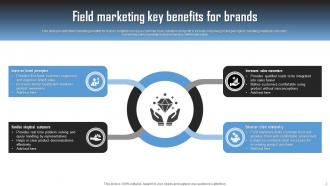
Effective field marketing strategies include targeted audience segmentation, localized campaign customization, face-to-face engagement tactics, performance measurement systems, and strategic sales alignment. These components work together by enabling personalized customer interactions, building regional brand presence, and generating qualified leads, with many organizations finding that integrated field programs deliver higher conversion rates and stronger market penetration than traditional approaches.
Businesses can measure field marketing ROI through lead generation metrics, conversion rates, brand awareness surveys, event attendance figures, and sales attribution tracking. These measurement approaches enable organizations to evaluate campaign effectiveness, optimize resource allocation, and demonstrate tangible value, with many companies finding that comprehensive tracking delivers improved targeting and significantly higher marketing efficiency.
Consumer behavior serves as the foundational blueprint for field marketing campaigns, informing targeting strategies, messaging approaches, channel selection, timing decisions, and engagement tactics. By analyzing purchasing patterns, demographic preferences, and local market dynamics, brands can create highly personalized experiences that resonate with specific audiences, ultimately delivering higher conversion rates and stronger customer relationships in targeted geographic markets.
Technology enhances field marketing effectiveness through mobile CRM systems, real-time analytics, GPS tracking, automated lead capture, and digital presentation tools. These technologies streamline operations by enabling instant data synchronization, personalized customer interactions, and performance monitoring, with many organizations finding that integrated digital solutions ultimately deliver faster response times and measurable ROI improvements.
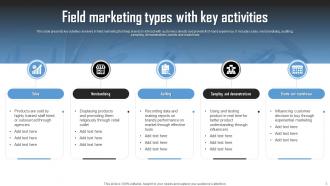
Innovative field marketing tactics include experiential pop-up installations, AR-enhanced product demonstrations, geo-targeted mobile campaigns, influencer-led street activations, and interactive digital kiosks at high-traffic locations. These approaches streamline customer engagement by creating memorable brand interactions, generating real-time social content, and capturing valuable consumer data, with many retail and technology companies finding that experiential strategies deliver significantly higher conversion rates than traditional advertising methods.
Geographic considerations significantly influence field marketing strategies through local market dynamics, regional consumer preferences, cultural nuances, competitive landscapes, and distribution channels. Companies adapt their messaging, timing, and tactics based on demographic variations, seasonal patterns, and regulatory requirements, with retail brands finding that localized approaches in different metropolitan areas drive higher engagement rates and ultimately deliver stronger regional market penetration.
Data analytics enables field marketing teams to identify optimal target audiences, predict campaign performance, and allocate resources strategically across different markets and channels. Through comprehensive data analysis, organizations can measure real-time engagement metrics, optimize event locations and timing, and demonstrate clear ROI to stakeholders, ultimately delivering more personalized customer experiences and significantly higher conversion rates.
Companies ensure well-trained field marketing teams through comprehensive product training, competitive landscape education, customer persona workshops, sales methodology certification, and ongoing skill development programs. These initiatives enable teams to deliver consistent messaging, handle objections effectively, and adapt to market changes, with many organizations finding that regular training updates and mentorship programs significantly enhance field performance and customer engagement outcomes.
Companies face challenges including resource allocation across multiple locations, maintaining brand consistency, measuring ROI effectively, coordinating timing with local events, and managing logistics for materials and personnel. These obstacles often result in fragmented messaging, inefficient budget distribution, and difficulty tracking campaign performance, with many organizations finding that standardized templates and centralized coordination systems ultimately streamline execution while preserving local market relevance.
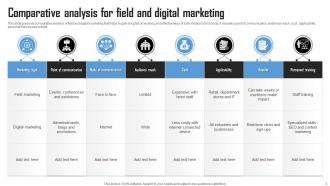
Field marketing complements digital and content strategies by providing direct, personal customer interactions that validate and amplify online messaging through face-to-face engagement, event activations, and real-world demonstrations. While digital marketing reaches broad audiences and content educates prospects, field marketing delivers immediate feedback, builds authentic relationships, and converts leads through experiential touchpoints, ultimately creating a comprehensive omnichannel approach.
Brands should prioritize authentic interactions, train representatives thoroughly on product knowledge and brand values, choose high-traffic locations strategically, and create memorable experiences through interactive demonstrations or samples. These approaches enhance consumer trust and brand recall by fostering genuine connections, delivering immediate value, and encouraging word-of-mouth marketing, with many retail and consumer goods companies finding that personalized ground-level engagement significantly boosts conversion rates.
Field marketing adapts to different demographics through targeted event selection, culturally relevant messaging, age-appropriate communication channels, and localized engagement strategies. Organizations successfully tailor approaches by utilizing demographic data to customize product demonstrations, adjust presentation styles for generational preferences, and select venues that resonate with specific audience segments, ultimately delivering more personalized experiences and higher conversion rates.
Local culture and community engagement significantly impact field marketing success by building authentic relationships, enhancing brand trust, and increasing customer loyalty through culturally relevant messaging. Companies that deeply understand regional preferences, local traditions, and community values often see higher conversion rates, stronger word-of-mouth marketing, and sustained market penetration, ultimately delivering competitive advantage in diverse markets.
Partnerships enhance field marketing through co-branded events, shared customer databases, cross-promotional campaigns, joint content creation, and expanded geographic reach. These strategic collaborations enable organizations to reduce costs, access new audiences, and leverage complementary expertise, with many companies finding that partner networks significantly amplify their local market presence and accelerate customer acquisition.
Shifts in consumer preferences directly reshape field marketing strategies by demanding more personalized experiences, digital integration, and authentic brand interactions. Field marketing teams increasingly adapt through targeted event formats, interactive demonstrations, and real-time feedback collection, with retail and technology sectors finding that agile, preference-driven approaches deliver stronger engagement and competitive advantage.
-
“Detailed and great to save your time.”
-
Use of icon with content is very relateable, informative and appealing.