

Finance For Real Estate Development Powerpoint Ppt Template Bundles





Try Before you Buy Download Free Sample Product
 Impress Your
 Audience
 100%
100% Editable
 Save Hours
 of Time


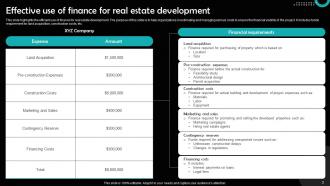
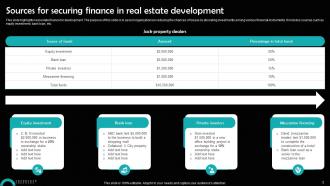
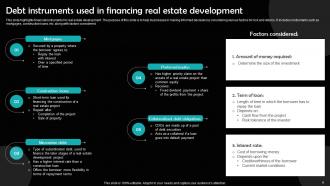
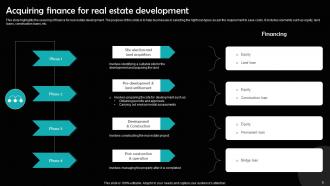
Introducing our comprehensive PowerPoint presentation on Finance for Real Estate Development, a must have resource for anyone involved in property ventures. This dynamic presentation delves into the intricacies of Real Estate Financing, Property Development Finance, and Real Estate Investment Funding. With a focus on strategic financial planning, risk assessment, and innovative funding solutions, this PPT equips you with the knowledge needed to navigate the complex landscape of real estate development. Whether youre an aspiring developer, investor, or industry professional, this presentation provides invaluable insights to optimize your projects, enhance investment decisions, and secure successful outcomes. Explore the nuances of financing in real estate and empower your ventures with our expertly curated content.
People who downloaded this PowerPoint presentation also viewed the following :
Finance For Real Estate Development Powerpoint Ppt Template Bundles with all 26 slides:
Use our Finance For Real Estate Development Powerpoint Ppt Template Bundles to effectively help you save your valuable time. They are readymade to fit into any presentation structure.












FAQs for Finance For Real Estate Development Powerpoint
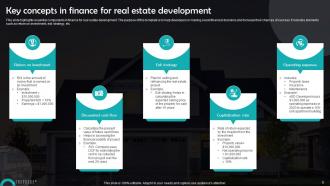
Key financial metrics include net present value (NPV), internal rate of return (IRR), debt service coverage ratio, loan-to-value ratio, and return on investment. These metrics enable developers to evaluate project profitability, financing capacity, and risk exposure by analyzing cash flows, market positioning, and capital efficiency, ultimately delivering strategic insights for investment decisions and competitive advantage in increasingly dynamic real estate markets.
Developers can effectively leverage financing by combining traditional construction loans with equity partnerships, government grants, tax incentives, and alternative funding sources like crowdfunding or real estate investment trusts. This strategic diversification enables projects to secure adequate capital while minimizing risk, with many developers finding that blended financing approaches ultimately deliver better cash flow management and enhanced project viability.
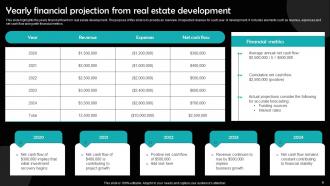
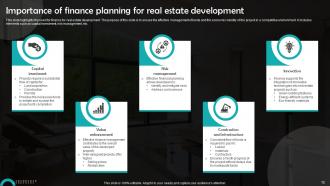
Cash flow analysis serves as the foundation of real estate development financial planning by tracking income timing, construction costs, debt service obligations, and projected returns throughout the development lifecycle. This analysis enables developers to identify potential funding gaps, optimize financing structures, and make informed decisions about project viability, with many real estate firms finding that detailed cash flow modeling significantly reduces financial risk while maximizing investment returns.
Interest rate changes significantly reshape real estate development financing by affecting borrowing costs, project feasibility, and capital allocation strategies. When rates rise, developers increasingly turn to alternative funding sources like joint ventures, equity partnerships, and mezzanine financing, while falling rates enable traditional debt financing and larger project scales, ultimately delivering enhanced returns and competitive positioning.
Common pitfalls include underestimating construction costs, inadequate contingency reserves, overly optimistic market projections, insufficient cash flow planning, and poor timing of financing arrangements. These challenges often stem from incomplete due diligence and unrealistic timelines, with many developers finding that thorough market analysis and conservative budgeting ultimately deliver more predictable returns and reduced project risk.
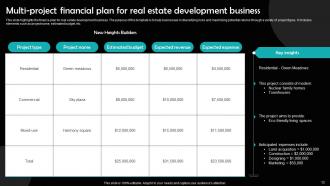
Developers use financial modeling to project ROI by analyzing acquisition costs, construction expenses, financing terms, market comparable sales, and projected timelines to calculate potential profit margins. Through detailed cash flow projections and sensitivity analysis, developers can evaluate various scenarios including best-case and worst-case outcomes, ultimately enabling informed investment decisions and securing investor confidence in increasingly competitive real estate markets.
Debt financing offers leverage and tax deductions while preserving ownership control, but requires regular payments and personal guarantees that increase risk. Equity financing provides capital without repayment obligations and shared expertise, though it dilutes ownership and profits, with many developers finding that strategic combinations of both financing types optimize project feasibility while managing cash flow demands.
Market research significantly influences financial feasibility by providing accurate demand forecasting, competitive pricing analysis, target demographic insights, and risk assessment data that directly impact revenue projections and investment returns. Through comprehensive market analysis, developers can optimize project positioning, secure better financing terms, and minimize investment risks, with many finding that thorough research reduces costly miscalculations and enhances profitability.
Essential financial tools include project management software like Procore, budgeting platforms such as Sage 300 Construction, cash flow modeling tools, cost tracking systems, and integrated accounting solutions like QuickBooks Enterprise. These technologies streamline budget oversight by automating expense tracking, providing real-time financial reporting, and enabling accurate forecasting, with many developers finding that comprehensive software integration ultimately delivers enhanced cost control and improved project profitability.
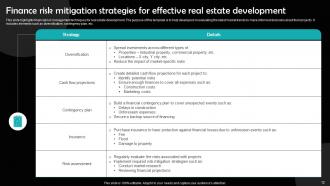
Developers mitigate financial risk through diversified project portfolios, flexible financing structures, comprehensive market analysis, strategic partnerships, and robust contingency planning. These approaches enable developers to adapt to market fluctuations by securing multiple funding sources, adjusting project timelines, and maintaining liquidity buffers, ultimately delivering sustained profitability while minimizing exposure to market volatility.
Zoning regulations and permits significantly impact development costs, project timelines, construction scope, and revenue projections through compliance requirements, approval delays, and design modifications. These regulatory factors often add 15-30% to project budgets and extend development schedules by months, with many developers finding that early regulatory analysis and community engagement ultimately streamline approvals and enhance long-term profitability.
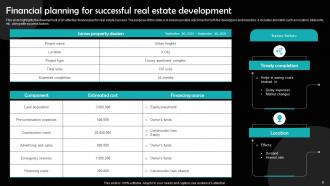
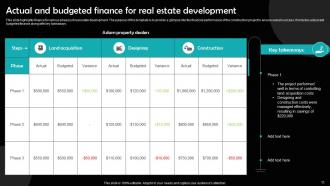
Accurate cost estimation enhances real estate financial outcomes by preventing budget overruns, enabling realistic pricing strategies, and improving investor confidence through transparent projections. With precise estimates covering construction, permits, and contingencies, developers secure better financing terms, minimize unexpected expenses, and ultimately deliver higher profit margins while maintaining competitive market positioning.
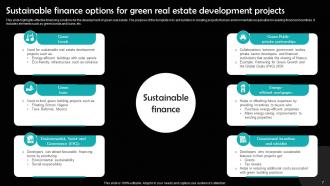
Green real estate financing strategies include green bonds, sustainability-linked loans, tax increment financing, carbon credit monetization, and ESG-focused investment funds. These mechanisms enable developers to access lower-cost capital while delivering energy-efficient buildings, reduced operational costs, and enhanced property values, with many financial institutions increasingly prioritizing environmental impact alongside traditional returns.
Developers ensure regulatory compliance by working with qualified attorneys and accountants, conducting thorough due diligence on zoning and environmental requirements, maintaining detailed financial documentation, and implementing robust internal controls. Through partnerships with compliance specialists, real estate firms streamline regulatory processes, minimize legal risks, and accelerate project approvals, ultimately delivering faster market entry and reduced development costs.
Strong investor relations and stakeholder engagement significantly impact funding success by building trust, demonstrating transparency, and showcasing project viability through regular communication and detailed progress reports. These relationships enable developers to secure better terms, attract repeat investors, and maintain funding continuity, with many finding that proactive engagement reduces financing costs and accelerates project approvals.
-
Loved the fact that SlideTeam provides clean, high-definition, and professional PowerPoint products.
-
Very well designed and informative templates.