


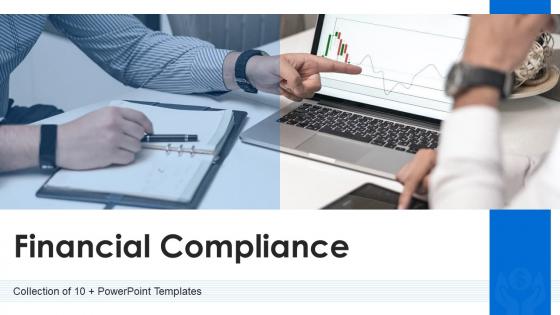
Financial Compliance Powerpoint Ppt Template Bundles




Try Before you Buy Download Free Sample Product
 Impress Your
 Audience
 100%
100% Editable
 Save Hours
 of Time


Our Financial Compliance Powerpoint Ppt Template Bundles are topically designed to provide an attractive backdrop to any subject. Use them to look like a presentation pro.
People who downloaded this PowerPoint presentation also viewed the following :
Financial Compliance Powerpoint Ppt Template Bundles with all 17 slides:
Use our Financial Compliance Powerpoint Ppt Template Bundles to effectively help you save your valuable time. They are readymade to fit into any presentation structure.






FAQs for Financial Compliance Powerpoint
Key regulations include SOX and Dodd-Frank in the US, MiFID II and GDPR in Europe, Basel III internationally, and local banking laws across jurisdictions. These frameworks streamline risk management, enhance transparency, and ensure consumer protection, with many financial institutions finding that comprehensive compliance programs ultimately deliver competitive advantage and operational efficiency in an increasingly regulated global marketplace.
Organizations establish effective financial compliance programs by implementing robust internal controls, conducting regular risk assessments, ensuring comprehensive staff training, maintaining detailed documentation, and establishing clear reporting mechanisms. These strategic components work together by standardizing processes, identifying vulnerabilities early, and creating accountability frameworks, with many financial institutions finding that integrated compliance systems ultimately reduce regulatory penalties while enhancing operational efficiency and stakeholder trust.
Technology streamlines financial compliance through automated monitoring systems, real-time transaction analysis, regulatory reporting tools, AI-powered risk assessment, and blockchain-based audit trails. These solutions enable banks and financial institutions to detect violations faster, reduce manual errors, and ensure continuous regulatory adherence, ultimately delivering cost savings and enhanced operational efficiency.
Companies face challenges including complex regulatory requirements, data integration across multiple systems, manual reporting processes, keeping pace with changing regulations, and ensuring accuracy across departments. These obstacles often result in increased costs, delayed reporting, and compliance gaps, with many organizations finding that outdated processes significantly hinder their ability to maintain consistent regulatory standards while managing operational efficiency.
Organizations measure financial compliance effectiveness through key performance indicators like audit findings, regulatory violations, compliance costs, and incident response times, alongside metrics such as training completion rates and process automation levels. These measurements enable financial institutions and corporations to identify gaps, streamline compliance operations, and demonstrate regulatory adherence, ultimately delivering reduced risk exposure and enhanced operational efficiency.
Non-compliance in financial practices results in hefty regulatory fines, legal penalties, operational restrictions, reputational damage, and potential criminal charges for executives. These consequences significantly impact business operations, with many financial institutions facing millions in penalties, loss of banking licenses, restricted market access, and diminished customer trust, ultimately affecting long-term competitive positioning and profitability.
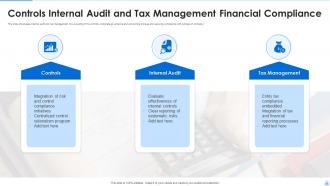
Internal audits contribute to financial compliance by systematically reviewing processes, identifying control gaps, and ensuring adherence to regulatory requirements and internal policies. These comprehensive assessments enable organizations to detect potential violations early, strengthen risk management frameworks, and maintain transparency with stakeholders, ultimately delivering enhanced regulatory confidence and reduced compliance costs.
Best practices for training employees on financial compliance include regular interactive workshops, scenario-based learning modules, role-specific compliance protocols, ongoing assessment programs, and clear documentation requirements. These approaches enhance understanding by combining theoretical knowledge with practical applications, while many organizations find that incorporating real-world case studies from banking and financial services ultimately delivers better retention and regulatory adherence.
International financial compliance standards significantly impact multinational corporations by requiring standardized reporting, enhanced risk management protocols, and consistent audit procedures across all jurisdictions. These regulations streamline operations while increasing transparency, with many banks and investment firms finding that unified compliance frameworks reduce operational costs, minimize regulatory conflicts, and ultimately deliver competitive advantages in global markets.
Financial compliance and risk management work together as complementary business functions, with compliance establishing regulatory frameworks while risk management identifies, assesses, and mitigates potential threats to organizational stability. Through integrated approaches, financial institutions streamline oversight processes, enhance regulatory reporting accuracy, and strengthen operational controls, with many organizations finding that this strategic combination ultimately delivers improved decision-making capabilities and competitive advantage.
Companies ensure vendor financial compliance through comprehensive due diligence processes, regular audits, contractual compliance requirements, and continuous monitoring systems. These approaches enable organizations to verify vendor certifications, assess risk profiles, and maintain ongoing oversight, with many financial institutions and healthcare organizations finding that structured vendor management programs significantly reduce regulatory risks while streamlining partnership relationships.
Innovative compliance technologies include artificial intelligence for automated reporting, blockchain for transparent audit trails, robotic process automation for regulatory filings, machine learning for risk detection, and cloud-based platforms for real-time monitoring. These solutions streamline operations by reducing manual errors, accelerating compliance workflows, and enhancing regulatory transparency, with many financial institutions finding that automated systems deliver faster reporting cycles and significantly lower compliance costs.
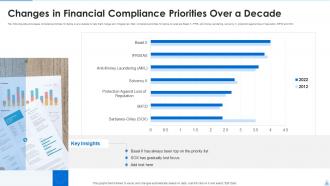
Financial compliance requirements vary significantly across industries, with banks facing Basel III capital requirements, healthcare organizations adhering to HIPAA privacy standards, publicly traded companies following SOX regulations, and investment firms complying with SEC filings. These sector-specific frameworks require tailored approaches to risk management, data protection, and reporting structures, with many organizations finding that industry-focused compliance strategies streamline regulatory adherence while enhancing operational efficiency.
Emerging trends in financial compliance include regulatory technology (RegTech) automation, real-time transaction monitoring, enhanced data privacy requirements, ESG reporting mandates, and AI-driven risk assessment tools. These technologies streamline compliance processes by reducing manual oversight, accelerating reporting timelines, and improving audit accuracy, with many financial institutions finding that automated systems ultimately deliver cost efficiencies while maintaining regulatory standards.
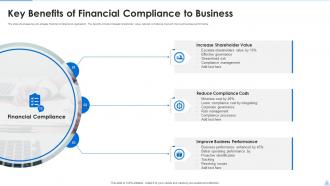
Organizations leverage financial compliance to enhance reputation and trust by demonstrating transparency, accountability, and ethical business practices through rigorous adherence to regulatory standards. This strategic approach enables companies to build stakeholder confidence, attract investors, and differentiate themselves in competitive markets, with many financial institutions and corporations finding that proactive compliance ultimately delivers customer loyalty and sustainable growth.
-
“I really like the convenient operation and professionalism I saw on the SlideTeam website. I want to express my regards and appreciation to the team.”
-
Out of the box and creative design.