


Value Based Approach And Plan For Sponsorship Valuation




Try Before you Buy Download Free Sample Product
 Impress Your
 Audience
 100%
100% Editable
 Save Hours
 of Time


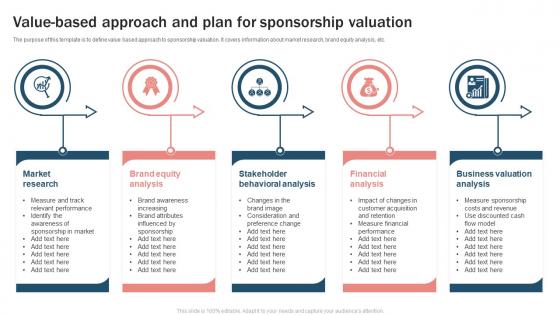
The purpose of this template is to define value based approach to sponsorship valuation. It covers information about market research, brand equity analysis, etc.
People who downloaded this PowerPoint presentation also viewed the following :
Value Based Approach And Plan For Sponsorship Valuation with all 6 slides:
Use our Value Based Approach And Plan For Sponsorship Valuation to effectively help you save your valuable time. They are readymade to fit into any presentation structure.





FAQs for Value Based Approach And Plan
Key factors include audience reach and demographics, brand alignment and values compatibility, activation opportunities and marketing rights, media exposure and digital engagement metrics, and exclusivity terms within sponsor categories. These elements enable organizations to evaluate potential return on investment, brand visibility enhancement, and strategic market positioning, with many companies finding that comprehensive assessment across multiple touchpoints ultimately delivers measurable competitive advantage and sustained brand growth.
Brands can effectively measure sponsorship ROI through brand awareness surveys, social media engagement metrics, website traffic analysis, sales attribution tracking, and media value assessments. These measurement approaches enable organizations to quantify exposure reach, audience sentiment, lead generation, and revenue impact, with many companies finding that combining multiple metrics delivers comprehensive insights into sponsorship effectiveness and strategic value.
Common sponsorship valuation methodologies include media equivalency, brand exposure metrics, consumer sentiment analysis, ROI calculations, and integrated attribution modeling. These approaches differ significantly, with media equivalency focusing on advertising cost comparisons, while consumer sentiment and attribution modeling provide deeper insights into audience engagement and conversion rates, ultimately delivering more strategic valuation frameworks for sponsors seeking competitive advantage.
Audience engagement significantly elevates sponsorship valuations by demonstrating active participation, brand recall, and conversion potential rather than passive exposure alone. Sponsors increasingly prioritize engaged audiences over raw numbers, with sports teams, influencers, and event organizers finding that high engagement rates, social media interactions, and meaningful brand connections command premium pricing and longer-term partnerships.
Social media significantly amplifies sponsorship value by expanding reach, enabling real-time engagement, providing measurable analytics, and creating user-generated content opportunities. These platforms deliver enhanced brand visibility, deeper audience interaction, and comprehensive performance tracking, with many organizations finding that strategic social media integration transforms traditional sponsorships into dynamic, multi-touchpoint campaigns that drive measurable ROI.
Brands leverage data analytics to improve sponsorship valuation by tracking audience engagement metrics, measuring brand exposure across digital platforms, analyzing demographic alignment, and monitoring social media sentiment in real-time. These analytics enable organizations to quantify ROI more accurately, optimize partnership selections based on performance data, and negotiate better deals, with many companies finding that data-driven approaches deliver 30-40% higher sponsorship value.
Brand alignment significantly impacts sponsorship value by ensuring message consistency, enhancing credibility, and maximizing audience resonance between sponsor and property. When brands share similar values, demographics, and market positioning, sponsors achieve stronger consumer connections, increased brand recall, and higher ROI, with many organizations finding that strategic alignment delivers measurable competitive advantages over generic sponsorship approaches.
Market trends significantly influence sponsorship valuations by altering audience behaviors, media consumption patterns, digital engagement metrics, and brand association values. Economic conditions, emerging platforms like social media and streaming services, shifting demographics, and industry-specific developments directly impact sponsor ROI expectations, with many brands finding that adaptable partnerships in growing markets command premium valuations while traditional channels face declining rates.
Longer sponsorship durations typically enhance overall valuation through sustained brand exposure, deeper audience relationships, and reduced acquisition costs per impression. Multi-year partnerships enable sponsors to build meaningful connections with target demographics, streamline activation planning, and negotiate better rates, while properties benefit from predictable revenue streams and stronger sponsor integration opportunities.
Sponsorship valuation varies significantly across industries based on audience demographics, engagement metrics, brand alignment opportunities, and measurement methodologies. In sports, valuations emphasize broadcast reach and fan loyalty, while entertainment focuses on experiential activation, technology sectors prioritize thought leadership positioning, and healthcare emphasizes regulatory compliance considerations, with many organizations finding that industry-specific ROI benchmarks ultimately deliver more accurate investment assessments.
The sponsorship valuation process adapts by incorporating real-time consumer data analytics, social media engagement metrics, digital touchpoint analysis, and behavioral tracking technologies. These methods enable brands to measure shifting preferences across demographics, adjust activation strategies dynamically, and optimize investment allocation, with many organizations finding that data-driven valuation delivers enhanced ROI and competitive advantage.
Common pitfalls include overvaluing intangible benefits, relying on outdated audience metrics, ignoring competitor benchmarks, failing to account for activation costs, and misaligning valuation methods with sponsor objectives. These oversights often lead to unrealistic pricing expectations, declined proposals, and missed partnership opportunities, with many organizations finding that comprehensive market research, standardized measurement frameworks, and transparent cost breakdowns ultimately deliver more successful sponsorship negotiations and stronger long-term relationships.
Geographic market reach significantly influences sponsorship value by determining audience size, demographic diversity, and brand exposure potential across different regions. Sponsors investing in properties with broader geographic coverage, such as national sports leagues or international events, typically pay premium rates compared to local sponsorships, as expanded reach delivers greater brand awareness, market penetration opportunities, and ultimately higher return on marketing investment.
Successful sponsorship valuation case studies include Coca-Cola's FIFA partnerships measuring brand exposure and consumer engagement, Nike's athlete endorsements tracking social media reach and sales conversion, and Red Bull's extreme sports events quantifying audience demographics and brand association metrics. These strategic approaches demonstrate how combining traditional media value with digital analytics, consumer sentiment tracking, and sales attribution enables sponsors to optimize investment decisions and maximize return on marketing spend.
Emerging technologies like AI analytics, blockchain verification, real-time data tracking, and augmented reality measurement are revolutionizing sponsorship valuation by delivering precise ROI calculations, transparent performance metrics, and comprehensive audience insights. Through automated data collection and predictive modeling, organizations can measure engagement across digital touchpoints, optimize activation strategies, and demonstrate tangible value to sponsors, ultimately enabling more strategic partnerships and competitive pricing.
-
Content of slide is easy to understand and edit.
-
The content is very helpful from business point of view.