


Five staged gear process for process control flat powerpoint design





Try Before you Buy Download Free Sample Product
 Impress Your
 Audience
 100%
100% Editable
 Save Hours
 of Time


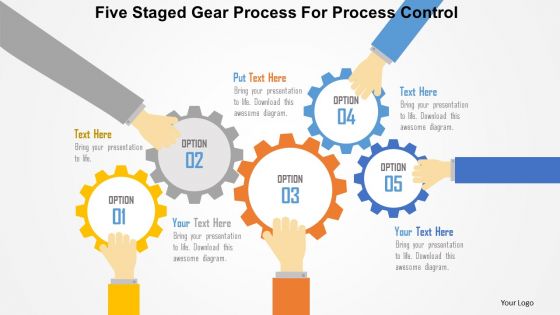
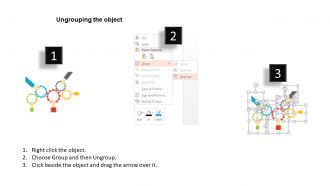
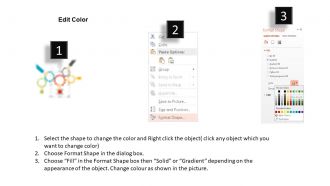
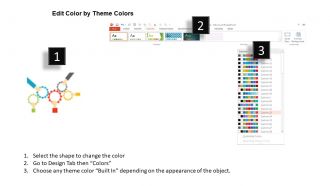
Download our five staged gear process for process control flat PowerPoint design slide and make impressive slide shows. This PPT slide has been designed with graphic of five staged gear graphics. This presentation diagram contains the concept of process control which can be used for production and marketing related presentation. This slide contains the graphic of colorful gears and human hands and can be used for business topics and get full marks for your efforts. This presentation is easy to download and customize rather than creating it from scratch on any designing software. The hands of professional experts have crafted an easy to comprehend face of the business PPT slide. With the help of our slide graphic, you can easily highlight your important business concepts such as your services, your modes of operations, collaboration among the team members, etc. Also, creative and elegant graphics have been utilized in modelling this tremendous design. So, keeping all these aspects in mind, download and use our slide now. Our Five Staged Gear Process For Process Control Flat Powerpoint Design are generous to a fault. Get extra add ons free of cost.
People who downloaded this PowerPoint presentation also viewed the following :
Five staged gear process for process control flat powerpoint design with all 6 slides:
Display fair handling with our Five Staged Gear Process For Process Control Flat Powerpoint Design. They ensure equitable distribution.
FAQs for Five staged gear process for process control
The Five Staged Gear Process includes problem identification, solution design, implementation planning, execution monitoring, and performance evaluation. These components work systematically by establishing clear objectives, developing strategic frameworks, and tracking measurable outcomes, with many organizations finding that this structured approach streamlines project delivery and enhances operational efficiency.
Each stage in the Five Staged Gear Process contributes through systematic progression, risk mitigation, resource optimization, stakeholder alignment, and continuous validation checkpoints. These sequential phases enable organizations to streamline project delivery, minimize costly revisions, and enhance team coordination, with many companies finding that this structured approach ultimately delivers faster time-to-market and improved project outcomes.
The Five Staged Gear Process can be applied across various industries by adapting its systematic progression framework to sector-specific workflows, from manufacturing assembly lines and software development cycles to healthcare treatment protocols and financial service delivery. This strategic approach enables organizations in retail, banking, and manufacturing to streamline operations, enhance quality control, and deliver consistent outcomes, ultimately providing competitive advantage through standardized yet flexible process management.
Common challenges include resource allocation constraints, employee resistance to change, inadequate training protocols, integration complexities with existing systems, and timeline management issues. These implementation hurdles can be streamlined through strategic planning, comprehensive change management, and phased rollouts, with many organizations finding that early stakeholder engagement and robust communication ultimately deliver smoother transitions and enhanced operational efficiency.
Stakeholder involvement significantly enhances each stage by ensuring alignment, reducing resistance, and incorporating diverse perspectives that improve decision-making quality. Through regular consultation and feedback loops, organizations streamline implementation, accelerate adoption rates, and minimize costly revisions, with many finding that engaged stakeholders ultimately deliver stronger buy-in and sustainable outcomes across all process phases.
Communication serves as the central connecting mechanism throughout the Five Staged Gear Process, enabling seamless information flow, stakeholder alignment, and coordinated execution across all phases. It facilitates real-time feedback loops, ensures consistent messaging between teams, and maintains project momentum, with many organizations finding that structured communication protocols significantly reduce delays, minimize misunderstandings, and ultimately deliver more successful outcomes.
Organizations measure Five Staged Gear Process success through key performance indicators like completion rates, timeline adherence, resource utilization efficiency, stakeholder satisfaction scores, and quality metrics at each stage. Through systematic tracking and data analytics, companies can identify bottlenecks, optimize workflows, and demonstrate tangible improvements in operational efficiency, with many finding that regular milestone assessments ultimately deliver enhanced project outcomes and competitive advantage.
Tools enhancing Five Staged Gear Process execution include project management platforms, data analytics software, automation workflows, performance dashboards, and collaborative communication systems. These technologies streamline each stage by improving resource allocation, accelerating decision-making, and enhancing cross-functional coordination, with many organizations finding that integrated digital tools ultimately deliver faster implementation cycles and measurable operational efficiency gains.
Risk management integrates throughout the Five Staged Gear Process by embedding assessment protocols, mitigation strategies, and contingency planning at each sequential stage. Organizations implement continuous monitoring frameworks, stakeholder communication channels, and adaptive response mechanisms, with many finding that this systematic approach ultimately delivers enhanced project outcomes, reduced operational vulnerabilities, and sustained competitive advantage.
Effective transitions require clear milestone validation, stakeholder alignment, comprehensive documentation, regular progress reviews, and structured handoff protocols between each gear stage. Organizations successfully implementing this process establish defined exit criteria, maintain cross-functional communication channels, and conduct thorough readiness assessments, ultimately ensuring seamless progression while minimizing disruption and maximizing operational efficiency throughout the transformation.
The Five Staged Gear Process can be adapted for agile methodologies by incorporating iterative cycles, shorter feedback loops, and flexible stage transitions that align with sprint-based development. Through continuous integration practices, cross-functional collaboration, and adaptive planning frameworks, organizations streamline project delivery while maintaining systematic progression, with many software development teams finding that this hybrid approach delivers faster time-to-market and enhanced responsiveness.
Manufacturing organizations like Toyota and General Electric showcase the Five Staged Gear Process through systematic implementation across assessment, planning, execution, monitoring, and optimization phases. These companies demonstrate how structured gear methodology streamlines operations, reduces production bottlenecks, and enhances quality control, with many finding that systematic phased approaches ultimately deliver measurable efficiency gains and competitive advantage.
Cultural factors significantly impact the Five Staged Gear Process through varying communication styles, decision-making approaches, hierarchy expectations, feedback preferences, and timeline orientations across global teams. Organizations implementing this process find that adapting each stage to accommodate cultural nuances, such as consensus-building in Asian markets versus direct approaches in Western contexts, ultimately enhances team collaboration and process effectiveness.
The Five Staged Gear Process emphasizes continuous momentum and iterative acceleration through interconnected phases, while traditional methodologies often follow linear, sequential approaches with distinct gates and approval checkpoints. This gear-based framework enables organizations to maintain operational velocity, adapt quickly to changing requirements, and streamline resource allocation, with many project teams finding that the integrated approach delivers faster time-to-market and enhanced stakeholder alignment.
Technology streamlines the Five Staged Gear Process through automated workflow management, real-time progress tracking, data analytics for decision optimization, collaborative platforms for team coordination, and integrated reporting systems. These digital solutions enhance each stage by reducing manual errors, accelerating transitions between phases, and providing actionable insights, ultimately delivering faster project completion and improved operational efficiency across organizations.
-
Innovative and Colorful designs.
-
Out of the box and creative design.