

Food And Beverage Value Chain Analysis Framework




Try Before you Buy Download Free Sample Product
 Impress Your
 Audience
 100%
100% Editable
 Save Hours
 of Time


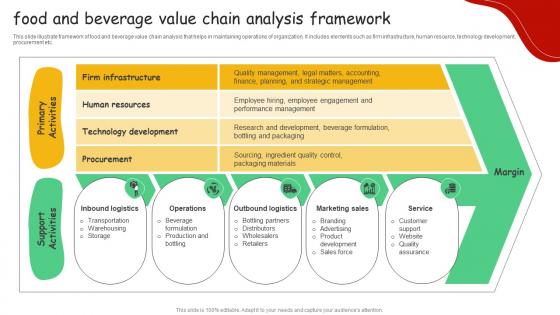
This slide illustrate framework of food and beverage value chain analysis that helps in maintaining operations of organization. It includes elements such as firm infrastructure, human resource, technology development, procurement etc.
People who downloaded this PowerPoint presentation also viewed the following :
Food And Beverage Value Chain Analysis Framework with all 9 slides:
Use our Food And Beverage Value Chain Analysis Framework to effectively help you save your valuable time. They are readymade to fit into any presentation structure.








FAQs for Food And Beverage Value
So it basically starts with farming and livestock, then goes through processing, distribution, retail - you know the drill. Think about that apple sitting in your fridge right now - it traveled through like 5 different hands before you grabbed it. Each step makes things more valuable but way more complicated too. What's wild is how one hiccup anywhere can mess up the whole thing. We saw that big time during COVID, right? My advice? Don't just focus on making one part super efficient. Build solid relationships across the board - that's what actually saves you when things go sideways.
Ugh, supply chain issues are brutal for food companies. They're already working with crazy thin margins and everything has to move fast. When something breaks down, it hits ingredient supplies, production, distribution - the whole thing. Fresh stuff gets hit worst - imagine lettuce just dying in some stuck truck somewhere. Companies scramble to find new suppliers, which totally messes with consistency and jacks up costs. Consumers end up paying more or staring at empty shelves. Honestly, the smart move is diversifying suppliers and keeping backup inventory of key ingredients, even though that ties up a bunch of cash you'd rather use elsewhere.
Look, sustainability isn't just trendy anymore - it actually saves money. Companies are cutting water use, reducing food waste, and being smarter about packaging because customers genuinely care (and honestly, the regulations are getting stricter). Supply chain chaos these past few years really showed how important resilient sourcing is. Your bottom line benefits from cost savings and better risk management. I'd say start with an audit of your biggest environmental impacts first. That'll give you the clearest picture of where to focus your efforts.
Honestly, the tech for supply chain tracking is getting crazy good. Blockchain and IoT sensors give you real-time updates on everything - where your products are, what temps they're hitting during transport, all that stuff. QR codes are huge now too since customers can just scan and see exactly where their food came from. Smart sensors catch problems before they blow up into major recalls. And speaking of recalls - we're talking hours to track down contaminated batches instead of the weeks it used to take. Oh, and don't try to implement everything at once. Pick one tech to pilot first and see what actually works for your products.
Start with mapping your critical control points - that's your foundation. HACCP implementation and temperature monitoring throughout the cold chain are huge. Regular microbiological testing at those control points too. Don't skip supplier verification or sanitation protocols. pH and moisture testing depends on what you're making, but metal detection is non-negotiable - seriously, one piece of wire in someone's protein bar and you're toast. Your team needs to actually document everything, not just pretend they are. Oh, and microbiological testing can get expensive fast, so budget for that upfront.
Honestly, it all starts with what people are buying at the grocery store. Plant-based stuff gets popular? Your suppliers are suddenly hunting down pea protein like it's gold. Takes forever though - we're talking months to reformulate products and find new ingredient sources. Manufacturing has to retool their whole setup, packaging teams redesign everything, and logistics gets flipped when you're shipping totally different volumes. The smart move is watching consumer data super closely so you can make changes before everyone else catches on. Some TikTok food trends are obviously gonna flop, but the real shifts? Those reshape your entire supply chain fast.
Globalization totally flipped food markets on their head. You're competing with everyone now, but honestly? You've also got access to suppliers and ingredients that didn't exist before. Supply chains are crazy complex these days - nothing's really seasonal anymore, which keeps costs down but makes everything feel... I dunno, less special? Customers expect international flavors and that pushes innovation. Traditional producers get squeezed out if they can't adapt or scale. But here's the thing - you can export your local stuff globally now too. What makes you unique actually matters more because of all this global competition. People crave authentic local stories when everything else feels mass-produced.
Dude, regulations control literally everything you do - farm safety, pesticide limits, how you process stuff, labeling, distribution, the works. HACCP forces you to set up these monitoring systems, and trade rules mess with your sourcing and exports. Environmental compliance is honestly such a pain. But here's the thing - you can't just ignore this stuff. One violation and they'll shut you down or block your market access completely. My cousin learned that the hard way. You gotta bake compliance into your plans from the start, not scramble to fix it later.
So basically, small producers get screwed in three main ways. They can't reach buyers directly - always stuck dealing with middlemen who take huge cuts. Pricing is awful too since they have zero bargaining power against big distributors. Then there's the whole infrastructure mess - no money for proper cold storage or decent transport, so tons of food just goes to waste. Actually pretty depressing when you think about it. Your best bet is helping them team up in cooperatives or finding ways to connect straight with local buyers. That's really their only shot at making this work.
Honestly, partnerships are a game-changer for cutting costs in food ops. You can split warehouse space, combine shipping routes, and share tech with suppliers or distributors. Some companies I know dropped their logistics costs by like 30% doing this. Even sharing demand data helps everyone waste less food - which is huge right now. The trick is finding partners who are strong where you're weak. Map out where you're bleeding money first, then figure out who could help fix those specific problems. Oh, and don't overlook working with competitors sometimes - sounds weird but it works.
Start with figuring out where you're losing the most food first - that's gonna tell you where to focus. Better forecasting helps stores not over-order, and fixing cold transport keeps stuff fresh longer. Those "ugly produce" campaigns actually work pretty well (people don't care if their apples look weird). Packaging redesigns can add shelf life too. On the consumer side, clearer date labels would help tons - half the time people toss perfectly good food because they can't tell what "best by" means. Oh, and food recovery programs are solid for redirecting surplus to food banks instead of dumpsters.
Look, if your supply chain falls apart, it doesn't matter how much people want your stuff - empty shelves are empty shelves. You've got warehouses, trucks, cold storage for anything that spoils, and getting orders to people's doors. When logistics suck, you get stockouts and products showing up late or at totally wrong locations. Honestly, I've seen companies lose customers just because they couldn't figure out their transportation routes. Good distribution keeps inventory flowing smoothly so the right products hit the right stores when customers actually want them. Start by finding where things get stuck in your current system - that's usually where you're bleeding sales.
Honestly, branding is where the magic happens in food & bev. You're basically taking cheap ingredients and spinning a story that lets you charge way more. Starbucks didn't just sell coffee - they sold the whole "third place" vibe. Same with organic stuff getting those crazy 20-40% markups. What's really smart is how good branding makes customers less sensitive to price changes. They'll stick with you even when competitors go cheaper. The key is finding stories that actually resonate with people's values, not just random marketing fluff. It's kinda insane how much perception drives willingness to pay in this industry.
Honestly, the amount of waste you can eliminate just by looking at your data properly is wild. Analytics turns all that chaotic supply chain info into stuff you can actually use - like predicting when demand's gonna spike or catching quality problems before they turn into expensive recalls. You'll figure out which suppliers consistently deliver and optimize your inventory without overthinking it. Real-time consumer insights help with pricing too, which is clutch. My advice? Don't try to do everything at once. Pick something concrete like demand forecasting first, then expand from there once you get the hang of it.
Automation's taking over everywhere - robots handling processing and packaging like crazy. Most brands went direct-to-consumer during COVID and honestly? They're not looking back because the margins are way better. Local sourcing is becoming huge since nobody wants to deal with global supply chain nightmares again. Real-time tracking means you can literally watch your stuff move through the system, which customers love. Oh, and the sustainability thing isn't going anywhere - people want the full backstory on their food now. When you're picking vendors, go with whoever's already invested in this tech stuff. Trust me on that one.
-
The slides are remarkable with creative designs and interesting information. I am pleased to see how functional and adaptive the design is. Would highly recommend this purchase!
-
I was really impressed with the presentation I created with their templates. I’ll be using their services moving forward.