


Food groups pyramid for keto diet




Try Before you Buy Download Free Sample Product
 Impress Your
 Audience
 100%
100% Editable
 Save Hours
 of Time


Our Food Groups Pyramid For Keto Diet are topically designed to provide an attractive backdrop to any subject. Use them to look like a presentation pro.
People who downloaded this PowerPoint presentation also viewed the following :
Food groups pyramid for keto diet with all 2 slides:
Use our Food Groups Pyramid For Keto Diet to effectively help you save your valuable time. They are readymade to fit into any presentation structure.

FAQs for Food groups pyramid
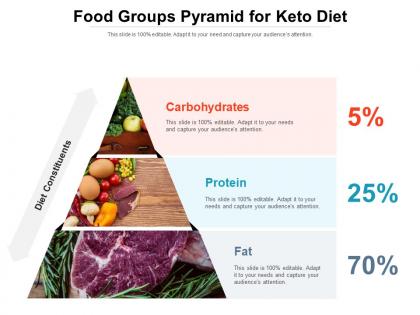
The foundational foods in a keto diet pyramid include healthy fats like avocados, olive oil, nuts, and fatty fish, high-quality proteins such as grass-fed meats and eggs, and low-carb vegetables including leafy greens and cruciferous options. These nutrient-dense foods work together by maintaining ketosis, stabilizing blood sugar, and providing sustained energy, with many individuals finding that this combination delivers enhanced mental clarity and metabolic efficiency.
The keto food pyramid inverts traditional dietary guidance by prioritizing healthy fats at the base, followed by moderate proteins, with minimal carbohydrates at the top. While traditional pyramids emphasize grains and carbohydrates as primary energy sources, keto pyramids focus on achieving ketosis through fat metabolism, with many individuals finding this approach enhances weight management and metabolic efficiency.
Healthy fats form the foundation of the keto food pyramid, comprising 70-80% of daily calories through avocados, olive oil, nuts, seeds, and fatty fish. These fats fuel ketosis by replacing carbohydrates as the primary energy source, enabling sustained energy levels, improved mental clarity, and enhanced fat burning, ultimately delivering metabolic flexibility and weight management benefits.
Essential keto protein sources include fatty fish like salmon and mackerel, grass-fed beef, free-range poultry, eggs, and full-fat dairy products. These proteins deliver optimal fat-to-protein ratios while minimizing carbohydrates, with many keto practitioners finding that incorporating varied sources enhances nutritional balance and sustains long-term dietary adherence.
Vegetables within the keto food pyramid are categorized by net carbohydrate content, with leafy greens, cruciferous vegetables, and low-carb options like spinach, broccoli, and zucchini forming the foundation layer. This strategic categorization enables meal planning that maximizes nutrient density while maintaining ketosis, with many following keto finding that prioritizing these vegetables enhances satiety and delivers sustained energy levels.
Keto serving recommendations include 70-80% fats (5-6 servings of oils, nuts, avocados), 15-25% protein (4-6 oz portions of meat, fish, eggs), and 5-10% carbohydrates (2-3 cups leafy greens, low-carb vegetables). These proportions enable metabolic ketosis by dramatically limiting carb intake, increasing healthy fat consumption, and maintaining adequate protein levels, ultimately delivering sustained energy and efficient fat burning for those following ketogenic lifestyle approaches.
The keto diet pyramid accommodates dietary restrictions by offering flexible protein sources, dairy alternatives, and customizable vegetable selections within each tier. Individuals with allergies can substitute almond flour for wheat-based products, use coconut oil instead of dairy fats, and select specific low-carb vegetables that align with their needs, ultimately maintaining ketosis while respecting personal dietary limitations and preferences.
Common misconceptions include believing all carbs are forbidden, that vegetables don't count toward carb limits, and that net carbs aren't relevant for planning meals. Many people overlook that keto emphasizes strategic carb selection from nutrient-dense sources like leafy greens and low-glycemic vegetables, while minimizing processed options, ultimately enabling sustained ketosis and better metabolic outcomes.
Transitioning to a keto food pyramid requires gradually reducing carbohydrates to under 20-50 grams daily while increasing healthy fats to 70-80% of total calories. This strategic approach enables the body to enter ketosis within 2-7 days, with many individuals finding that meal planning, electrolyte supplementation, and gradual implementation ultimately deliver sustained energy and metabolic flexibility.
Easy keto meal planning strategies include batch cooking proteins and low-carb vegetables, preparing fat-rich snacks in advance, organizing weekly menus by macronutrient ratios, and creating shopping lists organized by pyramid tiers. These approaches streamline grocery shopping, reduce daily decision-making, and ensure consistent macronutrient targets, with many finding that systematic preparation ultimately delivers better adherence and sustainable results.
The keto food pyramid addresses micronutrient intake by emphasizing nutrient-dense whole foods like leafy greens, avocados, nuts, and quality proteins at its foundation, while minimizing processed foods. This strategic approach ensures adequate vitamins and minerals through natural sources, with many following ketogenic diets finding that focusing on food quality rather than just macronutrient ratios delivers better energy levels and overall health outcomes.
Beverages fit into the keto pyramid by prioritizing water, electrolyte drinks, and unsweetened options at the foundation, while incorporating moderate amounts of bulletproof coffee, bone broth, and sugar-free alternatives. These strategic beverage choices support ketosis by maintaining hydration, replenishing minerals lost during carb restriction, and providing satisfying options that complement meal planning, ultimately helping individuals sustain their ketogenic lifestyle more effectively.
Beginner keto compliance improves through meal planning, gradual carb reduction, and focusing on whole foods like avocados, fatty fish, and leafy greens rather than processed options. Starting with simple recipes, tracking macros initially, and preparing keto-friendly snacks helps establish sustainable habits, while many find that batch cooking proteins and vegetables streamlines daily adherence significantly.
The keto food pyramid adapts by adjusting fat ratios, protein portions, and carb timing based on activity levels, metabolic demands, and recovery requirements. Athletes may incorporate strategic carb cycling around workouts while maintaining ketosis, whereas sedentary individuals focus on steady fat intake and minimal carbs, with both approaches ultimately delivering sustained energy and metabolic flexibility.
Resources for visualizing the keto food pyramid include comprehensive infographics, interactive digital tools, meal planning apps, educational charts, and detailed nutritional guides. These resources streamline understanding by categorizing foods into appropriate tiers, providing macronutrient breakdowns, and offering practical meal combinations, with many health-focused organizations and nutrition platforms finding that visual pyramid formats enhance dietary adherence and strategic meal planning.
-
Best way of representation of the topic.
-
Use of different colors is good. It's simple and attractive.
-
Great experience, I would definitely use your services further.
-
Awesomely designed templates, Easy to understand.
-
Out of the box and creative design.