


Foodborne Pathogens PowerPoint Template Bundles PPT Template





Try Before you Buy Download Free Sample Product
 Impress Your
 Audience
 100%
100% Editable
 Save Hours
 of Time


Our Foodborne Pathogens PowerPoint Template Bundles PPT Template are topically designed to provide an attractive backdrop to any subject. Use them to look like a presentation pro.
People who downloaded this PowerPoint presentation also viewed the following :
Content of this Powerpoint Presentation
Slide 1: This slide introduces Foodborne Pathogens. State your company name and begin.
Slide 2: The purpose of this slide is to provide a concise overview of major foodborne pathogens and their associated symptoms. It aids in quick identification and response.
Slide 3: The purpose of this slide is to highlight how understanding sources and transmission routes of foodborne pathogens aids in preventing contamination and reducing foodborne illness outbreaks. It helps in implementing effective food safety practices and improving public health.
Slide 4: The purpose of this slide is to outline the symptoms and health effects of key foodborne pathogens for improved diagnosis, treatment, and prevention. It helps in identifying and managing foodborne illnesses more effectively.
Slide 5: The purpose of this slide is to highlight prevalence, health effects, and common sources of major foodborne pathogens for better understanding and prevention. It helps in identifying high-risk pathogens, understanding their impact on public health, and guiding effective food safety measures.
Slide 6: The purpose of this slide is to highlight how biochemical tests for foodborne pathogens detection help in rapidly identifying specific pathogens through characteristic chemical reactions, ensuring food safety.
Slide 7: The purpose of this slide is to ensure rapid, accurate, and user-friendly identification of harmful microorganisms in various settings. It helps in enhancing food safety through efficient pathogen detection.
Slide 8: The purpose of this slide is to show how array-based methods enable rapid and precise detection of multiple foodborne pathogens. It includes target site, probe, array matrix, and detection limit.
Slide 9: The purpose of this slide is to highlight how hygiene practices to prevent foodborne pathogens help ensure food safety and reduce the risk of illness. It includes handwashing, sanitizing surface, temperature control, and cross contamination.
Slide 10: The purpose of this slide is to identify and manage key pathogens to assess and mitigate risks in food safety. It helps in prioritizing preventive measures and ensuring compliance with safety standards.
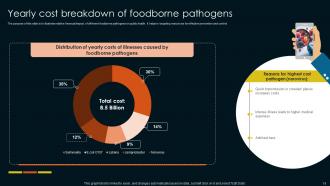
Slide 11: The purpose of this slide is to illustrate relative financial impact of different foodborne pathogens on public health. It helps in targeting resources for effective prevention and control.
Slide 12: This slide highlights title for topics that are to be covered next in the template.
Slide 13: The purpose of this slide is to equip staff with essential knowledge and practices to prevent and manage foodborne illness outbreaks effectively. It helps in ensuring food safety, and reducing contamination risks.
Slide 14: The purpose of this slide is to assess severity and impact of each foodborne pathogen by comparing illness duration. It helps in prioritizing response and treatment strategies.
Slide 15: The purpose of this slide is to enhance food safety through faster, more accurate, and on-site detection of contaminants. It helps in improving response times to food safety issues.
Slide 16: The purpose of this slide is to outline effective measures to ensure food safety and reduce the risk of illness. It helps in maintaining high hygiene standards, proper food handling, and minimizing contamination.
Slide 17: The purpose of this slide is to outline essential guidelines for cooking and storing food safely. It helps to prevent foodborne illnesses through proper handling, cooking, and storage practices.
Slide 18: This slide shows Foodborne pathogens icon for safety training.
Slide 19: This slide presents Foodborne pathogens icon for educational materials.
Slide 20: This slide displays Foodborne pathogens icon for safety training.
Slide 21: This is a Thank You slide with address, contact numbers and email address.
Foodborne Pathogens PowerPoint Template Bundles PPT Template with all 29 slides:
Use our Foodborne Pathogens PowerPoint Template Bundles PPT Template to effectively help you save your valuable time. They are readymade to fit into any presentation structure.












FAQs for Foodborne Pathogens PowerPoint Template
The most common foodborne pathogens include Salmonella from poultry and eggs, E. coli from ground beef, Listeria from dairy products, Campylobacter from chicken, and Norovirus from contaminated surfaces. These pathogens significantly impact food service operations through supply chain disruptions, regulatory compliance costs, and brand reputation risks, with many restaurants and food manufacturers finding that comprehensive pathogen monitoring systems ultimately deliver enhanced food safety protocols and reduced liability exposure.
Foodborne pathogens significantly impact global public health by causing widespread illness, hospitalizations, and economic burden across healthcare systems, food industries, and communities worldwide. These pathogens affect millions annually through contaminated food supply chains, with developing nations experiencing disproportionate impacts, ultimately costing billions in healthcare expenses, lost productivity, and trade restrictions while highlighting the critical need for enhanced food safety monitoring systems.
Key symptoms of foodborne illnesses include nausea, vomiting, diarrhea, abdominal cramps, fever, and dehydration, with severity varying by pathogen type and individual health status. These symptoms typically develop within hours to days of consumption, with healthcare facilities and food service operations increasingly implementing rapid detection systems to minimize exposure risks and enhance customer safety protocols.
Proper food handling minimizes foodborne infections through temperature control, cross-contamination prevention, thorough cooking, and regular hand hygiene practices. These methods significantly reduce pathogen survival by maintaining cold storage below 40°F, using separate cutting boards for raw and cooked foods, and ensuring internal temperatures reach safe levels, with restaurants and food manufacturers finding that systematic protocols deliver safer products and enhanced customer trust.
Cross-contamination serves as a primary transmission pathway for foodborne pathogens, occurring when harmful bacteria, viruses, or parasites transfer from contaminated surfaces, utensils, or foods to safe products. This process significantly amplifies outbreak risks in commercial kitchens, processing facilities, and retail environments, with many food service operations finding that implementing strict separation protocols, sanitization procedures, and staff training ultimately reduces contamination incidents and enhances consumer safety.
Current food safety regulations have significantly reduced foodborne outbreaks through mandatory HACCP protocols, regular inspections, traceability requirements, and rapid response systems. While these frameworks deliver enhanced monitoring and contamination prevention, they present implementation challenges for smaller operations, with many food manufacturers finding that strategic compliance investments ultimately streamline operations and minimize costly recall risks.
Advanced detection technologies include PCR-based methods, biosensors, mass spectrometry, next-generation sequencing, and AI-powered imaging systems. These innovations streamline pathogen identification by reducing testing time from days to hours, enhancing accuracy through automated analysis, and enabling real-time monitoring throughout supply chains, ultimately delivering faster responses and safer food products.
Environmental factors significantly influence foodborne pathogen prevalence through temperature fluctuations, humidity levels, seasonal variations, water quality, and soil contamination. Warmer climates and inadequate refrigeration enable bacterial multiplication in food supplies, while contaminated irrigation water affects produce safety, with agricultural operations and food processing facilities finding that controlled environmental monitoring ultimately delivers safer products and reduced contamination risks.
Foodborne illness outbreaks create substantial economic burdens through direct costs like product recalls, facility shutdowns, legal settlements, and regulatory fines, alongside indirect impacts including brand reputation damage and market share losses. These financial consequences can reach millions for individual companies, with many food manufacturers finding that comprehensive pathogen prevention programs ultimately deliver significant cost savings compared to outbreak response expenses, while enhancing consumer trust and competitive positioning.
Consumers can educate themselves through government resources like CDC and FDA websites, food safety courses, cooking classes focused on proper handling techniques, and reputable health organizations' materials. These educational approaches enhance kitchen practices by teaching proper temperatures, storage methods, and hygiene protocols, ultimately delivering safer meals and reduced illness risks for families.
The temperature danger zone (40-140°F) represents the critical range where foodborne pathogens multiply rapidly, doubling every 20 minutes and creating significant health risks. This concept enables food service operations, restaurants, and healthcare facilities to implement strategic temperature control protocols, ultimately minimizing contamination risks, reducing foodborne illness outbreaks, and delivering safer customer experiences.
Foodborne pathogens demonstrate significant variation in infectious dose and virulence, with some requiring millions of cells while others need fewer than ten organisms to cause illness. These differences impact food safety protocols, risk assessment strategies, and regulatory approaches across restaurants, food processing facilities, and healthcare institutions, ultimately enabling more targeted prevention measures and faster outbreak response capabilities.
Best practices for cleaning and sanitizing kitchen surfaces include using separate cutting boards for different food types, cleaning with hot soapy water before sanitizing, applying EPA-approved sanitizers, maintaining proper contact times, and establishing regular cleaning schedules. These protocols streamline food safety operations by reducing cross-contamination risks, minimizing pathogen survival, and ensuring regulatory compliance, with many commercial kitchens finding that systematic sanitization ultimately delivers safer food preparation environments and enhanced customer confidence.
Antibiotic use in livestock contributes to pathogen resistance by creating selective pressure that favors resistant bacterial strains, enabling horizontal gene transfer between bacteria, and introducing resistant pathogens into the food supply chain. Through routine prophylactic treatment and growth promotion practices, farms inadvertently cultivate superbugs that compromise treatment effectiveness in both animals and humans, ultimately presenting significant public health challenges for healthcare systems managing foodborne illness outbreaks.
Emerging foodborne pathogens include antibiotic-resistant Salmonella strains, Cyclospora cayetanensis, Clostridium difficile, novel E. coli variants, and Cronobacter sakazakii. These pathogens present both challenges and opportunities for food safety systems, with many restaurants, processors, and healthcare facilities finding that enhanced detection technologies, improved supply chain monitoring, and strategic prevention protocols ultimately deliver stronger consumer protection and competitive advantage.
-
Been using SlideTeam for some time now…can’t imagine why I wasted all that time in front of the screen trying to make the perfect presentation.
-
Stunning collection! With a wide variety of options available, I was able to find a perfect slide for my presentation. Thank you, SlideTeam!