


Food Fraud Mitigation Plan Template Powerpoint PPT Template Bundles




Try Before you Buy Download Free Sample Product
 Impress Your
 Audience
 100%
100% Editable
 Save Hours
 of Time


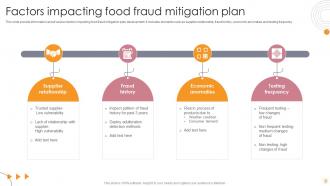
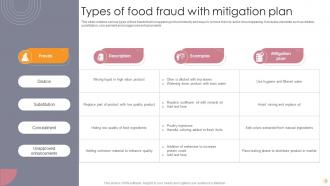
Introducing our comprehensive Food Fraud Mitigation Plan Template PowerPoint PPT presentation, designed to assist food industry professionals in developing robust strategies to combat fraudulent activities. This informative slide deck covers essential keywords such as Types of Restaurant Frauds, Adulteration, Agri-food Fraud, Dilution, and Tampering. With visually engaging slides and concise content, our PPT offers a deep dive into the various types of fraud that can occur in the food industry and provides practical guidance on developing a comprehensive mitigation plan. Whether youre a food safety manager, quality assurance professional, or part of a regulatory agency, this resource will enhance your understanding of identifying and preventing food fraud incidents. From risk assessments to control measures and monitoring protocols, our PPT equips you with the tools and knowledge to protect your organizations reputation and ensure the integrity of your food products. Strengthen your food fraud mitigation efforts with our user-friendly Food Fraud Mitigation Plan Template PPT.
People who downloaded this PowerPoint presentation also viewed the following :
Food Fraud Mitigation Plan Template Powerpoint PPT Template Bundles with all 25 slides:
Use our Food Fraud Mitigation Plan Template Powerpoint PPT Template Bundles to effectively help you save your valuable time. They are readymade to fit into any presentation structure.






FAQs for Food Fraud Mitigation Plan Template Powerpoint
You'll mostly see dilution and substitution - they add cheaper ingredients or swap out the expensive stuff with knockoffs. Honey gets watered down with corn syrup. Fish labeling is a total mess - that "red snapper" is probably tilapia. Olive oil? Cut with cheaper oils all the time. Then there's the weight games where they inject water into meat or add weird stuff like melamine to fake higher protein levels. That last one's actually dangerous, not just annoying. Your best bet is solid supplier checks and testing the sketchy ingredients regularly. Focus on the high-risk stuff first.
So there's actually some pretty solid tech for catching food fraud early. Blockchain's your best bet for tracking products from farm to shelf - creates records nobody can mess with. DNA testing and spectroscopy will tell you if that "premium olive oil" is legit or just fancy marketing. IoT sensors are great too, they'll monitor temps during shipping and catch weird stuff happening. Oh, and machine learning can spot sketchy patterns in your supply data - like if a supplier's suddenly acting weird. Honestly, I'd start with blockchain for your riskiest products first, then add the testing stuff when you've got more budget.
So regulatory agencies like the FDA and USDA are supposed to be your safety net here - they inspect stuff, set standards, and fine companies when they mess up. International bodies do this too. They keep databases of common scams (olive oil cutting, fake seafood labels, all that) and share info across countries. Problem is, they're pretty stretched thin resource-wise so tons of stuff slips through. I mean, think about how much food moves around globally - there's no way they catch everything. You're way better off setting up your own verification systems instead of just hoping regulators will protect you.
Start with mapping your whole supply chain - every supplier and their suppliers too. Get all the paperwork: certificates, audit reports, the works. Those blockchain tracking systems can help but honestly they're not as smooth as companies make them sound. Make your suppliers document everything from sourcing to processing. Regular audits are huge. Build relationships with transparent suppliers - if someone's sketchy about sharing info, run. Oh and do spot-checks randomly, keeps everyone honest. The documentation part is tedious but you'll thank yourself later when issues come up.
Ugh, food fraud is brutal for businesses. Revenue tanks immediately from recalls and disposal costs. But honestly? The reputation hit is what really kills you - customers don't forgive that stuff easily. Then you're dealing with lawsuits, regulators breathing down your neck, insurance companies jacking up rates. Oh and suppliers will probably make you jump through way more hoops going forward, which gets pricey. It's like dominoes falling. Way better to spend money upfront on testing and verifying your suppliers than trying to dig out of that mess later.
Dude, teaching people what to watch for is actually huge. Like if your customers can spot the obvious red flags - crazy low prices, sketchy labels, weird sellers - they basically become your extra eyes out there. That $2 "premium" olive oil? Yeah, nobody's falling for that anymore. Once people know what to look for, they'll either report the sketchy stuff or just avoid it completely. Makes the whole fraud thing way less profitable. I'd honestly just make some simple guides showing the warning signs. People love feeling like they're in on something, and it actually works.
Honestly, start with SQF and BRC certifications - they're pretty strict about traceability so it's harder for sketchy stuff to slip through. GFSI schemes like IFS and FSSC 22000 work well too. Organic certs (USDA, EU) track supply chains really thoroughly, though they care more about how things are grown than actual fraud prevention. For European stuff, look for PDO/PGI labels - those are legit. My advice? Figure out which ingredients are your biggest risk first, then focus on certifications that require solid documentation for those specific suppliers. Third-party audits are your friend here.
Honestly, supplier audits come down to three main things. Check their paperwork first - certifications, test results, all that documentation stuff. People fake this more than you'd think, so watch for anything that seems off. Do surprise visits too because what they show you on paper vs reality can be totally different. Oh, and map out where everything actually comes from, not just who you're buying from directly. You'll want your own audit schedule instead of relying on third parties. The suppliers who get weird about being transparent? Yeah, those are the ones you don't want.
So this is actually pretty complicated - cultural differences totally change what people consider "food fraud" versus normal practice. Like in parts of India, adding water to milk is just how things are done, but try that elsewhere and you're basically committing fraud. Enforcement is all over the place too. Some countries are crazy strict about regulations while others... well, not so much. Oh and your background really shapes what you think counts as fraud versus traditional prep methods. Definitely worth checking local food standards before you do anything cross-border because what seems normal to you might not fly there.
Food fraud is honestly scarier than people realize. Substituting ingredients can expose people to allergens they're trying to avoid, or worse - remember that melamine baby formula disaster? That killed kids. Sometimes fraudsters just water stuff down for profit, which seems less scary but you're still not getting the nutrition you paid for. Even "economic" fraud where they just swap cheaper ingredients can be dangerous if someone has allergies. Companies need solid supplier checks and regular testing, though let's be real - some will always try to cut corners. It's wild how often this stuff slips through.
So blockchain basically gives you this unfakeable record of where your food came from - like a digital trail that follows everything from the farm straight to your plate. Each step gets logged across tons of computers, so if someone tries to mess with the data, the system spots it right away. Honestly, it's pretty genius for catching fraud since you can see exactly who touched what and when. The records can't be tampered with once they're in there. I'd probably test it out first on whatever products get counterfeited most in your industry, just to see how well it actually works before going all-in.
Here's the thing - your HACCP and supplier audits are basically fraud detectors in disguise. All that paperwork you're already doing? It creates trails that make it super hard for sketchy stuff to slip through. I know documentation is annoying, but those verification processes catch inconsistencies before they become bigger problems. Your traceability systems work with everything else to spot red flags. Obviously it's not perfect - nothing is. But honestly, it beats having zero visibility into your supply chain. Start by checking your current supplier verification for gaps. That's where the bad actors usually try to sneak in first.
Honestly, you don't need a huge budget for this. Check your suppliers' certifications first and ask for test results - basic stuff but it works. Do random checks when stuff gets delivered (I know, more work). Build relationships with vendors you trust instead of just going for whoever's cheapest. Keep records of everything - purchase orders, quality checks, all that paperwork that seems pointless until you actually need it. Join some industry groups where small businesses warn each other about sketchy suppliers. Train your team to watch for red flags like crazy low prices or suppliers who get weird about documentation.
Look at the 2013 horsemeat thing - that mess actually forced companies like Tesco to start doing regular DNA testing and sharing results publicly. Italy's been using chemical fingerprinting to catch fake olive oil (thank god, because that fraud was everywhere). Walmart uses blockchain now to track seafood from boat to store, which cut down mislabeling big time. The thing is, you can't rely on just one method. Testing alone won't cut it - you need that plus tracking systems and supplier audits working together. It's like having multiple locks on your door instead of trusting one.
Honestly, packaging tricks people more than you'd think. Companies slap "artisanal" or "farm-fresh" on everything - those words don't actually mean anything legally, but they jack up prices like crazy. Scammers love this stuff too. They'll use fancy fonts and fake heritage stories to sell garbage products. What really gets me is how well it works on people. Look for actual certifications instead of marketing buzzwords. Train your staff to catch the obvious fakes, and maybe put up some posters showing customers what labels actually matter versus total fluff.
-
Best way of representation of the topic.
-
I joined SlideTeam last month and there’s no doubt that I tend to find our bond only strengthening over time. Best place to find world-class themes, templates, and icons.