


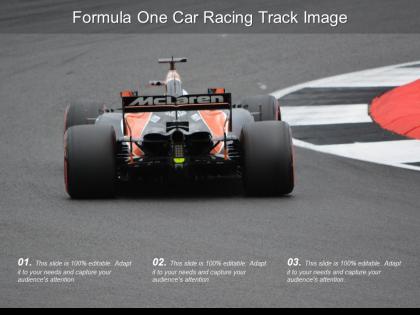
Formula one car racing track image




Try Before you Buy Download Free Sample Product
 Impress Your
 Audience
 100%
100% Editable
 Save Hours
 of Time


Function competently with our Formula One Car Racing Track Image. Exploit the advantage they can create.
People who downloaded this PowerPoint presentation also viewed the following :
Formula one car racing track image with all 6 slides:
Generate crowd funding with our Formula One Car Racing Track Image. Impress folks with your entrepreneurial ability.





FAQs for Formula one car
Formula One track layouts are determined by safety requirements, terrain constraints, FIA regulations for minimum track width and run-off areas, spectator visibility considerations, and strategic overtaking opportunities. These factors combine to create circuits that balance high-speed sections with technical corners, elevation changes, and sufficient space for emergency access, ultimately delivering exciting racing while maintaining driver safety standards across diverse locations from Monaco's street circuit to purpose-built facilities like Silverstone.
Elevation changes significantly impact Formula One car performance by altering aerodynamic efficiency, engine power delivery, and braking dynamics throughout different track sections. Uphill sections reduce downforce effectiveness while demanding increased engine output, while downhill portions enhance braking challenges and cornering speeds, with teams like Mercedes and Red Bull strategically adjusting suspension setups and aerodynamic configurations to optimize performance across varying elevations.
Track surface material significantly impacts Formula One performance through grip levels, tire degradation rates, and thermal characteristics that affect aerodynamic efficiency. Different asphalt compositions and aggregate materials create varying friction coefficients, with circuits like Monaco's smooth surface offering different grip patterns than Silverstone's abrasive tarmac, ultimately determining cornering speeds, braking distances, and strategic tire management approaches.
Formula One track safety is ensured through comprehensive barrier systems, advanced medical facilities, stringent circuit inspections, mandatory safety equipment, and strict marshaling protocols. These measures work together by providing crash protection through SAFER barriers and tire walls, enabling rapid emergency response with trackside medical centers, and implementing real-time hazard management, ultimately delivering enhanced protection for both drivers and spectators in increasingly competitive racing environments.
FIA officials evaluate new Formula One circuits based on safety standards, track layout specifications, infrastructure requirements, pit facilities, and spectator accommodations. These comprehensive assessments ensure circuits meet international racing standards through rigorous safety barriers, optimal track width and elevation changes, while delivering world-class racing experiences that enhance competitive integrity and operational efficiency.
Weather conditions significantly impact Formula One racing strategy through tire selection, fuel load adjustments, aerodynamic configurations, and pit stop timing decisions. Teams constantly monitor temperature, humidity, wind patterns, and precipitation forecasts, with circuits like Silverstone and Spa-Francorchamps presenting unique challenges that require adaptive strategies, ultimately delivering competitive advantages to those who best anticipate and respond to changing conditions.
European circuits typically emphasize traditional racing heritage with flowing corners, elevation changes, and technical complexity, while Asian tracks prioritize modern infrastructure, wider layouts, and enhanced spectator experiences. These design philosophies reflect cultural approaches to motorsport, with European venues like Spa and Silverstone delivering historical authenticity, and Asian circuits like Singapore and Suzuka combining cutting-edge facilities with strategic overtaking opportunities, ultimately enhancing global Formula One appeal.
Tight corners create strategic overtaking zones by forcing drivers to brake heavily and choose different racing lines, while long straights enable DRS-assisted passes through superior aerodynamics and slipstreaming. This combination delivers dynamic racing opportunities, with many circuits finding that alternating technical sections and high-speed straights ultimately enhances competitive battles and strategic tire management throughout races.
Formula One tracks employ automated weather monitoring systems, track temperature sensors, drainage management technology, surface grip analysis tools, and real-time condition reporting networks. These technologies work together by continuously monitoring surface conditions, predicting weather impacts, and enabling rapid track adjustments, with many circuits finding that proactive condition management delivers safer racing environments and enhanced competitive performance.
Historical tracks like Monaco and Silverstone feature natural terrain integration, elevation changes, and tight, challenging corners that test driver skill, while modern circuits prioritize safety runoffs, consistent grip levels, and overtaking opportunities. These classic venues deliver unique character and prestige that newer tracks often lack, with many teams finding that historical circuits provide greater competitive differentiation and strategic advantage through their demanding layouts.
Pit lane design is crucial for race strategy and safety, featuring precise positioning for optimal driver access, standardized equipment zones, controlled speed limits, and strategic timing advantages. These elements streamline tire changes, refueling operations, and mechanical adjustments, with teams finding that efficient pit lane layouts ultimately deliver faster service times and competitive advantages during critical race moments.
Track layout and facility design significantly enhance spectator experience by optimizing sightlines, creating multiple viewing angles, and strategically positioning grandstands near high-action zones like chicanes and overtaking points. Modern circuits increasingly integrate elevated seating, hospitality suites, and enhanced accessibility features, with venues like Silverstone and Monaco finding that thoughtful facility planning delivers improved crowd flow, premium experiences, and ultimately greater fan engagement and revenue generation.
Environmental considerations include carbon footprint reduction, sustainable materials, water management systems, wildlife habitat preservation, and renewable energy integration. Modern circuits like Yas Marina and Silverstone incorporate solar panels, rainwater harvesting, and eco-friendly construction materials, while implementing noise reduction measures and biodiversity protection, ultimately delivering environmentally responsible venues that balance competitive racing with ecological stewardship.
Regulation changes significantly influence Formula One track design through updated safety requirements, modified corner specifications, and enhanced spectator facilities. These evolving standards drive circuit modifications like wider run-off areas, improved barrier systems, and optimized overtaking zones, with many tracks finding that strategic upgrades ultimately deliver enhanced driver safety and more competitive racing experiences.
Track-specific characteristics significantly influence tire selection and strategy through surface grip levels, temperature conditions, corner configurations, and elevation changes. Teams analyze track abrasiveness, weather patterns, and historical data to optimize compound choices, with circuits like Monaco requiring maximum grip compounds while high-speed tracks like Monza demand lower drag setups, ultimately delivering competitive advantages through strategic tire management.
No Reviews