


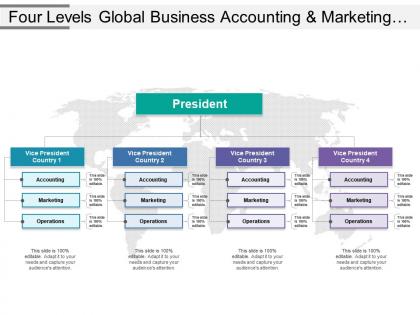
Four levels global business accounting and marketing operations org chart ppt slide





Try Before you Buy Download Free Sample Product
 Impress Your
 Audience
 100%
100% Editable
 Save Hours
 of Time


Feel assured that you have gone by the facts with our Four Levels Global Business Accounting And Marketing Operations Org Chart. You can be certain of your inferences.
People who downloaded this PowerPoint presentation also viewed the following :
Four levels global business accounting and marketing operations org chart ppt slide with all 5 slides:
Help is here! Our Four Levels Global Business Accounting And Marketing Operations Org Chart are ready to bail you out of all your presentation presentation worries.




FAQs for Four levels global business accounting and marketing operations org
Honestly, the logistics stuff will drive you crazy - shipping delays, customs nightmares, dealing with time zones. Currency keeps screwing with your prices too. Finding suppliers you can actually trust? Way harder than people think, especially when you're trying to maintain quality standards across different countries. Each place has their own random import rules that seem to change whenever they feel like it. Oh, and transportation costs will eat your profits if you're not careful. I'd definitely spread out your suppliers so you're not stuck if one goes sideways. Also invest in some decent tracking systems - you'll thank me later when everything inevitably goes wrong.
Honestly, research the hell out of local customs before you jump in - greeting styles, business etiquette, all that stuff. I've seen deals tank over simple gift-giving mistakes, it's wild. Get local partners or cultural consultants who actually know the scene. Your team needs training too, not just on obvious things like holidays but the deeper stuff. How do they make decisions? What's their negotiation style? Hierarchy matters way more in some places than others. The whole thing comes down to showing real respect instead of bulldozing in with your usual approach.
Dude, tech is literally what keeps global operations from falling apart. Real-time communication, automated supply chains, AI optimizing shipping routes - all that stuff. Your teams can actually work together across time zones with cloud platforms, plus data analytics catch problems before they become disasters. I swear, coordinating multiple countries without proper tech sounds like pure hell. Oh, and don't pick tools that don't talk to each other - you'll go crazy switching between dashboards. Map out your biggest headaches first, then find solutions for those specific problems.
Dude, regulations will completely mess with your business plans - you can't just copy-paste your strategy across different countries. Tax laws are totally different everywhere. Same with labor rules, privacy stuff, and whatever random industry regulations they've got going on. Your marketing, products, supply chain - basically everything needs tweaking for each market. I learned this the hard way when I was looking into expanding my cousin's business a few years back. Map out the major regulatory differences before you dive in, trust me. It's a pain but way better than dealing with compliance disasters later.
Standardize everything first - same SOPs, same quality metrics, same training materials across all your locations. That's your base. Strong local managers are honestly make-or-break here because they're the ones actually enforcing your standards day-to-day. Cross-regional training helps a ton too. Oh, and try to use the same equipment everywhere if budget allows - removes one more variable. Regular audits are super important but coordinating them across different time zones is such a headache. Document your processes really well, train people thoroughly, then audit consistently so you catch any drift early before it snowballs into bigger issues.
So basically, you'll want to dig into data analytics to figure out market trends and how locals actually behave as consumers. Collect info on demographics, what competitors are charging, economic stuff - you know the drill. I've watched companies totally blow it because they just went with their gut instead of looking at real numbers. Pretty painful to see honestly. Combine your big-picture global data with what's happening on the ground locally. That's where you'll spot the patterns. Use predictive analytics to forecast demand and get your supply chain working smoothly across different regions and time zones.
So first thing - figure out like 2-4 hours where most people can actually be online together. Document literally everything because someone's always gonna be asleep when decisions happen. Default to async stuff and only do real-time meetings when you actually need to hash something out immediately. Oh, and rotate meeting times so you're not constantly screwing over the same zones (learned that one the hard way). Set response expectations upfront - 24-48 hours for regular stuff works. You can't just walk over to someone's desk anymore, so overcommunicate project updates and deadlines. Start with a shared calendar showing everyone's hours though - seriously changes everything.
Dude, politics mess with business in ways you wouldn't expect. Trade wars and sanctions can totally block your market access or jack up supply costs overnight. I've watched companies get hammered by currency swings during big elections - like millions lost just from exchange rates going crazy. Regional conflicts screw up your logistics too. Plus diplomatic relationships change and suddenly entire markets either open up or slam shut. Honestly, the smart move is spreading your suppliers across different regions so you're not stuck when things go sideways. You really gotta stay on top of political news in your key markets.
Honestly, focus on three main things: supplier relationships, transparency, and circular practices. Set actual sustainability standards for your suppliers and audit them - can't tell you how many companies just skip that part entirely. Track where everything comes from so you know the real environmental impact. Design stuff that can actually be recycled and cut waste wherever possible. But here's the thing - build real partnerships with suppliers who get it, don't just go for cheapest option every time. Makes implementing everything else so much smoother. Oh, and those tracking systems? Total game-changer once you get them running properly.
So honestly, forward contracts are your best starting point - they're pretty straightforward and lock in rates for big transactions. Currency swaps and options work too but they're more complex. Natural hedging is smart if you can pull it off, like matching revenue and expenses in the same currency. I've watched companies completely ignore this stuff and then panic when exchange rates tank. Don't put all your eggs in one currency basket either. Spread exposure across different markets. Oh and timing your invoices strategically helps, plus keeping some cash reserves in major foreign currencies doesn't hurt.
Dude, the biggest thing right now is mobile-first everything - people expect same-day delivery and they're shopping through social media constantly. Cross-border marketplaces are exploding too. The AI personalization stuff is honestly getting scary good at predicting what you want. Oh, and sustainability isn't just nice-to-have anymore - it's reshaping entire supply chains. Voice commerce is sneaking up on everyone too. Your ops basically need to be super flexible and data-heavy now. I'd start with mobile experience and delivery speed first since those hit your conversion rates hardest. Everything else can wait.
You want that "glocal" thing - global brand, local execution. McDonald's nails this perfectly. Golden arches everywhere, but rice burgers in Taiwan and veggie stuff in India (honestly genius moves). First, figure out what's absolutely sacred about your brand - usually your mission and main visual stuff. That stays locked. Everything else? Fair game for tweaking. Your messaging, products, even customer experience can bend to fit local culture and tastes. The trick is testing how much you can adapt without losing what makes you... you. Start small and see what works.
Track your revenue growth and market share by region - those are non-negotiables. But honestly, the operational stuff matters just as much. Customer satisfaction scores in each market, how long employees stick around locally, whether you're actually nailing the product tweaks for different regions. Supply chain delays will absolutely wreck your margins if you're not watching them. Brand awareness is another big one since it takes ages to build globally. Oh, and set up monthly dashboard updates - weekly's overkill but quarterly misses too much. You need to catch problems while they're still fixable.
Working with international partners is honestly such a smart move - you get their local knowledge while they tap into what you bring to the table. Market entry becomes way faster, and you're splitting costs on big stuff like R&D. Trust me, dealing with foreign regulations solo is absolute hell. Your partners already know the cultural stuff, the good suppliers, all that insider info you'd take forever to figure out. Just make sure you're crystal clear on goals from day one and do regular check-ins. Oh, and supply chain optimization becomes so much smoother when someone local is handling their end.
Trade deals cut red tape and make cross-border business way more predictable. You'll get into bigger markets, find cheaper suppliers, and move stuff around internationally without jumping through as many hoops. Tariff cuts can save you tons - though honestly, figuring out all the different rules is annoying at first. Your supply chain gets more flexible too. Plus you can hire talent from anywhere. My advice? Keep up with what's happening in your region and find some trade experts who actually know their stuff. They're worth it.
No Reviews