


Fundraising Campaign Quarterly Goals And Results




Try Before you Buy Download Free Sample Product
 Impress Your
 Audience
 100%
100% Editable
 Save Hours
 of Time


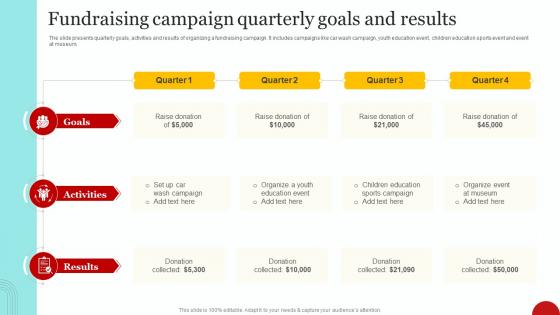
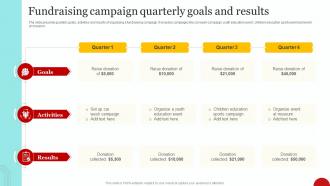
The slide presents quarterly goals, activities and results of organizing a fundraising campaign. It includes campaigns like car wash campaign, youth education event, children education sports event and event at museum.
People who downloaded this PowerPoint presentation also viewed the following :
Fundraising Campaign Quarterly Goals And Results with all 6 slides:
Use our Fundraising Campaign Quarterly Goals And Results to effectively help you save your valuable time. They are readymade to fit into any presentation structure.





FAQs for Fundraising Campaign Quarterly
Honestly, storytelling with good visuals is huge - way more important than people think. Social media helps stuff spread naturally, and you've gotta make donating dead simple with one-click buttons. People are lazy (myself included). Set specific goals instead of vague "please help" nonsense, and create some urgency with deadlines. Mobile optimization is critical since everyone's on their phones anyway. Oh, and email sequences beat single blasts every time - took me forever to learn that one. Start with friends and family first to get momentum rolling before you go after strangers.
Dude, stories are absolute gold for fundraising presentations. People connect with real experiences way more than spreadsheets - there's actually research showing we remember stories like 22x better than random facts (which honestly blew my mind). Pick one specific person your cause helped and lead with that. Donors need to visualize where their money goes. Don't just tug at heartstrings though - that feels manipulative. Make it genuine and relatable, then hit them with your data after. Numbers matter, but the story hooks them first. Trust me on this one.
Honestly, social media is a game-changer for fundraising because you can reach so many more people than old-school methods. People love sharing stuff that matters to them, so your message spreads naturally. What really works is posting behind-the-scenes content and donor stories first - builds trust before you ask for anything. Facebook's algorithm changes drive me crazy, but when posts get engagement, they actually boost your reach. Don't just spam donation requests though. The visual storytelling aspect is huge too. Your friends see others donating and it creates this ripple effect where they're more likely to give.
Hit these slides: problem, solution, market size, business model, traction, team, competition, financials, and funding ask. Lead with a problem that actually hurts - investors have to feel it right away. Honestly, most VCs just skip straight to your traction slide anyway, so make that one bulletproof. Don't go over 10-12 slides for presenting, but yeah, definitely prep backup slides for questions. Oh and make your funding ask super specific - tie it to exact milestones you'll reach with their money. Nothing vague.
So basically, dig into your donor data to figure out who gives what and when. You can spot patterns in giving behavior and tailor your asks accordingly. Track stuff like lifetime value and retention rates - honestly, most nonprofits are sitting on goldmines of data they never touch. Look for trends in timing and messaging that work best for different groups. Short sentences work here. The predictive modeling thing is cool too - you might find future major donors hiding among your $25 contributors. I'd say start with simple donor segments first, then get fancier as you learn what works.
Honestly, most people mess up by setting their goal way too high without knowing if their crowd can actually afford it. Start promoting like 2-3 weeks earlier than you think you need to - I learned this the hard way lol. Don't try cramming everything into one event either. Too many speakers or activities just confuses people. Have your donation ask ready and make it super easy for people to give money right there. Oh, and follow up fast afterward! Like within 24 hours while they're still feeling good about your cause.
Your branding is basically how donors decide whether they trust you or not. Consistent visuals and messaging across everything makes people feel like they actually know your organization - and honestly, that's half the battle right there. Nobody wants to donate to some random group that feels sketchy or all over the place. Think about it like dating... you're way more likely to commit when someone's authentic and their story makes sense. Focus on telling your story the same way everywhere - same colors, same tone, same mission. When donors can picture themselves as part of what you're doing, they'll keep giving. It's that simple.
Oh man, fundraising has gotten so much easier lately. Crowdfunding platforms like GoFundMe are huge now - anyone can just set one up and share it around. There's also peer-to-peer stuff where your friends basically become fundraisers for you, which is pretty genius honestly. Remember the ice bucket challenge? That whole viral social media thing opened up so many doors. Now you've got crypto donations, livestream fundraising, even NFT auctions for causes (though I'm still not totally sure how those work lol). Text-to-give is super convenient too. The whole game changed from organizations doing everything themselves to letting supporters take the lead. Just pick whatever platform your people actually use.
Honestly, so many nonprofits totally blow this part. Recognizing your donors properly is like the easiest way to keep them around, but everyone just phones it in with generic thank you cards. You want people to feel like actual partners, not walking wallets, right? Personal touches make all the difference - mention their specific gift amount or tell them exactly what their money accomplished. A quick handwritten note beats mass-printed stuff every single time. I always tell people to track how you're thanking donors because you'll literally see retention numbers jump almost right away. It's wild how much this simple thing matters.
Honestly, corporate partnerships are huge for fundraising. You'll get way more money than from individual donors, plus they can commit for multiple years which makes planning so much easier. Their employees often become supporters too, which is a nice bonus. Don't just go after any company with money though - that's a waste of time. Find businesses that actually care about what you're doing. I'd start with local companies first since they're easier to connect with. Research what they already support before you pitch them. The credibility boost alone makes it worth the effort.
Honestly, visuals are a game-changer for fundraising. Donors remember like 65% more when you show them charts or photos instead of just rattling off numbers. A before/after photo? Way more powerful than any statistic you could throw at them. I learned this the hard way at my last nonprofit job - we were so focused on data we forgot people need to *feel* something. Keep your visuals simple but make them tell a story. Donors want to picture themselves making that difference happen. Oh, and definitely create a one-page visual summary they can share around. Makes your job so much easier.
Okay so first figure out exactly what you actually need the money for - like specific programs, not just "we need more cash" because that never works. Then be honest about what your donors can realistically give based on their history. I'm kind of obsessed with setting stretch goals that push you but aren't completely delusional, you know? Break the big number into smaller chunks so you're hitting quarterly targets instead of just hoping for the best at year-end. Oh and make sure your whole team knows the exact goal and deadline - can't believe how often that gets missed.
Honestly, progress bars work so well for this stuff. People love seeing that thermometer fill up toward your goal. You could do donor leaderboards too, or give out little badges for different amounts - sounds cheesy but it actually gets people competitive about donating lol. Try milestone challenges like "if we hit $5K by Friday, the whole team will do something embarrassing." Unlocking special content at certain levels is pretty smart too. The main thing is making it visual so donors can see their impact right away. Oh, and keep supporters feeling like they're part of the whole mission, not just throwing money into a void. Start basic with just the progress bar though.
Honestly, just be straight up with people about where their money's going. Don't oversell your impact or create fake deadlines - that stuff backfires anyway. Respect when someone says no and don't keep hounding them afterward. Nobody wants their inbox flooded with donation requests every week. Make sure you're actually delivering on whatever you promised too. Privacy matters - don't share donor info around. Try to reach different communities, not just your usual crowd. I know it sounds basic, but think about how you'd want someone approaching you for money. That golden rule thing really works here.
Track the obvious stuff first - total raised, new donors, cost per dollar. But the engagement metrics matter way more than people think. Email opens, social shares, repeat donors - that's how you know if they actually give a damn about your cause. I always compare everything back to the original goals too, otherwise what's the point? Oh and seriously, set up some kind of weekly dashboard you can glance at. Trust me, you don't want to be digging through spreadsheets at the last minute trying to figure out what the hell happened.
-
SlideTeam provides PPTs on every single topic. Their templates suit my job very well. I am very grateful!
-
Excellent products for quick understanding.