


Hip Hop Music Publishing Company Investor Funding Elevator Pitch Deck Ppt Template




Try Before you Buy Download Free Sample Product
 Impress Your
 Audience
 100%
100% Editable
 Save Hours
 of Time


Check out our professionally designed Investor Funding Elevator Pitch Deck for Hip Hop Music, the groundbreaking mobile app empowering budding rappers and hip-hop artists to create, collaborate, and share their music effortlessly. This comprehensive Investor Deck adeptly tackles the challenges faced by potential investors, encompassing issues like beat selection, limited access to recording studios, and music distribution obstacles. Moreover, the Investor Presentation module shines a light on the ingenious solutions offered by Hip Hop Music, providing a dedicated platform for singing, music mixing, and recording. Furthermore, our investor deck provides a thorough company breakdown, featuring introductions, key facts, product and service descriptions, and a compelling Unique Selling Proposition USP. Additionally, the Startup Presentation showcases significant milestones achieved, the business model, competitive analysis, market potential, and financial performance indicators. Lastly, this Funding pitch deck presentation is a powerful tool for attracting potential investors and securing funding for Hip Hop Musics journey. Access our pitch deck now to elevate your investor presentation and drive success in fundraising efforts. Get access now.
People who downloaded this PowerPoint presentation also viewed the following :
Content of this Powerpoint Presentation
Slide 1: This slide introduces Hip Hop Music Publishing Company Investor Funding Elevator Pitch Deck.
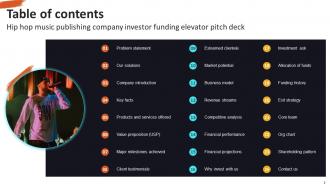
Slide 2: This slide shows Table of Content for the presentation.
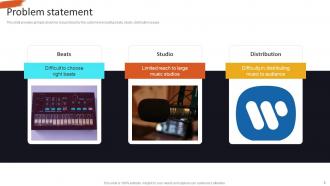
Slide 3: This slide presents key issues faced by the customers including beats, studio, distribution issues.
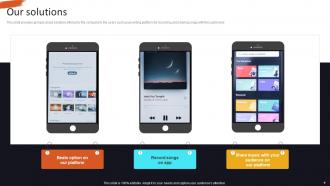
Slide 4: This slide provides solutions offered by the company to the users such as providing platform for recording and sharing songs.
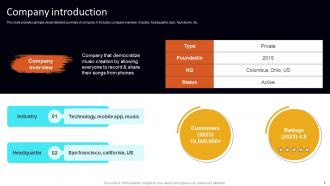
Slide 5: This slide depicts detailed summary of company. It includes company overview, industry, headquarter, type, founded in, etc.
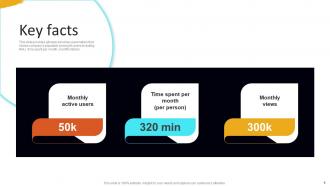
Slide 6: This slide presents key parameters that shows company’s popularity among its users including MAU, time spent per month, monthly listens.
Slide 7: This slide provides number of products & services on the company’s platform such as Beats,and songs creations.
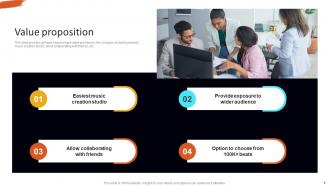
Slide 8: This slide describes unique value provided by the company including easiest music creation studio, allow collaborating with friends, etc.
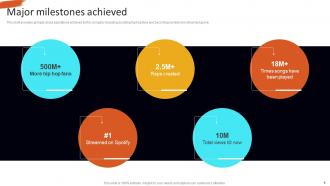
Slide 9: This slide presents aspirations achieved by the company including boosting hip hop fans and becoming number one streamed genre.
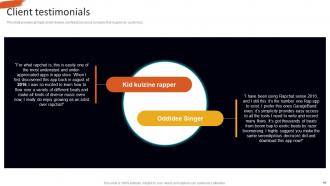
Slide 10: This slide displays reviews and feedback about company that is given by customers.
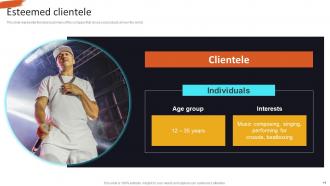
Slide 11: This slide represents the ideal customers of the company that chose our products all over the world.
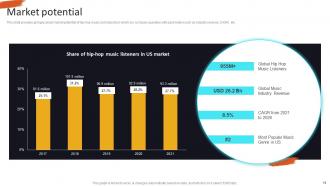
Slide 12: This slide provides glimpse about market potential of hip-hop music and industry in which our company operates.
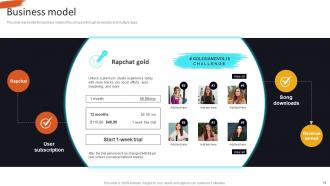
Slide 13: This slide represents the business model of the company through its website and multiple apps.
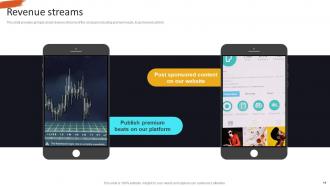
Slide 14: This slide describes revenue streams of the company including premium beats, & sponsored content.
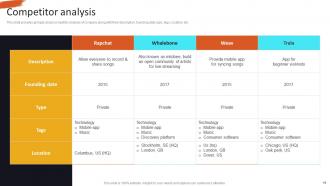
Slide 15: This slide provides competitor analysis of company along with their description, founding date, type, tags, location, etc.
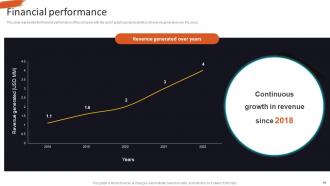
Slide 16: This slide presents the financial performance of the company with the aid of graphical representation of revenue generated over the years.
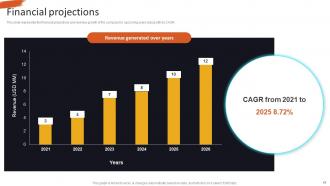
Slide 17: This slide represents the financial projections and revenue growth of the company for upcoming years along with its CAGR.
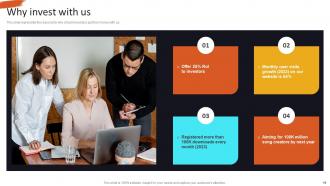
Slide 18: This slide describes the reasons for why should investors put their money with the company.
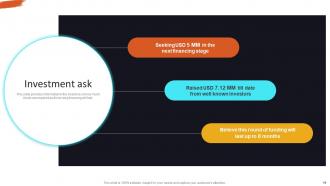
Slide 19: This slide provides information to the investors on how much funds are required and how long financing will last.
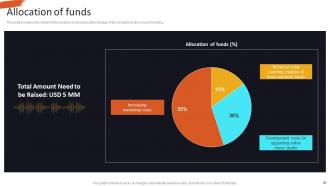
Slide 20: This slide presents information to the investors on fund allocation strategy of the company for this round of funding.
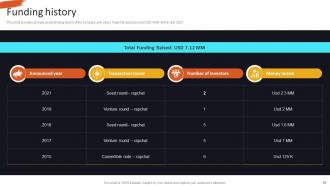
Slide 21: This slide describes funding history of the company over years.
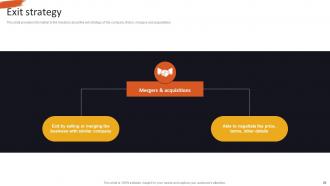
Slide 22: This slide provides information to the investors about the exit strategy of the company, that is, mergers and acquisitions.
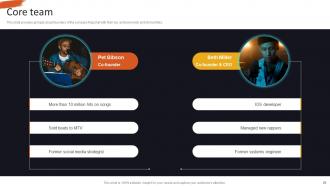
Slide 23: This slide displays founders of the company Rapchat with their key achievements and former titles.
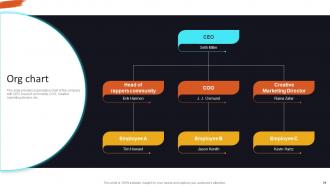
Slide 24: This slide presents organization chart of the company with CEO, head of community, COO, creative marketing director, etc.
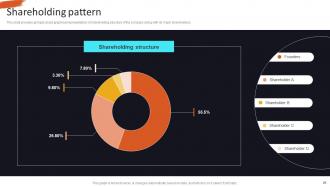
Slide 25: This slide displays graphical representation of shareholding structure of the company along with its major shareholders.
Slide 26: This is a contact us slide to show company's contact information.
Slide 27: This slide shows all the icons included in the presentation.
Slide 28: This slide is titled as Additional Slides for moving forward.
Slide 29: This is an Idea Generation slide to state a new idea or highlight information, specifications etc.
Slide 30: This is a Timeline slide. Show data related to time intervals here.
Slide 31: This is About Us slide to show company specifications etc.
Slide 32: This slide provides 30 60 90 Days Plan with text boxes.
Slide 33: This is Our Target slide. State your targets here.
Slide 34: This slide shows SWOT analysis describing- Strength, Weakness, Opportunity, and Threat.
Slide 35: This is a Thank You slide with address, contact numbers and email address.
Hip Hop Music Publishing Company Investor Funding Elevator Pitch Deck Ppt Template with all 41 slides:
Use our Hip Hop Music Publishing Company Investor Funding Elevator Pitch Deck Ppt Template to effectively help you save your valuable time. They are readymade to fit into any presentation structure.











FAQs for Hip Hop Music Publishing Company Investor Funding Elevator Pitch
Music publishing in hip hop focuses on songwriting, lyrics, and composition rights, while recording involves the actual performance and production of tracks. Publishing generates revenue through streaming royalties, licensing for films and commercials, and sample clearances, whereas recording profits come from album sales, concert promotion, and merchandise, with many hip hop artists finding that publishing provides more sustainable long-term income.
Hip hop artists typically navigate their music publishing rights by working with publishing companies, retaining portions of their catalog ownership, and collaborating with experienced music attorneys to negotiate favorable deals. Through strategic partnerships with major publishers like Universal Music Publishing or independent firms, artists secure royalty collection, sync licensing opportunities, and global distribution while maintaining creative control, ultimately delivering sustained revenue streams and long-term career growth in an increasingly complex music industry landscape.
Music publishers play crucial roles in hip hop success by securing sync placements, negotiating licensing deals, collecting royalties globally, and connecting artists with collaboration opportunities. Through strategic partnerships with streaming platforms, film studios, and brands, publishers maximize revenue streams while handling administrative complexities, ultimately enabling hip hop artists to focus on creativity while ensuring their tracks reach broader commercial markets.
**INPUT**: In what ways can songwriters protect their work in hip hop music publishing? **OUTPUT**: Hip hop songwriters can protect their work through copyright registration, performance rights organization membership, proper publishing agreements, sample clearances, and detailed collaboration contracts. These protective measures streamline royalty collection, enhance legal standing, and ultimately deliver sustained income streams, with many artists finding that strategic publishing partnerships significantly boost their competitive advantage in an increasingly complex music landscape.
Sampling in hip hop publishing creates complex clearance requirements, royalty splits with original copyright holders, potential litigation risks, and increased administrative costs for publishers. These agreements must address mechanical licenses, synchronization rights, and master use permissions, while many hip hop artists and labels find that proactive sample clearance, though expensive upfront, ultimately delivers creative freedom and long-term revenue protection in an increasingly rights-focused industry.
Digital platforms revolutionize hip hop publishing by enabling direct artist-to-audience distribution, streamlined royalty tracking through blockchain technology, and real-time analytics for rights management. While traditional publishers still provide valuable industry connections and marketing expertise, many hip hop artists increasingly leverage platforms like DistroKid and TuneCore to retain greater ownership percentages and faster revenue streams, ultimately delivering enhanced creative control and improved profit margins in an increasingly democratized music landscape.
Hip hop music publishing generates revenue through mechanical royalties from streaming and sales, performance royalties from radio and live venues, synchronization fees for TV and film placements, digital licensing for online platforms, and print music sales. These revenue streams work together by diversifying income sources, maximizing reach across multiple channels, and creating sustained earnings, with many hip hop publishers finding that sync licensing and streaming royalties deliver the strongest growth potential.
Independent hip hop artists can effectively manage their publishing rights by registering with performing rights organizations like ASCAP or BMI, maintaining detailed records of songwriting credits and splits, and understanding mechanical licensing for streaming platforms. Through self-publishing companies or digital platforms like CD Baby and TuneCore, artists retain greater control over royalties while accessing global distribution networks, ultimately delivering higher revenue percentages and creative autonomy than traditional publishing deals.
Emerging hip hop artists face challenges including complex publishing contracts, limited industry knowledge, inadequate legal representation, difficulty securing fair royalty splits, and navigating digital distribution rights. These obstacles often result in artists signing unfavorable deals or losing significant revenue streams, though many are increasingly leveraging educational resources and independent publishing platforms to retain greater control over their intellectual property and maximize long-term earning potential.
Copyright laws significantly impact hip hop distribution by requiring proper licensing for samples, beats, and collaborations, while establishing revenue-sharing frameworks between artists, producers, and publishers. These regulations enable streaming platforms, record labels, and digital distributors to legally monetize hip hop content through mechanical licenses and performance royalties, ultimately protecting creators' intellectual property while ensuring sustainable income streams across the industry's complex collaborative ecosystem.
Signing with a music publisher provides hip hop artists with professional song promotion, sync licensing opportunities, royalty collection services, industry connections, and creative collaboration support. These partnerships streamline revenue generation by securing placements in films, commercials, and streaming platforms, while ultimately delivering broader exposure and steady income streams that many independent artists find challenging to achieve alone.
Hip hop producers can leverage publishing rights through mechanical royalties from streaming and sales, performance royalties from radio and live venues, sync licensing for films and commercials, and co-publishing deals with established companies. These revenue streams enable producers to build sustainable income beyond initial beat sales, with many finding that retaining publishing ownership creates long-term financial stability and competitive advantage in an increasingly streaming-focused music landscape.
International music publishing for hip hop artists operates through strategic partnerships with foreign publishers, sub-publishing agreements, and performance rights organizations in target markets, enabling global royalty collection and rights management. These partnerships help artists navigate diverse copyright laws, cultural preferences, and market dynamics across regions like Europe, Asia, and Latin America, while ensuring proper licensing for streaming, radio play, and synchronization opportunities, ultimately delivering broader revenue streams and expanded audience reach.
Performance Rights Organizations like ASCAP, BMI, and SESAC are crucial in hip hop publishing, collecting and distributing royalties when songs are performed publicly through radio, streaming, live venues, and broadcasts. These organizations streamline revenue collection for hip hop artists and publishers by monitoring usage across thousands of platforms, negotiating licensing deals with venues and media companies, and ensuring creators receive compensation, ultimately delivering consistent income streams and enabling artists to focus on creative work while maximizing their publishing revenue.
Collaborations between hip hop artists create complex publishing arrangements involving split ownership of copyrights, shared royalty streams, and joint licensing opportunities across multiple catalogs. These partnerships often strengthen negotiating power with publishers and distributors, while expanding market reach through combined fan bases, ultimately delivering enhanced revenue potential and broader commercial opportunities for all participating artists.
-
What a stunning collection of customizable templates! Really a time-saver..
-
Extensive range of templates! Highly impressed with the quality of the designs.