

Home Decor Investor Funding Elevator Pitch Deck Ppt Template




Try Before you Buy Download Free Sample Product
 Impress Your
 Audience
 100%
100% Editable
 Save Hours
 of Time


Our Home Decor Investor Funding Elevator Pitch Deck Ppt Template are topically designed to provide an attractive backdrop to any subject. Use them to look like a presentation pro.
People who downloaded this PowerPoint presentation also viewed the following :
Content of this Powerpoint Presentation
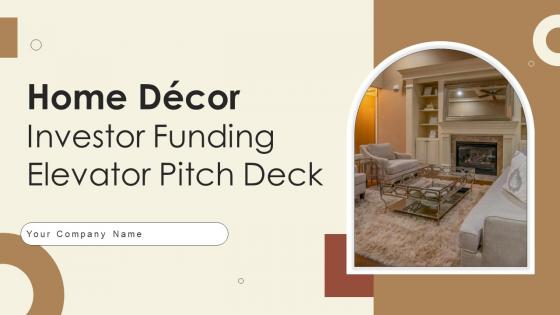
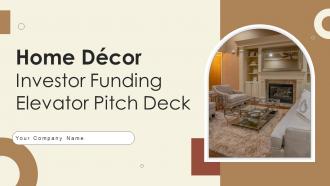
Slide 1: This slide introduces Home Décor Investor Funding Elevator Pitch Deck. State Your Company Name and begin.
Slide 2: This slide shows a Table of Contents for the presentation.
Slide 3: This slide provides information about problems faced by customers in furnishing homes.
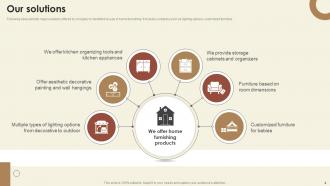
Slide 4: This slide exhibits major solutions offered by company to identified issues in home furnishing.
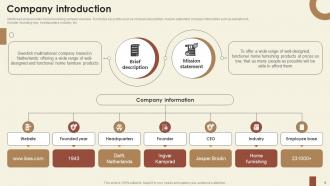
Slide 5: This slide entails home furnishing company overview.
Slide 6: This slide represents key statistics associated with home furnishing company.
Slide 7: This slide presents various products offered by home furnishing company.
Slide 8: This slide shows unique selling proposition of home furnishing company.
Slide 9: This slide showcases various awards and recognition received by company.
Slide 10: This slide caters to customer reviews related to home furnishing company products and services.
Slide 11: This slide caters to insights into a major customer base.
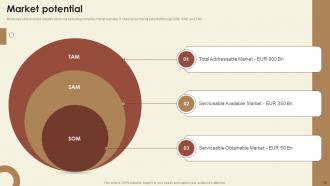
Slide 12: This slide provides insights into home furnishing company market overview.
Slide 13: This slide gives detailed insights into companies business model which comprises of key partners, key activities, resources, value proposition, customer relations, channels, customer segment, cost structure and revenue sources.
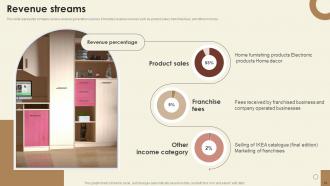
Slide 14: This slide shows company various revenue generation sources.
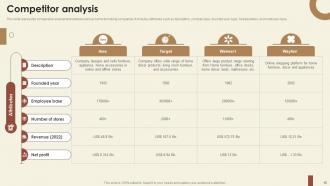
Slide 15: This slide showcases comparative assessment between various home furnishing companies.
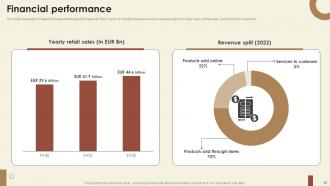
Slide 16: This slide portrays home furnishing business financial performance.
Slide 17: This slide represents company forecasted financial performance for next 3 years.
Slide 18: This slide presents insights into reasons why investors should offer funding to company.
Slide 19: This slide provides insights into company investment funding ask for improving business working.
Slide 20: This slide entails allocation of investment funding in different areas.
Slide 21: This slide depicts funding history if home furnishing company.
Slide 22: This slide showcases information about various exit strategies for reducing risk.
Slide 23: This slide shows insights into company core management team.
Slide 24: This slide deals with organisation chart of company.
Slide 25: This slide demonstrates shareholding or ownership structure of home furnishing company.
Slide 26: This is a Contact Us slide. Add your Email Address, Contact, Social Media Handles, and Address.
Slide 27: This slide shows all the icons included in the presentation.
Slide 28: This slide is titled Additional Slides for moving forward.
Slide 29: This slide provides a 30-60-90-day plan with text boxes.
Slide 30: This slide depicts a Venn diagram with text boxes.
Slide 31: This slide is Our Target slide. State your targets here.
Slide 32: This slide presents a Roadmap with additional text boxes.
Slide 33: This slide is a Quotes slide to convey messages, beliefs, etc.
Slide 34: This slide shows SWOT describing- Strength, Weakness, Opportunity, and Threat.
Slide 35: This slide contains a Puzzle with related icons and text.
Slide 36: This slide is a thank-you slide with address, contact numbers, and email address.
Home Decor Investor Funding Elevator Pitch Deck Ppt Template with all 44 slides:
Use our Home Decor Investor Funding Elevator Pitch Deck Ppt Template to effectively help you save your valuable time. They are readymade to fit into any presentation structure.
-
Home D cor Investor Funding Elevator Pitch Deck
-

Home d cor investor funding elevator pitch deck
-

Problem statement
-
Our solutions
-
Company introduction
-
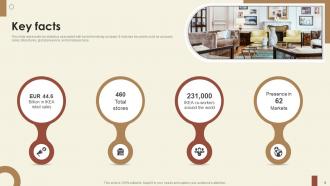
Key facts
-
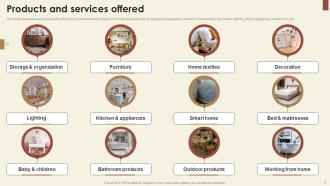
Products and services offered
-
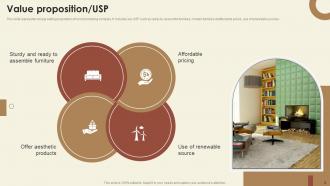
Value proposition USP
-
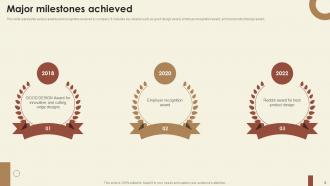
Major milestones achieved
-

Client testimonials
-

Esteemed clientele
-
Market potential
-

Business model
-
Revenue streams
-
Competitor analysis
-
Financial performance
-

Financial projections
-

Why invest with us
-

Investment ask
-

Allocation of funds
-

Funding history
-

Exit strategy
-
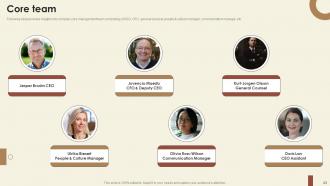
Core team
-

Org structure
-

Shareholding pattern
-

Contact us
-
Icons slide for home d cor investor funding elevator pitch deck
-

Additional slides
-

Home Decor Investor Funding Elevator Pitch
-
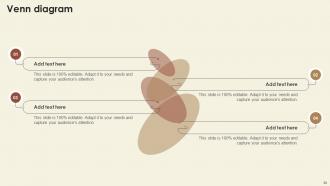
Venn diagram
-
Our target
-

Roadmap
-

Quotes
-
Swot analysis
-
Puzzle
-

Thanks for watching
-

-

-

-

-

-

-

-

FAQs for Home Decor Investor Funding Elevator Pitch
Current home decor market trends attracting investor attention include sustainable and eco-friendly products, smart home integration, personalized customization options, wellness-focused designs, and direct-to-consumer e-commerce platforms. These trends enable companies to capture increasingly conscious consumers while streamlining operations, reducing overhead costs, and delivering enhanced customer experiences, with many furniture and decor startups finding significant competitive advantage through technology-driven personalization and sustainable supply chains.
Investors can identify promising home decor startups by evaluating market differentiation, scalability potential, management expertise, financial projections, and digital presence across multiple channels. Through comprehensive due diligence, many venture capital firms and angel investors find that startups with strong e-commerce platforms, sustainable product lines, and clear omnichannel strategies deliver superior returns and competitive market positioning.
Key financial metrics include revenue growth, gross margins, inventory turnover, customer acquisition cost, lifetime value, and cash flow patterns. These metrics enable investors to evaluate profitability, operational efficiency, and market positioning, with many home decor businesses finding that strong inventory management and repeat customer rates ultimately deliver sustainable competitive advantage.
Consumer behavior significantly influences home decor investment decisions through purchasing patterns, lifestyle trends, sustainability preferences, and digital shopping habits. Investors analyze seasonal spending cycles, demographic shifts toward home improvement, and emerging preferences like eco-friendly materials, with many finding that millennials' focus on experiential living spaces and Gen Z's social media-driven aesthetic choices ultimately drive funding toward companies delivering personalized, sustainable solutions.
Sustainability significantly enhances investor appeal in home decor through eco-friendly materials, circular economy models, reduced manufacturing waste, and energy-efficient production processes. These approaches deliver competitive advantages by attracting environmentally conscious consumers, reducing operational costs, and meeting regulatory requirements, with many investors finding that sustainable home decor brands demonstrate stronger long-term growth potential and market resilience.
Home decor brands can effectively communicate their value proposition by presenting clear market differentiation, scalable business models, proven customer acquisition strategies, and strong financial projections with demonstrable growth metrics. Through comprehensive pitch decks showcasing unique design aesthetics, target demographic insights, and omnichannel distribution capabilities, brands deliver compelling investment narratives that highlight expanding market opportunities, ultimately positioning themselves as strategic partners in the increasingly profitable home decor sector.
Home decor startups face challenges including proving market differentiation in a saturated space, demonstrating scalable business models beyond traditional retail, securing inventory financing for seasonal demands, and convincing investors of long-term profitability amid shifting consumer preferences. These obstacles require strategic positioning through unique value propositions, omnichannel approaches, and data-driven customer insights, with many startups finding success by emphasizing sustainable practices and personalization technologies.
An online presence and e-commerce strategy are crucial for attracting home decor investments, as they demonstrate market reach, scalability potential, and direct-to-consumer capabilities that investors increasingly prioritize. These digital foundations enable brands to showcase portfolio breadth, track customer analytics, and prove revenue diversification across multiple channels, with many home decor startups finding that robust online sales data significantly strengthens their investment pitches and valuation discussions.
Strategic partnerships include retail collaborations with major chains, designer partnerships with established brands, technology integrations with AR/VR platforms, sustainable sourcing alliances, and influencer networks. These partnerships enhance investor appeal by demonstrating market validation, expanding distribution channels, and reducing customer acquisition costs, while ultimately delivering scalable growth potential and competitive differentiation in an increasingly crowded marketplace.
Successful home decor investment case studies include West Elm's acquisition by Williams-Sonoma delivering 300% returns, Wayfair's IPO generating billion-dollar valuations, and private equity firms achieving 25-40% IRR through brands like CB2 and Pottery Barn Teen. These investments succeeded by leveraging e-commerce scalability, brand diversification, and omnichannel strategies, with many investors finding that home decor's resilient consumer demand delivers consistent growth even during economic uncertainty.
Investors can leverage social media trends by monitoring platform analytics, tracking influencer partnerships, analyzing hashtag performance, and identifying emerging aesthetic preferences across demographics. Through platforms like Instagram and Pinterest, investors can assess market demand for specific design elements, predict seasonal shifts, and evaluate brand engagement rates, ultimately enabling more strategic investments in home decor companies with proven social media traction.
Design and innovation serve as critical differentiators for home decor ventures, demonstrating market viability through unique aesthetics, sustainable materials, smart home integration, and scalable manufacturing processes. These elements enable startups to showcase competitive advantages, attract design-conscious consumers, and ultimately deliver compelling growth projections that resonate with investors seeking ventures positioned for long-term market expansion.
Economic shifts impact investor confidence in the home decor market through changing consumer spending patterns, housing market fluctuations, and disposable income variations that directly affect retail demand. During economic downturns, investors often view home decor as discretionary spending, while economic growth periods see increased confidence as consumers prioritize home improvement, with many finding that economic stability drives stronger market performance and investment returns.
Common misconceptions include believing home decor is purely trend-driven, requires minimal capital investment, guarantees quick returns, lacks technological innovation, and serves only luxury markets. In reality, successful home decor businesses combine timeless design with strategic market positioning, substantial supply chain investments, and increasingly sophisticated e-commerce platforms, with many investors finding that sustainable brands focusing on quality and customer experience deliver consistent long-term growth.
Customer feedback plays a crucial role in shaping investment strategies for home decor brands by revealing market trends, identifying product gaps, and validating consumer preferences across different demographics. This insight enables investors to make strategic funding decisions, with many home decor companies finding that customer-driven data leads to higher ROI and more targeted product development.
-
Professional and unique presentations.
-
Informative design.