

Honeywell Investor Funding Elevator Pitch Deck Ppt Template




Try Before you Buy Download Free Sample Product
 Impress Your
 Audience
 100%
100% Editable
 Save Hours
 of Time


Honeywell is a conglomerate company that provides various products and solutions to multiple industries and helps solve businesses toughest challenges. Our pitch presentation titled, Honeywell Investor Funding Elevator Pitch Deck illustrates various challenges faced by various industries such as aerospace, building technology, healthcare, and logistics and warehouse. Additionally, our Fund Proposal Deck includes industry specific solutions offered by the company for improving industrial performance. Furthermore, this Conglomerate Company template includes company details such as introduction, key facts, products and services offered USP, and major milestones achieved. It also adds business model, competitive analysis, market potential, financial performance, etc. Lastly, the funding module covers investment ask, fund allocation, funding history, core team, exit strategy, and shareholding pattern. Get access to our insightfully crafted PowerPoint Presentation right away.
People who downloaded this PowerPoint presentation also viewed the following :
Content of this Powerpoint Presentation
Slide 1: This slide introduces Honeywell Investor Funding Elevator Pitch Deck. State Your Company Name and begin.
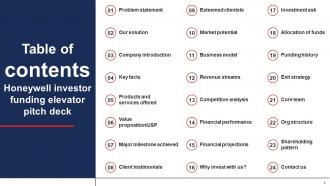
Slide 2: This slide shows a Table of Contents for the presentation.
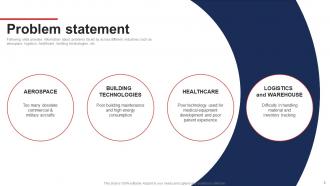
Slide 3: This slide provides information about problems faced by across different industries.
Slide 4: This slide exhibits major solutions offered by company to identify issues across different industries.
Slide 5: This slide represents overview of technology based company.
Slide 6: This slide entails key statistics associated with technology-based company.
Slide 7: This slide showcases products offered by conglomerate company.
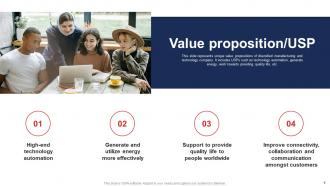
Slide 8: This slide shows unique value propositions of diversified manufacturing and technology company.
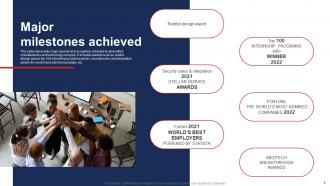
Slide 9: This slide describes major awards and recognition achieved by diversified manufacturers and technology company.
Slide 10: This slide details customer testimonials of conglomerate company.
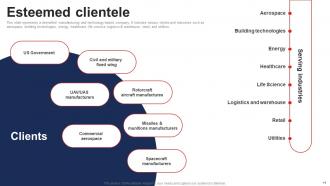
Slide 11: This slide puts a diversified manufacturing and technology-based company.
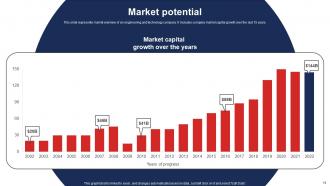
Slide 12: This slide marks market overview of an engineering and technology company.
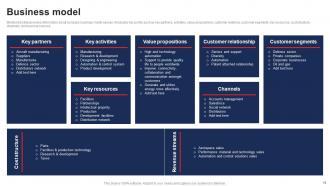
Slide 13: This slide portrays information about company business model canvas.
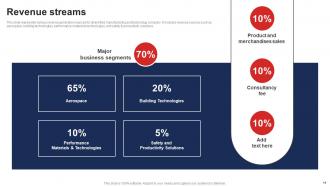
Slide 14: This slide represents various revenue generation sources for diversified manufacturing and technology company.
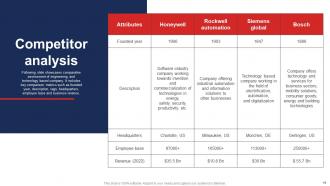
Slide 15: Following slide showcases comparative assessment of engineering and technology based company.
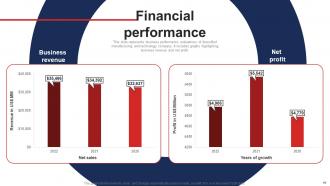
Slide 16: This slide presents business performance evaluations of diversified manufacturing and technology company.
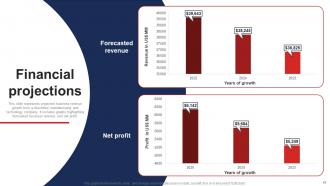
Slide 17: This slide contains projected business revenue growth from a diversified manufacturing and technology company.
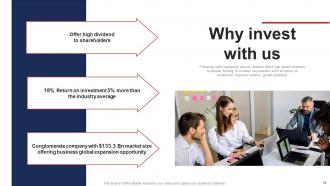
Slide 18: Thus slide caters to various reasons which can attract investors to provide funding.
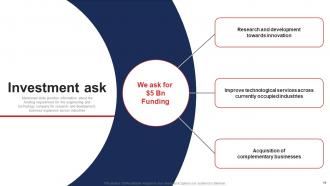
Slide 19: This slide provides information about the funding requirement for the engineering and technology company.
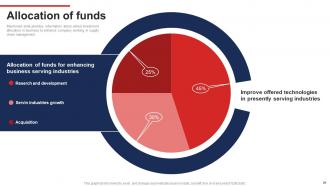
Slide 20: This slide elaborates information about asked investment allocation in business.
Slide 21: This slide represents funding history of diversified manufacturing and technology company.
Slide 22: This slide focuses exit strategies that can be used by investors to stay or leave investment.
Slide 23: This slide represents core leadership team of technology-based company.
Slide 24: This slide presents organisation chart of diversified manufacturing and technology company.
Slide 25: This slide portrays shareholding pattern of diversified manufacturing and technology company.
Slide 26: 2This is a Contact Us slide. Add your Email Address, Contact, Social Media Handles, and Address.
Slide 27: This slide shows all the icons included in the presentation.
Slide 28: This slide is titled Additional Slides for moving forward.
Slide 29: This slide presents a Roadmap with additional text boxes.
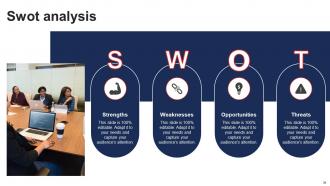
Slide 30: This slide shows SWOT describing- Strength, Weakness, Opportunity, and Threat.
Slide 31: This slide is an Idea Generation slide to state a new idea or highlight information, specifications, etc.
Slide 32: This slide is an About Us slide to show company specifications etc.
Slide 33: This slide showcases Magnifying Glass to highlight information, specifications, etc.
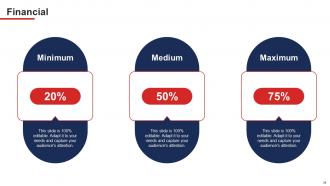
Slide 34: This slide is a financial slide. Show your finance-related stuff here.
Slide 35: This slide is a Quotes slide to convey messages, beliefs, etc.
Slide 36: This slide is a thank-you slide with address, contact numbers, and email address.
Honeywell Investor Funding Elevator Pitch Deck Ppt Template with all 44 slides:
Use our Honeywell Investor Funding Elevator Pitch Deck Ppt Template to effectively help you save your valuable time. They are readymade to fit into any presentation structure.
-
Honeywell Investor Funding Elevator Pitch Deck
-
Honeywell investor funding elevator pitch deck
-
Problem statement
-
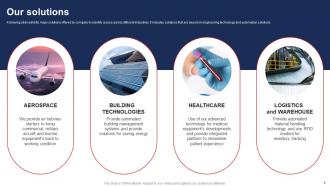
Our solutions
-
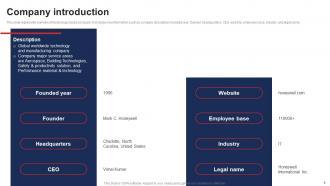
Company Introduction
-
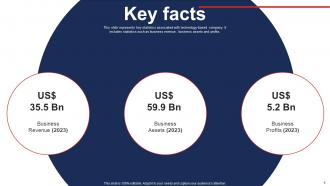
Key facts
-
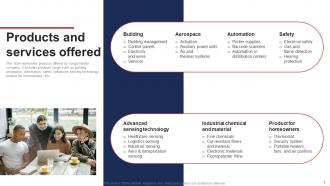
Products and services offered
-
Value proposition USP
-
Major milestones achieved
-

Client testimonials
-
Esteemed clientele
-
Market potential
-
Business model
-
Revenue streams
-
Competitor analysis
-
Financial performance
-
Financial projections
-
Why invest with us
-
Investment ask
-
Allocation of funds
-
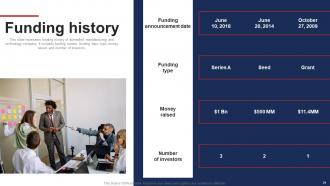
Funding history
-
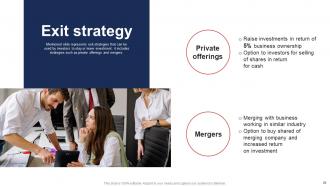
Exit strategy
-
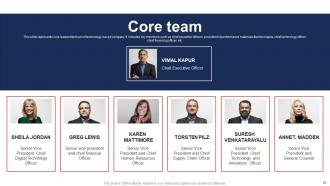
Core team
-
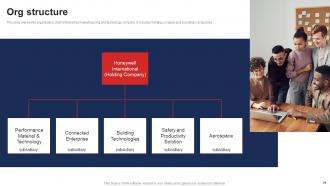
Org structure
-
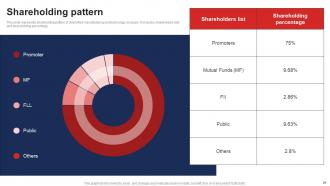
Shareholding pattern
-

Contact us
-
Icons slide Honeywell investor funding elevator pitch deck
-

Honeywell Investor Funding Elevator Pitch
-

Roadmap
-
Swot analysis
-
Idea generation
-

About us
-
Magnifying glass
-
Financial
-

Quotes
-
Thanks for watching
-

-

-

-

-

-

-

-

FAQs for Honeywell Investor Funding Elevator Pitch
So Honeywell's got four main chunks. Aerospace is their cash cow - like 35-40% of revenue from engines and flight systems. Building Technologies does HVAC and security stuff. There's also Performance Materials handling specialty chemicals (honestly kind of a random mix of things). Safety & Productivity covers warehouse gear and protective equipment. Aerospace usually kills it profit-wise, but having all these different areas means they're not totally screwed if one sector tanks. I always check their quarterly reports to see how each piece is doing - gives you a better read on where they're headed.
Yeah so Honeywell's done this massive shift over the last decade - they're way more about software now than just making industrial stuff. Instead of selling you a piece of equipment and calling it a day, they're building these connected systems that actually work together. Smart buildings, predictive maintenance, cloud analytics, all that jazz. Pretty smart move honestly, since everything's going digital anyway. You'll notice they're pushing subscription models hard now instead of the old "buy it once" hardware deals. Their whole thing is AI and IoT platforms these days.
So Honeywell's pretty much gone all-in on sustainability lately. It's not just marketing fluff either - they're shooting for carbon neutral operations by 2035, which is honestly pretty ambitious. Their whole product line reflects this now. Building controls that actually save energy, cleaner jet fuels, industrial stuff that cuts waste. What's smart is they're treating it like a business opportunity rather than just compliance. Customers are willing to pay more for greener tech, and Honeywell knows it. When you're evaluating their products, definitely dig into the sustainability specs - that's where they're putting their R&D money these days.
So Honeywell throws IoT sensors into basically everything now - thermostats, industrial machines, you name it. You get real-time data and can control stuff remotely. Their platform monitors building performance and predicts when equipment's gonna break down before it actually does. Pretty smart honestly. All the data goes to their cloud thing where AI spots problems early. They've really shifted from making basic hardware to these connected systems - that's where you'll actually save money. Definitely ask about the IoT features if you're looking at their products.
Honeywell's doing some really smart stuff with reskilling right now. They're pumping money into internal training - data analytics, cybersecurity, that whole industrial automation thing. Makes sense when you can't find decent external talent anywhere. They've got partnerships with universities and bootcamps too for bringing in fresh people. Honestly, their hiring spree for software engineers is pretty impressive - helps balance out all the traditional engineers they already have. Oh, and their "Future of Work" programs are worth looking into if you're researching this stuff. Good example of how old-school industrial companies can actually adapt their workforce instead of just complaining about it.
So Honeywell's dealing with the same supply chain mess everyone else is - semiconductors are still a nightmare for their aerospace and building tech stuff. Competition's brutal in automation and IoT right now too. The aerospace bounce-back has been way slower than anyone thought it'd be after COVID, which sucks for them. Plus they've got all the usual regulatory headaches around environmental stuff. Honestly, if you're watching their stock or thinking about working with them, I'd pay attention to what they say about supply chains in their quarterly reports - that's gonna tell you everything.
So Honeywell splits their R&D money across four main areas - Aerospace, Building Technologies, Performance Materials, and Safety Solutions. They put about 3-4% of revenue into R&D yearly. Aerospace gets the lion's share because honestly, that's where they make bank. Building automation comes next. Right now they're obsessed with sustainability and going digital, so projects in those spaces have better odds of getting funded. Oh, and if you want the exact numbers by segment, their 10-K filing breaks it all down.
Yeah, Honeywell's been going crazy with partnerships recently. Microsoft for cloud building stuff, Boeing on sustainable aviation fuel - honestly feels like they announce something new every few months. Their whole thing right now is sustainability and digital transformation, plus they're trying to get into emerging markets through local partnerships. Oh, and tons of IoT and AI collabs with tech companies. I swear they partner with everyone these days! If you're following their strategy, definitely check their quarterly calls - that's usually where they drop the partnership news first.
Yeah, Honeywell's actually gotten their act together with security lately. They bake it right into the design process now - multi-layered protocols, encrypted communications, the whole deal. Works across everything from industrial systems to your basic home thermostat. Plus they do vulnerability testing and work with outside researchers to catch problems early. Honestly, those ransomware hits on industrial companies probably scared them straight. The main thing though? Actually install the firmware updates when they come out. That's where most people screw themselves over - they just ignore the notifications and leave vulnerabilities sitting there.
Yeah, Honeywell's aerospace stuff has totally boosted their reputation. Building systems for jets and military aircraft? That's serious credibility. People figure if they can handle life-or-death aviation tech, they're probably solid for regular building systems too. The aerospace industry has crazy high standards, so that reputation helps them charge premium prices across all their other products. It's smart positioning - transforms them from just another industrial company into this high-tech brand. Honestly, if you're looking at them as a supplier or investment, that aerospace credibility gives them a real edge in other markets.
Honeywell's actually been really smart about this - they're not just slapping AI onto old products but rebuilding entire workflows around it. Their building tech and aerospace divisions use machine learning for predictive maintenance and energy optimization. What I find interesting is they've been buying up AI startups instead of trying to do everything in-house. Makes sense, honestly. They focus hard on operational efficiency first, which is probably why their approach works so well. If you're thinking about industrial AI stuff, definitely worth looking at how they do it.
So Honeywell dumps tons of money into R&D and buys up smaller companies with cool tech. They're big on the whole digital thing - IoT, AI, cloud stuff integrated into industrial systems. What's smart is they use their existing customers in aerospace and manufacturing to sell newer automation gear. Makes sense, right? They also team up with tech companies for partnerships. Oh, and cybersecurity is massive for them now since industrial systems are prime targets. Honestly, if you're shopping around for automation vendors, I'd focus on how well their digital platforms actually work together and whether they've got a solid long-term strategy.
From what I've seen, Honeywell does the whole survey thing - NPS scores, post-project feedback, the usual stuff. Their customer success teams do quarterly check-ins too, which is actually pretty thorough. They monitor social media and reviews (smart move honestly). What I like is they actually feed this stuff back into product development instead of just collecting dust. Oh, and they have different approaches for each business unit since they're so diverse. If you're dealing with them, just be upfront about issues - they seem to genuinely listen and make changes based on feedback.
Honeywell's going hard into aerospace, building tech, and performance materials right now. Makes sense since these markets are blowing up. They're diversifying big time - sustainability stuff, automation, digital products instead of just the old-school hardware they used to do. Oh, and they're pushing into emerging markets too which is smart. Honestly their sustainability pivot feels a bit trendy but whatever works I guess. If you're watching their stock, definitely tune into earnings calls. That's where they actually spill what sectors they're focusing on next. Way more useful than their PR fluff.
So Honeywell's got this global compliance office that tracks regulatory changes everywhere they operate. Pretty smart setup actually - they pair local experts who know the regional rules with centralized oversight from headquarters. What I found interesting is their early warning system that spots upcoming regulation changes before they hit, so they can tweak products ahead of time. They also work directly with regulatory bodies and industry groups to stay in the loop. Oh, and they do tons of compliance training for employees in different countries. Bottom line - if you're dealing with international compliance stuff, copy their model of local knowledge plus central coordination.
-
Professional and unique presentations.
-
They saved me a lot of time because they had exactly what I was looking for. Couldn’t be happier!