

HR Data Management Team Roles And Responsibilities




Try Before you Buy Download Free Sample Product
 Impress Your
 Audience
 100%
100% Editable
 Save Hours
 of Time


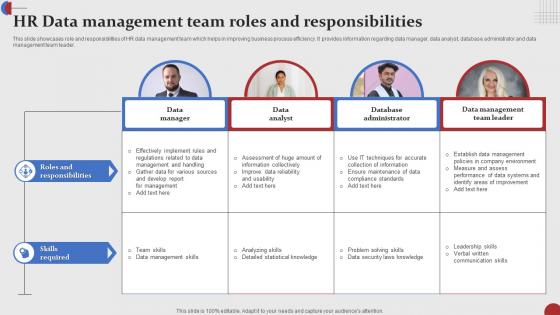
This slide showcases role and responsibilities of HR data management team which helps in improving business process efficiency. It provides information regarding data manager, data analyst, database administrator and data management team leader.
People who downloaded this PowerPoint presentation also viewed the following :
HR Data Management Team Roles And Responsibilities with all 6 slides:
Use our HR Data Management Team Roles And Responsibilities to effectively help you save your valuable time. They are readymade to fit into any presentation structure.






FAQs for HR Data Management Team
Honestly, go with automated HRIS systems and self-service portals - they're game changers. Connect your payroll and performance systems so everything syncs automatically. Manual data entry is the worst, you'll hate yourself later. Pulse surveys are clutch for getting real feedback, not just numbers. Mobile platforms work way better since people actually check their phones. Oh, and exit interviews - those tell you what's really going on. Start by checking what data you already have lying around, then figure out your biggest gaps. Automation should be priority one though. It'll save you so much headache down the road.
So basically you're looking at all your HR data to catch warning signs before people bail. Survey responses, performance dips, attendance issues - it's like detective work but way less exciting lol. The cool part is using what you find to actually help people. Sarah might need training opportunities, Mike probably just wants to work from home more. Compare your turnover rates to industry averages too so you know if you're doing okay or totally screwing up. Just start by getting all your people data organized in one spot and hunt for patterns.
Honestly, data analytics is a game changer for HR - it turns your gut instincts into stuff you can actually prove to the bosses. Why's turnover so crazy high? Which people are about to bail? You can find these patterns instead of just wondering. I got obsessed with it once I started seeing what the numbers revealed. Performance trends, hiring forecasts based on past data - suddenly you're making smarter calls on pay raises and training budgets. Don't try to tackle everything at once though. Pick something like retention first and really dig into those numbers.
Honestly, those GDPR and CCPA fines are insane - I've seen companies get hit hard. Start by locking down who can access what data, then encrypt everything you can. Your team needs to actually understand what counts as personal info (it's more than people think). Don't keep data forever either - set retention limits or you'll end up hoarding stuff unnecessarily. Always get clear consent before grabbing sensitive employee details. Oh, and make a simple checklist your team can use during onboarding. Sounds boring but it'll save you headaches later when audits come around.
Honestly, start with the basics - turnover rate, how long it takes to fill positions, and engagement scores. Those three will tell you the most. Cost-per-hire and absenteeism are solid too, plus training completion rates. Oh, and diversity numbers if that's a focus for you guys. Don't go crazy though - I've seen teams drown in like 15 different metrics and then never actually use half of them. Pick maybe 5-7 that match whatever your biggest headaches are right now. Get consistent with tracking first. The fancy dashboard stuff can wait until you've got the routine down.
Honestly, solid HR data makes a huge difference for culture. You can catch engagement issues and turnover red flags way before they blow up. People actually trust leadership more when they're transparent about how decisions get made - nobody likes feeling left in the dark, you know? Short sentences work here. You'll spot what makes your best teams tick, then spread those wins around. I've seen companies just wing it culturally and... yeah, that rarely ends well. Data helps you be intentional instead of crossing your fingers and hoping.
Look, if you're dealing with HR data stuff, BambooHR and Workday are solid picks for bigger companies. ADP too. Smaller teams? Gusto's pretty decent and won't break the bank. Honestly depends on what you actually need though - like are you talking basic employee records or full payroll integration? That changes everything. Oh and if your current system sucks at reporting, you might need something like Tableau on top of it. Best thing is to write down your actual requirements first, then demo a few options. Don't get stuck in analysis paralysis mode.
So your HRIS is sitting on tons of useful data - performance reviews, pay changes, promotion history, survey stuff. Predictive analytics can spot patterns in all that mess to figure out who's likely to quit in the next 6-12 months. Pretty wild, right? It's basically fancy pattern matching that also helps predict future hiring needs and which roles you'll struggle to fill. Honestly, I'd start simple with turnover prediction since that's where you'll see results fast. Don't overthink it - test one thing first, then expand from there.
Ugh, data format mismatches will make you want to scream - your HRIS stores names as "Last, First" but payroll does "First Last." Quality issues are brutal too since systems validate stuff differently. You'll have perfect addresses in one system, garbage in another. Oh and here's my favorite disaster: Employee ID 12345 exists in three places but it's three different people! Honestly, just map out your data sources first before doing anything else. Get some decent cleansing tools too - trust me on this one.
Ugh, staring at HR spreadsheets is the worst. But here's the thing - turn those numbers into charts and suddenly everything clicks. Your brain just gets visuals faster, you know? Like instead of hunting through rows trying to find turnover issues, boom - there's the pattern right in front of you. Bar charts work great for comparing departments, line graphs show trends over time. Heat maps are pretty solid for performance stuff too. Honestly, I'd just pick whatever metric is driving you crazy right now and make one simple chart. You'll probably have that "aha!" moment way sooner than you think.
Three things will save you here: automated validation rules, regular audits, and solid data entry protocols. Your HRIS can flag weird stuff automatically - duplicate IDs, wonky dates, that kind of thing. Seriously works better than I thought it would when we first set it up. Train everyone on consistent data entry and make them document changes. Then do quarterly reviews to catch patterns and clean up old messy records. Oh, and start with the automated validation first - way easier win. The whole point is building accuracy into your daily routine instead of scrambling to fix disasters later.
So feedback systems are basically your main way to collect all the juicy people data - sentiment, engagement, performance insights, all that stuff. This feeds into your bigger workforce analytics picture. You can predict turnover, spot training gaps, measure how healthy your culture actually is. Honestly, it's probably your richest data source since it captures the human side that spreadsheets totally miss. Just make sure it connects well with your HRIS so you can actually correlate feedback with performance and retention outcomes. Oh, and definitely audit what you're currently collecting first - you might be surprised what's just sitting there unused.
Honestly, you can't run effective D&I programs without solid data backing them up. Look at your hiring patterns, who's getting promoted, pay gaps - all broken down by demographics. That's how you catch bias before it becomes a bigger problem. Flying blind and just crossing your fingers? Yeah, that doesn't work (learned that one the hard way). The trick is picking the right metrics and actually acting on what the data tells you. I've seen too many companies build these gorgeous dashboards that just collect dust while nothing changes.
You know how you're always drowning in HR spreadsheets? AI tools can actually spot patterns in that mess that you'd never see - like predicting which employees might bail or figuring out what skills you're missing. Takes seconds instead of weeks. The crazy part is how it connects dots between performance data, engagement scores, and retention rates that seem totally unrelated. I tried one last month and it was wild seeing the correlations pop up. Pick one annoying problem you're dealing with first - don't try to solve everything at once - and find a tool that handles just that analysis.
Honestly, first thing I'd do is figure out where all your HR data actually lives - payroll, HRIS, performance systems, the whole mess. Then decide who owns what data and set up some basic quality standards. Access controls are key too, especially with all the privacy regulations (that stuff will bite you if you're not careful). Regular audits help catch problems before they explode. Document your policies but make them readable - nobody follows corporate speak anyway. Oh and definitely get leadership on board first. I've seen too many data governance projects die because executives didn't actually commit resources to it.
-
Templates are beautiful and easy to use. An amateur can also create a presentation using these slides. It is amazing.
-
The visual appeal of the templates is just unparalleled! I was so worried about the design of my presentation but SlideTeam made it all so easy.