


Key Roles Of HR In Talent Management Process




Try Before you Buy Download Free Sample Product
 Impress Your
 Audience
 100%
100% Editable
 Save Hours
 of Time


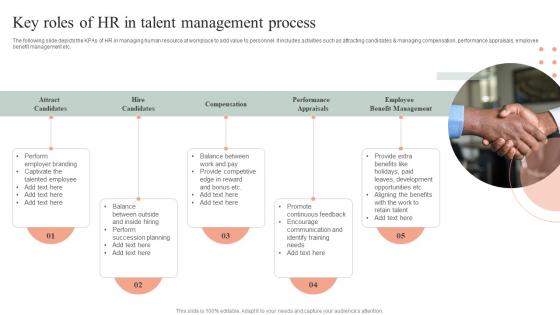
The following slide depicts the KPAs of HR in managing human resource at workplace to add value to personnel. It includes activities such as attracting candidates and managing compensation, performance appraisals, employee benefit management etc.
People who downloaded this PowerPoint presentation also viewed the following :
Key Roles Of HR In Talent Management Process with all 6 slides:
Use our Key Roles Of HR In Talent Management Process to effectively help you save your valuable time. They are readymade to fit into any presentation structure.





FAQs for Key Roles Of HR In
Alright so you need four main things: getting good people, training them up, keeping them around, and having backups ready. Most places are decent at hiring but totally bomb at retention - like they'll spend thousands recruiting someone then lose them over bad management or no clear career path. Compensation matters too obviously. For development, just make sure people can actually learn new skills and grow. Oh and succession planning is huge because good employees will leave eventually, so you better have someone ready to step up. I'd honestly just figure out which of these four you suck at most and fix that first.
Honestly, most companies mess this up because they hire randomly without thinking it through. Start by figuring out what skills you actually need for your goals - expanding to Asia? You'll need people who get those markets. Innovation is your thing? Focus on creative problem-solvers, not just whoever has the fanciest resume. Your recruiting and development should directly support where you're headed. Think of talent decisions like investments, not just filling empty chairs. Oh, and check in every quarter or so to make sure you're still on track.
Dude, tech has completely taken over talent management - and honestly, it's about time. AI screens resumes now, which saves HR from drowning in applications. These platforms track everything from hiring to performance reviews, plus you get crazy detailed analytics on who's staying and who's bouncing. The automation part is huge because it frees up HR to do actual strategic work instead of paperwork hell. My advice? Look at what you're doing manually right now and see where tech could step in. Even small changes make a difference - we switched to automated scheduling last year and it was a game changer.
Honestly, you need both the hard numbers and the squishy stuff. Retention rates are obvious, but also check internal promotion percentages and how long it takes to fill roles. Employee engagement surveys matter too - though people sometimes just click through those randomly. Performance ratings after development programs? That's where you see if anything actually worked. Participation rates in your initiatives tell a story too. Don't go crazy trying to measure everything though. Pick like 4-5 things that match what you're trying to accomplish. Set up a quarterly check-in so you can see if you're making progress or just spinning wheels.
Look, you've gotta be way more intentional about where you're recruiting. Hit up HBCUs, women's organizations, diverse professional groups - not just the same old places everyone else uses. Clean up those job descriptions too - words like "rockstar" are honestly pretty cringy and turn people off. Skills matter more than where someone went to school or whether they'd grab beers with the team. Make your interview panels diverse, and here's the thing - once people are hired, they need to actually see a path forward. Otherwise what's the point? It won't just happen on its own.
Honestly, mentorship programs are incredible for developing people. High-performers get to share what they know while building leadership chops. Meanwhile your rising stars get that personalized guidance you can't replicate in some generic training session. People stay longer too when they feel someone's actually invested in their growth - which makes total sense if you think about it. Those regular check-ins are where the real magic happens. My advice? Don't roll it out company-wide right away. Start small and let people volunteer to be matched up first.
Honestly, pay matters most - benchmark your salaries and don't cheap out on benefits. People also bolt when they hit dead ends, so map out actual career paths and invest in training. But here's the thing - culture's probably your biggest weapon right now. Good managers make all the difference (bad ones kill retention instantly). Recognize wins publicly, give your stars projects they actually care about. Oh, and don't wait for exit interviews to figure out what's wrong. Regular one-on-ones will catch issues before people start updating their LinkedIn.
Oh totally - they feed off each other in this crazy way! Invest in your people with real career paths and training? They'll actually stick around and care about their work. Engaged employees perform better and want those growth opportunities you're offering. Sometimes I can't tell which comes first tbh. But here's what I've learned - you gotta focus on engagement before anything else works. Just ask your team what development stuff they actually want (not what you think they need). That's literally where you start. Once people feel heard, the rest follows naturally.
Honestly, the next decade's gonna be all about AI recruiting and hiring for skills instead of degrees - finally! Remote work isn't going anywhere (which is awesome). Companies are getting way better at spotting talent early using predictive analytics, and they're actually investing in teaching people new skills internally. The whole employee experience thing is becoming as big a deal as keeping customers happy. You know what though? You should probably look at your current recruiting tools soon because this stuff is moving fast and you don't want to be scrambling to catch up later.
Honestly, feedback is your best friend for catching talent process issues early. Run pulse surveys and exit interviews - they'll show you exactly where things are breaking down. Maybe your onboarding is trash or nobody understands how promotions work. The trick is actually doing something with what people tell you (most companies just hoard this data like it's treasure). Look for patterns that keep popping up across teams. Start with whatever everyone's complaining about most, then check if your fixes actually helped. Oh, and don't forget manager check-ins too.
Honestly, remote work has been a game changer for talent stuff. Your candidate pool is massive now - geography doesn't limit you anymore, which is pretty cool. Downside? Everyone else is fishing in that same big pond, so competition got way more intense. You'll need to completely rework how you onboard people and keep them engaged without face-to-face interaction. Communication has to be way more deliberate now. I'd start by tweaking your interview process to actually test for remote skills - like, can they handle async work? Also set up regular check-ins for new people because they'll feel lost otherwise.
Honestly, the trick is making learning feel normal, not like extra homework. Give people actual time for it - maybe not Google's fancy 20% thing, but something real. Managers should talk career growth, not just "how'd you do last quarter?" Celebrate when someone finishes training or picks up new skills. Lunch-and-learns work great, or pair people up for mentoring. Here's the thing though - if you're not learning new stuff yourself, why would anyone else care? People need to see that growing skills actually leads somewhere career-wise. Otherwise it's just busywork.
Honestly, leadership development is like the secret sauce of talent management. You're basically taking your star players and grooming them for bigger things while keeping them happy. People want to grow - weird concept, I know - so when you create clear paths up, they stick around longer. My old manager used to say you should spot potential leaders early and throw some stretch projects their way. Mentoring works too. The whole point is building your own pipeline instead of scrambling to hire externally later. Way cheaper and these people already know your company inside out.
Honestly, most performance reviews are just backwards-looking report cards that nobody enjoys. What actually works? Focus way more on what's coming next - career goals, skill building, that stuff. I've sat through so many that were basically just "here's your screw-ups" which is... not helpful. Ask your people what they need from you and what kind of work gets them excited. Write down real action steps with actual dates, not just "we'll work on communication skills" or whatever vague thing. The goal is making these conversations something they don't dread. When that happens, you've won.
Honestly, start by watching who crushes their goals consistently and jumps on new projects without being asked. Those are your obvious wins. But also pay attention to the quieter signs - like who people go to for advice or who asks really good questions instead of just nodding along. I'd set up casual chats with managers to get their read on team members, since they usually have decent instincts about this stuff. Assessment tools for problem-solving help too, though they're not everything. Oh, and document what you're seeing now so you can actually track patterns later. The people who actively seek feedback instead of waiting for reviews? Usually keepers.
-
I was really impressed with the presentation I created with their templates. I’ll be using their services moving forward.
-
Great quality slides in rapid time.