12 Functions Of Human Resource Management
Try Before you Buy Download Free Sample Product
Audience
Editable
of Time
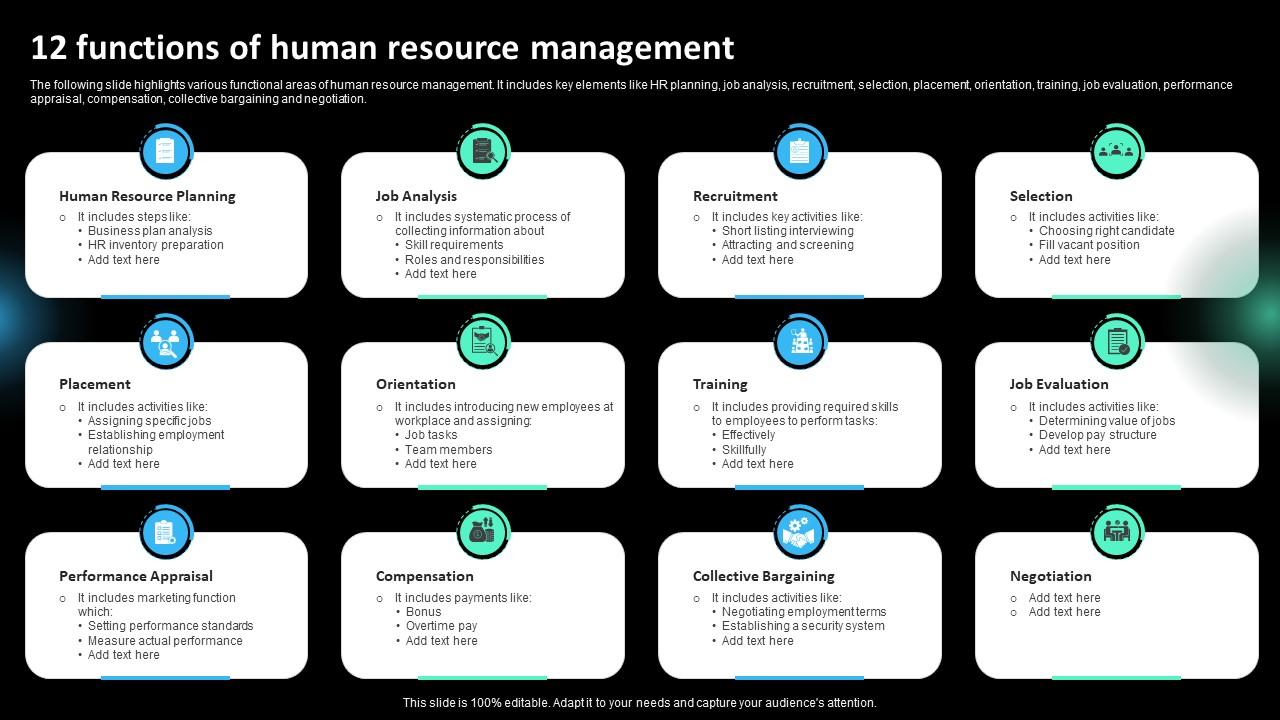
The following slide highlights various functional areas of human resource management. It includes key elements like HR planning, job analysis, recruitment, selection, placement, orientation, training, job evaluation, performance appraisal, compensation, collective bargaining and negotiation.
People who downloaded this PowerPoint presentation also viewed the following :
12 Functions Of Human Resource Management with all 6 slides:
Use our 12 Functions Of Human Resource Management to effectively help you save your valuable time. They are readymade to fit into any presentation structure.
FAQs for 12 Functions Of
So the main HR stuff you'll deal with is recruitment, onboarding, performance reviews, pay/benefits, training, and employee relations. Plus compliance - honestly such a drag but you can't skip it. All of this covers people from when they apply to when they leave. Performance management and hiring are where I'd start if you're building from scratch. The rest can wait until you're bigger. Everything connects though - like good onboarding makes performance reviews way easier later. It's all about supporting your business while keeping people happy, which sounds simple but definitely isn't.
Okay so three main things to fix. Your employer brand needs work - check what's on Glassdoor and social media because candidates definitely stalk you online first. Nobody's filling out those crazy long application forms anymore, so cut that down. Also, stop just posting on job boards and hoping for the best. Employee referrals are honestly gold, plus hit up your industry contacts and those passive LinkedIn people who aren't actively looking. I'd start by figuring out where candidates are dropping off in your current process - that'll show you the biggest problems right away.
Dude, good onboarding can literally bump your retention up by 50% or more. It's huge. When people feel welcomed and actually understand what they're supposed to do, they'll stick around way longer. Bad onboarding though? Total waste of money - people bail so fast if they're confused or feel like outsiders. I'd honestly say the first 90 days make or break everything. You want something structured that hits job expectations, culture stuff, and helps them connect with the team. Oh and definitely ask your recent hires what sucked about the process - they'll tell you straight up.
Honestly, good performance management makes a huge difference - I've seen it work. Clear goals and regular feedback keep people motivated way better than those awful yearly reviews everyone dreads. Your team actually knows what they're shooting for, plus they get coaching along the way instead of just being judged. Recognition matters too, even small stuff. The trick is focusing on helping people grow rather than just rating them. Set specific goals together and do quick check-ins monthly or whatever works. Trust me, it's worth the effort.
First thing - figure out what people actually need to learn, don't just wing it. Make the content relevant to their real jobs and mix up the formats. Videos, hands-on stuff, group work, whatever keeps people awake. Death by PowerPoint is still alive and well unfortunately. Clear goals upfront help a ton so everyone knows the point. Here's the thing though - one training session never works. You need follow-ups and regular check-ins. And skip the "did you like it" surveys. Track whether they're actually using this stuff at work, not just if the snacks were good.
Oh man, labor laws are such a headache but you've gotta stay on top of them. Regular training is key - make sure your managers know overtime rules, discrimination stuff, safety requirements. Keep that employee handbook current too. I swear the laws change every five minutes! Track your compliance metrics like wage payments and leave policies. Do audits of your practices so you catch problems early. And honestly? Don't be afraid to call your lawyer when you're confused. Way cheaper than getting hit with violations later - learned that one the hard way!
Okay so three things that actually work: recognition, growth stuff, and just being straight with people. Most managers seriously underestimate how much regular feedback matters - like, people just want to know they're doing good work, you know? I've literally watched entire teams flip around because someone finally started doing consistent one-on-ones. Professional development is huge too. Show them there's somewhere to go career-wise or they'll bounce. Be transparent about company goals and how their job fits in. Honestly? Start with weekly check-ins if you're not already. That one change alone will make a massive difference in engagement.
Dude, the difference is crazy - posting jobs hits multiple sites instantly now, and AI screens resumes before you even see them. Video interviews can analyze how candidates respond automatically (kinda creepy but useful). Performance stuff got way easier too. Real-time dashboards track everything, automated reminders ping people for check-ins, and you can spot problems brewing before they explode. Honestly beats the hell out of those Excel nightmares we used to deal with! My advice? Pick whatever's driving you nuts most in HR and find tech that fixes just that one thing. Don't go overboard trying to change everything.
Look, skip the vanity metrics that make you feel busy but don't actually matter. Your leadership cares about turnover rates, how long it takes to fill positions, and whether people are actually engaged - so measure those. Training completion rates are fine, but did skills actually improve afterward? That's what counts. Honestly, I've seen HR teams get obsessed with tracking everything instead of focusing on what moves the needle. High performer retention, internal promotions, and whether your programs boost productivity - that's the stuff that'll get you budget approval next year. Start small with maybe 3-4 metrics your boss actually asks about.
Start with hiring - recruit from different places and watch out for bias in job posts (gendered language is sneaky like that). Employee resource groups work well once people are there. Do bias training but honestly, surveys matter more because they tell you what's actually happening. Oh, and don't make it a one-and-done thing. I'd audit what you're doing now first, then pick one solid change for this quarter. Small steps but consistent ones - that's what sticks.
Honestly, start with researching what your competitors are paying - that's your baseline. Then look at your internal pay structure because nothing kills morale faster than finding out someone makes way more for the same work. Performance should definitely factor into compensation, but don't make it overly complicated. Benefits matter too - health insurance, PTO, retirement stuff. The tricky part is staying flexible since markets change constantly and you'll need to adjust. Oh, and definitely audit what you're currently offering versus what people actually want. Sometimes companies think ping pong tables matter more than they do.
So here's the thing - when people know there's actually a plan for handling disputes, they're way more likely to speak up before things get messy. Having clear steps (like mediation or who to escalate to) means nobody's sitting there thinking "ugh, what do I even do about this weird tension with my coworker?" You know that feeling, right? The trick is making sure your team actually knows these processes exist. Half the time people just suffer in silence because they don't realize there's a real system in place. Document whatever steps you currently have and actually tell everyone about them.
Okay so HR is literally the backbone when companies go through changes. People absolutely hate change - even good change, which is wild but true. You'll be running communication plans, training everyone, and dealing with all the pushback. Plus you're figuring out how changes affect employees and building transition plans so people actually have the skills they need. Don't forget you're also gathering feedback and tracking whether the change is working. Oh, and here's the thing - jump in during planning, not just when they're rolling everything out. Way more effective that way.
So here's what I'd tackle first - get your communication sorted with proper Slack setups and video check-ins. Performance management needs a total flip though, focus on what people actually deliver instead of when they're online. I mean, some of my best work happens way after normal hours anyway. Also throw in some virtual team stuff and flexible time off. Oh, and definitely survey your remote folks about what's broken - they'll tell you real quick what needs fixing. Having clear guidelines from day one saves everyone headaches later.
Look, there's tons of cool stuff you can do beyond the basic wellness programs. Mental health days that don't eat into PTO is genius - seriously wish my old job did that. Try mindfulness apps, maybe some on-site therapy sessions, or create little "wellness pods" where people can just... breathe for a minute. Therapy dogs are apparently amazing (who doesn't love dogs at work?). Those digital platforms that turn mental health into games are pretty popular now too. But honestly? Just send out an anonymous survey first. Ask what people actually want instead of guessing - might save you from investing in something nobody uses.
-
The slides come with appealing color schemes and relevant content that helped me deliver a stunning presentation without any hassle!
-
Fantastic and innovative graphics with useful content. The templates are the best and latest in the industry.