

Multi Step Talent Management Process Flow Chart




Try Before you Buy Download Free Sample Product
 Impress Your
 Audience
 100%
100% Editable
 Save Hours
 of Time


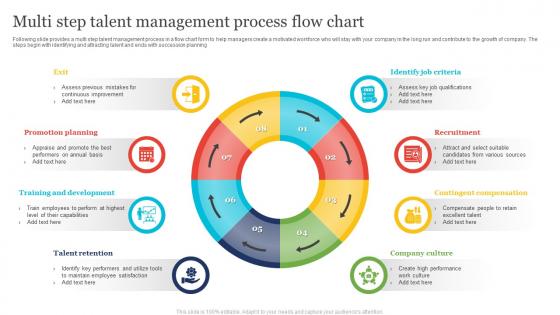
Following slide provides a multi step talent management process in a flow chart form to help managers create a motivated workforce who will stay with your company in the long run and contribute to the growth of company. The steps begin with identifying and attracting talent and ends with succession planning
People who downloaded this PowerPoint presentation also viewed the following :
Multi Step Talent Management Process Flow Chart with all 6 slides:
Use our Multi Step Talent Management Process Flow Chart to effectively help you save your valuable time. They are readymade to fit into any presentation structure.





FAQs for Multi Step Talent Management
Okay so you need five main things: talent acquisition, development, performance management, succession planning, and retention. Picture it like a pipeline where you're always bringing new people in while growing current employees. Most companies screw this up because they treat each piece separately instead of connecting them. Map out clear career paths, give regular feedback, spot your high-potential people early. I'd honestly start by looking at what you already have in each area - then just pick one thing to fix first. Don't try to overhaul everything at once, you'll burn out your team.
Honestly, look for people who go above and beyond without being asked. The ones asking smart questions in meetings? Those are your people. Also watch who volunteers for the tough stuff or naturally helps others out - super telling. Once you spot them, don't just cross your fingers and hope. Give them stretch projects that'll actually challenge them. Pair them with good mentors too. Cross-functional work is huge for getting them exposure to different parts of the business. The whole thing needs to be deliberate though - can't just wing it and expect results.
Honestly, you can't do talent management well anymore without decent tech. AI recruiting tools screen people for you, performance systems track everything, and analytics show where you're bleeding talent. The data you can pull now is insane! Automated onboarding saves tons of time, plus learning platforms that actually adapt to each person. Oh and succession planning tools help spot your next leaders early. Start by figuring out what manual stuff is killing your day - that's where tech will help most. Trust me, it's worth the investment.
So here's what works - bake engagement right into your talent processes instead of treating it separately. Survey people about what they actually want, then use those insights when you're promoting or planning development. Most companies? They collect this stuff and do nothing with it, which is maddening. Connect the dots for employees - show them how their feedback shaped decisions. I'd also tie engagement metrics to manager performance reviews. Short version: match development opportunities to what gets each person excited. Makes your whole talent pipeline stronger when engagement isn't just an HR checkbox.
Honestly, diverse teams just solve problems better - different backgrounds mean people approach challenges in totally different ways. Innovation jumps way up too. Decision-making gets sharper because you avoid that groupthink trap where everyone just agrees with each other. Plus diverse teams catch blind spots that homogeneous groups totally miss. Your company culture becomes way more interesting, and customers actually feel like you get them. Oh, and top talent these days? They want to work somewhere inclusive. I'd start by looking at where you're recruiting from and branching out to new sources.
Honestly, stop treating performance reviews like report cards. Instead of just looking at what went wrong, ask people where they want to grow and what strengths they can build on. Those yearly sit-downs are basically worthless - make it more frequent and casual. I always throw in career conversations too, like "where do you see yourself in two years?" The whole point should be spotting future talent, not just checking boxes. Oh and here's a simple start: add one forward-looking question to whatever review process you're already doing. Makes a huge difference.
Honestly, you've gotta be way more intentional about this stuff since it won't just happen naturally. Regular one-on-ones are huge. Set up virtual mentoring and make sure there's actual career paths people can see - like, concrete next steps. Online training is perfect for remote teams (sometimes I think it works better than dragging everyone to a conference room). Recognition matters too - call people out publicly in Slack or whatever you use. Monthly career chats with each person keeps development from getting forgotten. Oh, and flexible schedules are basically expected now, so use that as a retention tool.
Dude, forget waiting for those dreaded annual reviews - nobody wants those awkward surprises anyway. Give feedback in real-time so people can actually fix stuff while it matters. Weekly check-ins work great, or even just casual peer feedback. When someone does something well, tell them right then. Skill gaps? Address them immediately instead of letting people flounder for months. I've seen this work so much better than formal evaluations. People connect their daily grind to bigger career stuff way faster. Honestly, it's like the difference between learning to drive with an instructor versus figuring it out solo in a parking lot.
Honestly, retention and promotion rates are your best starting points - they'll tell you right away if people actually see a future there. Don't go crazy tracking everything though. Pick maybe 4-5 metrics that actually connect to your business goals. I'd add engagement survey scores, time-to-fill for key roles, and how your performance ratings are trending. Oh, and training completion rates matter more than people think - they're like a crystal ball for future performance. The 360 feedback stuff is gold too if you're running development programs. Just focus on what gives you that full picture without drowning in data.
Your talent management basically IS your culture - it shows what you really care about, not just what's on the company website. Hire people who fit your values. Promote based on performance AND culture fit. That reinforces the right behaviors. Development programs matter too - they show whether you believe people can grow or you're stuck in old-school thinking. I've watched companies completely flip their culture just by changing performance reviews and how they recognize people. The tricky part? Making sure what you actually do matches what you say you want. Most places mess this up.
Honestly, start by tracking which job boards or referral sources actually get you good hires - not just any warm bodies. Time-to-fill is huge too. Then dig into why people stay or bail after a few months. The really cool thing? You can spot patterns in your best employees and use that to predict who'll crush it. Same skills, similar backgrounds, even how they answered certain interview questions. Don't go crazy with this though - pick one thing like source tracking for 3 months. You'll see pretty quick where your recruiting dollars should actually go.
Oh man, you're gonna hit some real headaches. Cultural stuff is massive - motivating your Tokyo team versus your São Paulo crew? Completely different playbooks. Time zones alone will make you want to scream sometimes. Then there's all the legal mess with different labor laws everywhere, plus people expect wildly different compensation and career paths. Honestly, the hardest part might be keeping everyone feeling connected to the same company vision when they're literally on opposite sides of the planet. Get your managers some serious cultural training and build policies that bend without breaking your core values.
Dude, succession planning is SO overlooked but it'll save your ass. Basically you're spotting people who could step up when someone leaves or gets promoted. Life happens, right? People quit unexpectedly all the time. Without a plan, you're scrambling to fill holes and probably overpaying some outside hire who takes forever to figure things out. Plus you lose all that inside knowledge when people walk out the door. Map out your key roles first. Then find at least two people who could potentially fill each spot. Trust me on this one.
Honestly, leadership development is what keeps your best people from walking out the door. People will bail if they can't see where they're headed next - I've seen it happen so many times. You're basically killing two birds here: building your future management pipeline while keeping current talent happy. Spot your high-potential folks early and throw them some stretch assignments or pair them with mentors. It's way cheaper than constantly hiring from outside. Plus you'll actually know these people can handle bigger roles since you've watched them grow.
Okay so first thing - figure out what your company actually wants to accomplish. Then build your hiring around that. Expanding to new markets? Go after people who've done it before or train your current team. Need more innovation? Hunt down the creative types and set up solid learning programs. Most companies totally mess this up honestly - they just do random HR stuff and wonder why nothing clicks. Get your business leaders involved in these conversations instead of dumping it all on HR. Oh, and make sure every hiring decision connects to some actual business result. Otherwise you're just throwing money around.
-
“Easy to use. I always wanted to have a quick search for products and SlideTeam has helped me have it.”
-
Well-designed and informative templates. Absolutely brilliant!